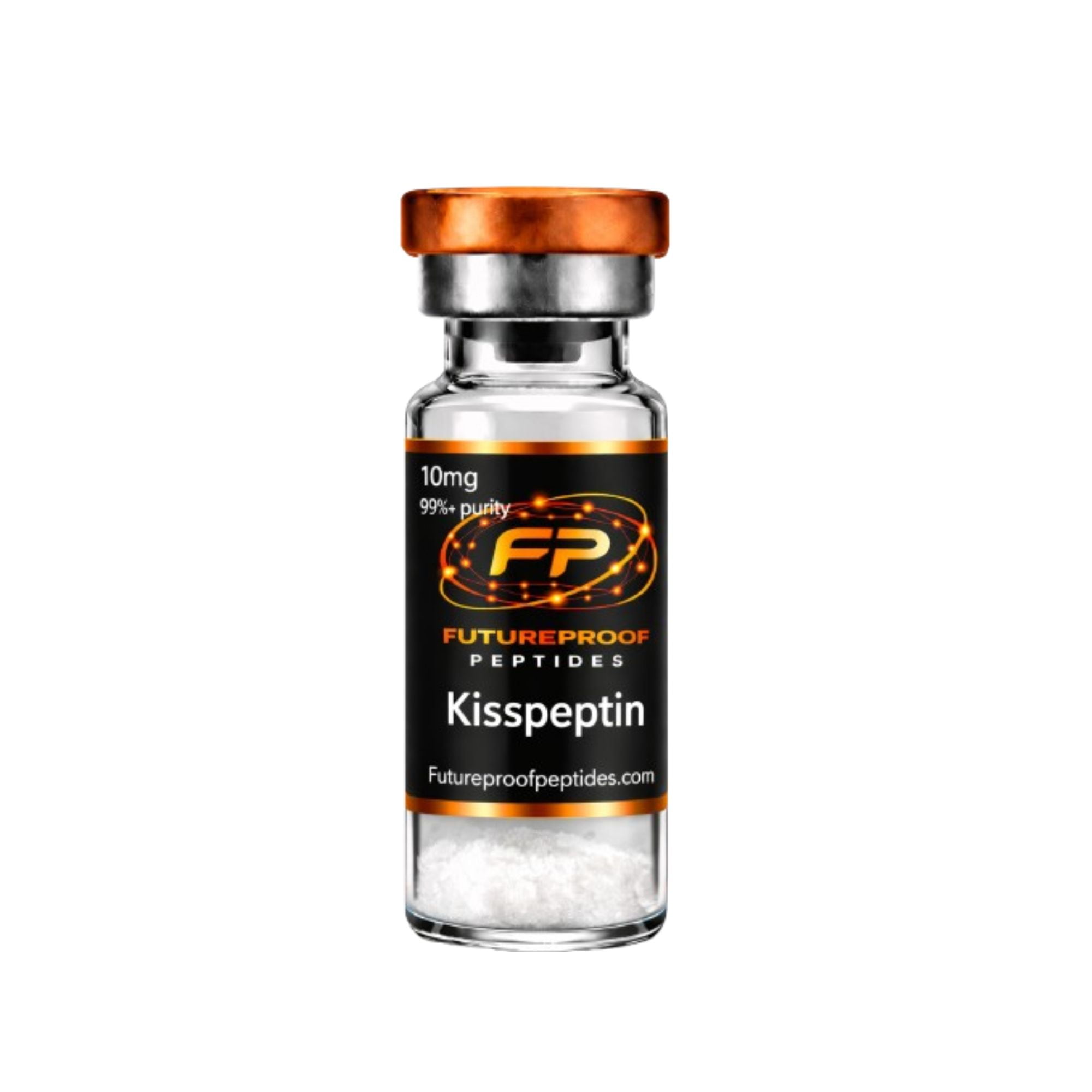
Kisspeptin-10 10mg Vial
Kisspeptin-10 10mg Vial: Advanced Research Peptide for Hormone Studies
At Futureproof Peptides, our Kisspeptin-10 10mg Vial is supplied for laboratory research involving hormone signalling, reproductive endocrine pathways, and hypothalamic-pituitary-gonadal system research.
Kisspeptin-10 is a peptide fragment associated with the wider kisspeptin signalling system. Kisspeptin signalling has attracted significant scientific interest because of its relationship with gonadotropin-releasing hormone (GnRH) and downstream reproductive hormone activity.
Research involving kisspeptin commonly examines communication between the hypothalamus and pituitary gland. This signalling network is closely connected with the release of luteinising hormone (LH) and follicle-stimulating hormone (FSH).
These hormones form important components of reproductive endocrine biology.
The Kisspeptin-10 10mg Vial provides researchers with a defined peptide format for controlled laboratory studies investigating these pathways.
The product is intended strictly for research use only and is not intended for human or veterinary use.
What Is Kisspeptin-10?
Kisspeptin refers to a family of peptide signalling molecules produced from the KISS1 gene. These peptides interact with the kisspeptin receptor, also known as KISS1R or GPR54.
Kisspeptin signalling is particularly important in research involving reproductive neuroendocrinology.
Kisspeptin-10 is one of the biologically active kisspeptin fragments studied in laboratory and experimental models. Its interaction with KISS1R is associated with signalling processes that influence GnRH neurons.
This makes kisspeptin an important research tool for investigating how signals originating in the brain can influence downstream endocrine activity.
The pathway can broadly be represented as:
Kisspeptin → KISS1R → GnRH signalling → LH and FSH activity
This signalling relationship is one reason Kisspeptin-10 10mg Vial is of interest in controlled hormone research.
Kisspeptin and the Hypothalamic-Pituitary-Gonadal Axis
The hypothalamic-pituitary-gonadal, or HPG axis, is a major endocrine signalling network involved in reproductive biology.
It involves communication between:
- The hypothalamus
- The pituitary gland
- The gonads
- Reproductive hormone signalling pathways
Kisspeptin is closely associated with the upstream regulation of this system.
Within experimental models, kisspeptin signalling can influence GnRH neuronal activity. GnRH subsequently participates in the regulation of pituitary gonadotropin secretion.
The primary gonadotropins are:
- Luteinising hormone (LH)
- Follicle-stimulating hormone (FSH)
Researchers can therefore use kisspeptin-related models to investigate how signals move through different stages of the HPG axis.
This provides an opportunity to study endocrine communication from the neurological level through to downstream reproductive hormone responses.
How Kisspeptin-10 Works in Research
Kisspeptin-10 is primarily studied for its interaction with the KISS1 receptor.
KISS1R is a G-protein-coupled receptor expressed in tissues and neuronal populations involved in reproductive signalling.
When kisspeptin signalling activates KISS1R, intracellular signalling pathways can influence the activity of GnRH neurons.
This provides an important connection between neuronal signalling and endocrine hormone release.
Researchers may investigate this relationship by examining:
- KISS1R signalling
- GnRH neuronal activity
- LH secretion
- FSH secretion
- Reproductive endocrine feedback
- Pubertal signalling pathways
- HPG-axis regulation
The exact response can depend on the experimental model, biological system, concentration, timing, and study conditions.
For this reason, research findings should always be interpreted within the context of the individual experimental design.
Kisspeptin-10 and GnRH Research
One of the most important areas of kisspeptin research involves gonadotropin-releasing hormone.
GnRH is produced by specialised neurons within the hypothalamus. Pulsatile GnRH signalling is an important regulator of pituitary gonadotropin activity.
Kisspeptin neurons are considered important upstream regulators of GnRH neuronal function.
This relationship has made kisspeptin an important experimental system for studying reproductive neuroendocrinology.
Research can investigate how kisspeptin signalling affects GnRH-related activity and how changes within this pathway influence downstream endocrine responses.
The Kisspeptin-10 10mg Vial can therefore be relevant to laboratory models examining the relationship between neuropeptide signalling and reproductive hormone regulation.
LH and FSH Research
Luteinising hormone and follicle-stimulating hormone are central components of reproductive endocrine biology.
LH and FSH are released by the anterior pituitary and have different but interconnected biological roles.
Research involving kisspeptin can examine how upstream signalling affects these hormones.
Luteinising Hormone
LH research can involve studying:
- LH release patterns
- Gonadal endocrine signalling
- Reproductive hormone regulation
- HPG-axis activity
- GnRH-dependent pathways
Because kisspeptin signalling is connected to GnRH activity, it provides a useful model for studying upstream regulation of LH.
Follicle-Stimulating Hormone
FSH research can examine:
- FSH secretion
- Gonadal signalling
- Reproductive endocrine activity
- Pituitary responses
- Hormonal feedback mechanisms
The relationship between kisspeptin, GnRH, LH, and FSH provides researchers with a broader framework for investigating endocrine communication.
Kisspeptin and Testosterone Research
Kisspeptin is also frequently discussed within research involving testosterone and male reproductive endocrinology.
This connection exists because testosterone production is influenced by the HPG axis.
The simplified pathway involves:
Hypothalamus → GnRH → Pituitary → LH → Gonadal signalling → Testosterone production
Kisspeptin operates upstream within this broader signalling network.
Research models can therefore examine how kisspeptin signalling interacts with pathways associated with GnRH, LH, and downstream gonadal endocrine activity.
Importantly, this does not mean that a research peptide product should be interpreted as a testosterone treatment or hormone therapy.
The purpose of laboratory research is to understand the biological mechanisms involved.
Reproductive Endocrinology Research
Kisspeptin has become an important subject within reproductive endocrinology research.
Scientists investigate kisspeptin signalling because of its relationship with reproductive maturation, hormone regulation, fertility-related pathways, and the HPG axis.
Areas of research may include:
- Reproductive neuroendocrinology
- Pubertal signalling
- GnRH regulation
- Gonadotropin secretion
- LH and FSH activity
- Gonadal hormone signalling
- Endocrine feedback
- Neuroendocrine communication
The Kisspeptin-10 10mg Vial is therefore suited to controlled laboratory environments where researchers are investigating specific components of these signalling pathways.
Kisspeptin and Puberty Research
Another important research area is the relationship between kisspeptin signalling and puberty.
Pubertal development involves significant changes in neuroendocrine signalling.
Activation of the HPG axis leads to increased reproductive hormone activity and downstream physiological changes.
Kisspeptin neurons are believed to play an important role in initiating and regulating reproductive endocrine signalling.
Experimental research can therefore investigate how changes in kisspeptin signalling relate to the activation of GnRH neurons.
Such research can help scientists better understand the neuroendocrine processes associated with reproductive maturation.
Kisspeptin-10 in Laboratory Models
The value of Kisspeptin-10 10mg Vial in laboratory research comes from its ability to provide a defined peptide input for controlled experimental systems.
Researchers may use kisspeptin-related models to investigate changes in signalling under controlled conditions.
Depending on the study design, researchers may evaluate:
- Receptor activation
- Hormone secretion
- Gene expression
- Cellular signalling
- Neuronal responses
- Endocrine feedback
- Reproductive pathway activity
The results can then be compared across different experimental conditions.
This type of research can provide useful information about the mechanisms connecting neuropeptide signalling with endocrine responses.
KISS1R Receptor Research
The kisspeptin receptor, KISS1R, is a major component of kisspeptin biology.
KISS1R belongs to the G-protein-coupled receptor family.
Its activation can initiate intracellular signalling cascades within responsive cells.
Research into KISS1R can therefore focus on:
- Ligand-receptor interactions
- Receptor activation
- Intracellular signalling
- Cellular responses
- GnRH-associated pathways
- Neuroendocrine regulation
Understanding the receptor helps researchers understand how kisspeptin signals are translated into biological responses.
Cellular Signalling Research
Kisspeptin signalling is not limited to hormone measurements.
At the cellular level, researchers can investigate how KISS1R activation influences intracellular pathways.
Experimental work may examine:
- Calcium signalling
- Protein kinase pathways
- Gene expression
- Cellular activation
- Neuronal signalling
- Receptor-mediated responses
These investigations help connect molecular receptor activity with larger physiological signalling systems.
Because signalling responses can vary between experimental models, controlled laboratory conditions are essential for interpreting results accurately.
Kisspeptin and Endocrine Feedback
The endocrine system relies heavily on feedback mechanisms.
The HPG axis is particularly dependent on feedback between reproductive hormones, the pituitary gland, and hypothalamic signalling.
Kisspeptin research can help investigate how these feedback mechanisms influence upstream signalling.
Researchers may examine relationships between:
Kisspeptin → GnRH → LH/FSH → Gonadal hormones → Endocrine feedback
This makes kisspeptin an interesting experimental molecule for studying the dynamic nature of endocrine regulation.
Research Applications
The Kisspeptin-10 10mg Vial may be relevant to a variety of laboratory research areas.
Neuroendocrine Research
Researchers can investigate communication between neuronal signalling and endocrine hormone pathways.
Reproductive Biology
Kisspeptin is widely studied in relation to reproductive signalling and HPG-axis regulation.
Hormone Signalling Research
Experimental models can examine LH, FSH, GnRH, and downstream endocrine activity.
Receptor Biology
KISS1R activation and ligand-receptor interactions are important areas of molecular research.
Puberty Research
Kisspeptin signalling can be investigated within models of reproductive maturation and HPG-axis activation.
Endocrine Regulation
Researchers can explore how neuropeptide signals influence broader hormone signalling networks.
Why Researchers Study Kisspeptin
Kisspeptin occupies an interesting position within reproductive biology because it links neural signalling with endocrine regulation.
Many hormone systems involve complex communication between the brain, pituitary gland, and peripheral organs.
Kisspeptin provides a useful model for examining one of the upstream control points within this network.
Researchers can investigate how changes in kisspeptin signalling influence downstream pathways without treating the signalling system as a single isolated process.
This broader perspective is valuable when studying endocrine regulation.
Kisspeptin-10 Research and Experimental Variables
Laboratory responses to Kisspeptin-10 can vary considerably depending on experimental conditions.
Important variables may include:
- Biological model
- Cell type
- Receptor expression
- Experimental duration
- Environmental conditions
- Peptide quality
- Sample preparation
- Analytical method
- Study design
Because of these variables, results from one experimental model cannot automatically be applied to another.
Researchers should interpret findings according to the specific conditions under which they were obtained.
Product Format
The Kisspeptin-10 10mg Vial is supplied as a laboratory research peptide in a lyophilised format.
Lyophilisation, also known as freeze-drying, is commonly used for peptide products because removing water can improve storage stability compared with maintaining the material as an aqueous solution.
The vial format provides a defined quantity for controlled laboratory work.
Researchers should follow their institution’s established procedures for storage, handling, analytical preparation, and experimental use.
No human-use protocol is provided with this product.
Storage and Handling
Peptides should be handled according to appropriate laboratory procedures.
General considerations include:
- Keep the product in appropriate controlled storage.
- Protect the material from unnecessary environmental exposure.
- Minimise repeated temperature fluctuations.
- Avoid unnecessary freeze-thaw cycling where applicable.
- Maintain appropriate laboratory documentation.
- Use clean handling procedures.
- Follow the storage recommendations associated with the specific batch.
Actual stability can depend on formulation, container, temperature, moisture exposure, and other environmental factors.
Researchers should therefore establish storage and stability conditions appropriate to their own experimental requirements.
Quality Considerations
Reliable research depends on consistent experimental materials.
When working with research peptides, researchers may consider several quality attributes, including:
- Peptide identity
- Purity
- Batch consistency
- Manufacturing controls
- Analytical testing
- Physical appearance
- Storage conditions
- Documentation
These factors can influence the reproducibility of experimental results.
Futureproof Peptides supplies Kisspeptin-10 10mg Vial in a defined laboratory format for research applications involving kisspeptin and endocrine signalling.
Understanding Research Limitations
Although kisspeptin has been extensively investigated in scientific research, laboratory findings should not automatically be interpreted as evidence of a treatment or medical application.
Research involving Kisspeptin-10 can provide information about molecular and endocrine signalling, but experimental findings depend heavily on the model used.
Results obtained in cell cultures, animal models, or other laboratory systems cannot automatically be translated into clinical outcomes.
This distinction is particularly important when researching molecules involved in hormone signalling.
Frequently Asked Questions
What is Kisspeptin-10?
Kisspeptin-10 is a biologically active kisspeptin peptide fragment studied for its interaction with the KISS1 receptor and its relationship with GnRH and reproductive endocrine signalling.
What is Kisspeptin-10 used for in research?
It is primarily investigated in laboratory research involving kisspeptin receptor biology, GnRH signalling, LH and FSH activity, reproductive endocrinology, and HPG-axis regulation.
What receptor does Kisspeptin-10 interact with?
Kisspeptin peptides interact with the KISS1 receptor, also known as KISS1R or GPR54.
What is the connection between kisspeptin and GnRH?
Kisspeptin signalling is an important upstream regulator of GnRH neuronal activity. This creates a connection between kisspeptin signalling and downstream LH and FSH secretion.
Is Kisspeptin-10 related to LH?
Yes. Kisspeptin signalling is associated with GnRH activity, which regulates pituitary gonadotropins including LH.
Is Kisspeptin-10 related to FSH?
Yes. Because FSH is regulated through the GnRH-gonadotropin system, kisspeptin signalling can be investigated in research examining FSH responses.
Is Kisspeptin-10 related to testosterone research?
Kisspeptin is studied within the HPG axis, which includes pathways involved in LH and gonadal hormone production. This makes it relevant to experimental research involving testosterone-related endocrine signalling.
What is the HPG axis?
The hypothalamic-pituitary-gonadal axis is an interconnected endocrine system involving the hypothalamus, pituitary gland, and gonads.
What form is the product supplied in?
The product is supplied as a lyophilised peptide powder in a 10mg vial.
Is Kisspeptin-10 intended for human use?
No. The product is supplied strictly for laboratory research and is not intended for human or veterinary use.
Does Kisspeptin-10 have established medical uses?
Research findings should not be interpreted as established medical applications. The product is intended for experimental laboratory research.
Can research results vary?
Yes. Results can vary depending on the experimental model, biological system, peptide preparation, analytical method, and study conditions.
Kisspeptin-10 10mg Vial Product Summary
The Kisspeptin-10 10mg Vial provides researchers with a defined peptide format for laboratory studies involving reproductive neuroendocrinology and hormone signalling.
Its research relevance is primarily associated with the kisspeptin-KISS1R signalling system and its relationship with GnRH.
This makes Kisspeptin-10 useful for experimental research examining:
- KISS1R receptor signalling
- GnRH neuronal pathways
- LH activity
- FSH activity
- HPG-axis regulation
- Reproductive endocrine signalling
- Puberty-related pathways
- Endocrine feedback
- Neuroendocrine communication
- Molecular hormone research
The product is supplied as a lyophilised peptide powder and should be handled according to appropriate laboratory procedures.
Kisspeptin research continues to provide insight into the complex relationship between neuronal signalling and reproductive endocrine regulation.
Research Use Only Disclaimer
Kisspeptin-10 10mg Vial is supplied strictly for research and laboratory use only. It is not intended for human consumption, human administration, diagnosis, treatment, prevention, or veterinary use.
Researchers are responsible for following all applicable institutional, laboratory, regulatory, and safety requirements when working with research peptides.
Futureproof Peptides provides this material for scientific research purposes only.
Kisspeptin-10 10mg Vial Kisspeptin-10 10mg VialKisspeptin-10 10mg Vial Kisspeptin-10 10mg Vial Kisspeptin-10 10mg Vial Kisspeptin-10 10mg Vial Kisspeptin-10 10mg Vial Kisspeptin-10 10mg Vial Kisspeptin-10 10mg VialKisspeptin-10 10mg Vial Kisspeptin-10 10mg Vial Kisspeptin-10 10mg Vial Kisspeptin-10 10mg Vial Kisspeptin-10 10mg Vial