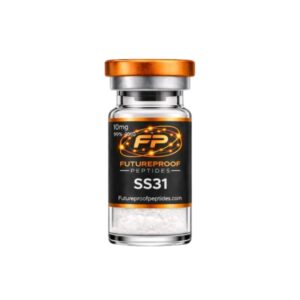
BPC-157 10mg: Advanced Research Peptide for Laboratory Studies
BPC-157 10mg Research Peptide
BPC-157 10mg is a synthetic pentadecapeptide widely investigated in preclinical research involving tissue response, cellular signalling, vascular biology, wound-healing models, and biological processes associated with structural repair.
BPC-157 is often referred to as Body Protection Compound 157. It consists of 15 amino acids and has been the subject of extensive laboratory research, particularly in animal and experimental models.
The scientific interest surrounding BPC-157 10mg comes from its reported interactions with several biological pathways. Research has examined processes involving nitric oxide signalling, angiogenesis, fibroblast activity, cellular migration, growth-factor pathways, and inflammatory responses.
Importantly, much of the published evidence remains preclinical. Results observed in laboratory or animal models should not be interpreted as proof of effectiveness or safety in humans. Current scientific reviews continue to identify significant gaps in human clinical evidence.
For researchers investigating peptide biology, BPC-157 10mg provides a higher-content laboratory format suitable for controlled research projects where sufficient material is required for analytical and experimental work.
Research Use Only. Not for human or veterinary use.
What Is BPC-157?
BPC-157 is a synthetic 15-amino-acid peptide associated with research into biological protection, tissue response, and cellular signalling.
The compound has historically been investigated in experimental models involving different tissues and physiological systems. Researchers have explored its relationship with processes such as angiogenesis, collagen-related activity, cellular migration, and vascular signalling.
The name BPC refers to Body Protection Compound, while the number 157 identifies the specific peptide sequence used in research.
Although BPC-157 has attracted significant interest, it is important to distinguish scientific investigation from established medical use.
The majority of available evidence comes from preclinical research rather than large, well-controlled human clinical trials. A recent review published in 2026 highlighted that BPC-157 remains underdeveloped from a pharmaceutical perspective, with limited human pharmacokinetic information and no validated clinical dosing regimen.
This makes BPC-157 10mg primarily relevant to laboratory research rather than clinical application.
BPC-157 10mg and Preclinical Research
One of the main reasons researchers continue to investigate BPC-157 10mg is the broad range of biological models in which the peptide has been studied.
Experimental research has examined BPC-157 in models involving:
- Tissue repair
- Wound-healing processes
- Connective tissue response
- Vascular signalling
- Angiogenesis
- Fibroblast activity
- Cellular migration
- Nitric oxide pathways
- Inflammatory signalling
- Gastrointestinal tissue models
- Muscle and tendon research
- Ligament and connective-tissue models
- Cellular protection mechanisms
These areas represent research subjects rather than established therapeutic indications.
Preclinical findings can help scientists identify biological mechanisms worthy of additional investigation. However, the transition from animal or cellular models to human applications requires extensive validation.
For this reason, BPC-157 10mg should be approached as an experimental research material rather than a treatment product.
BPC-157 10mg and Tissue Research
Tissue response is one of the most extensively investigated areas associated with BPC-157.
Researchers have examined how BPC-157 may interact with biological processes involved in tissue response following experimental injury.
These studies have included models involving skin, muscle, tendons, ligaments, gastrointestinal tissue, and other biological structures.
Research has examined several processes that are important to tissue biology, including cellular migration, vascular response, extracellular matrix activity, and collagen-associated processes.
Earlier experimental research investigated BPC-157 in models involving granulation tissue, angiogenesis, collagen formation, and tensile strength.
These findings have contributed to continued interest in BPC-157 research.
However, laboratory findings should always be interpreted within the limitations of the experimental model.
An effect observed in an animal model does not automatically demonstrate that the same biological effect occurs in humans.
BPC-157 10mg and Cellular Signalling
Cellular signalling is another important research area surrounding BPC-157 10mg.
Cells communicate through complex networks involving proteins, receptors, enzymes, growth factors, and intracellular signalling pathways.
Researchers investigate these pathways to understand how biological systems respond to injury, stress, inflammation, changes in blood flow, and other environmental factors.
BPC-157 has been investigated in relation to several of these signalling mechanisms.
Particular interest has been directed toward pathways associated with vascular signalling, nitric oxide activity, fibroblast behaviour, and growth-factor-related processes.
These mechanisms remain subjects of scientific investigation.
They should not be interpreted as evidence that BPC-157 produces a particular clinical outcome in humans.
Research Into Nitric Oxide Signalling
Nitric oxide is an important signalling molecule involved in vascular and cellular processes.
It participates in communication between cells and contributes to regulation of blood-vessel function.
Because vascular signalling plays an important role in tissue biology, researchers have investigated whether BPC-157 interacts with nitric oxide-related pathways.
Experimental studies have reported associations between BPC-157 and nitric oxide signalling in different research models.
This area remains particularly interesting because vascular responses are closely connected with tissue biology.
Researchers may therefore use BPC-157 10mg when studying interactions between peptide signalling and nitric oxide-related mechanisms.
Again, these findings represent laboratory research and should not be interpreted as evidence of a clinical effect.
Angiogenesis Research
Angiogenesis refers to the formation of new blood vessels from existing vascular structures.
It is an important biological process involved in development, tissue remodelling, and wound response.
Because blood-vessel formation can influence the availability of oxygen and nutrients within tissues, angiogenesis is frequently studied in regenerative biology.
BPC-157 has been investigated in experimental angiogenesis models.
Researchers have explored whether the peptide influences signalling associated with vascular growth and endothelial-cell activity.
This research has contributed to the broader scientific interest in BPC-157 and its potential interactions with tissue biology.
For laboratory projects examining vascular response, BPC-157 10mg provides a research-oriented peptide format for controlled investigation.
BPC-157 10mg and Fibroblast Research
Fibroblasts are connective-tissue cells involved in producing components of the extracellular matrix.
They contribute to the formation and maintenance of structural proteins, including collagen.
Because fibroblast activity is important to tissue biology, researchers have examined how experimental compounds influence fibroblast behaviour.
BPC-157 has been investigated in research involving fibroblast activity and cellular migration.
These studies are relevant to understanding how peptide signalling may interact with structural tissue processes.
The available evidence remains primarily preclinical, so additional research is required to determine whether laboratory observations have meaningful relevance to human physiology.
BPC-157 Research in Tendon and Ligament Models
Tendons and ligaments are specialized connective tissues with complex structural properties.
Their biology has become an important area of BPC-157 research.
Experimental studies have examined tendon and ligament models to investigate structural response, cellular activity, vascular signalling, and tissue remodelling.
A 2025 systematic review of BPC-157 research in orthopaedic and sports-medicine contexts found that most available evidence was preclinical and emphasized the lack of high-quality human evidence.
This distinction is important.
The presence of promising laboratory findings does not establish that BPC-157 is an effective treatment for tendon or ligament injuries.
Instead, these studies provide researchers with information about biological mechanisms that may warrant further investigation.
BPC-157 10mg and Muscle Research
Skeletal muscle research is another area where BPC-157 has been investigated.
Laboratory models have examined muscle injury, cellular response, vascular activity, and structural changes following experimental damage.
Researchers are particularly interested in how different biological pathways interact during muscle tissue response.
These pathways may involve:
- Cellular migration
- Fibroblast activity
- Vascular signalling
- Nitric oxide pathways
- Inflammatory mediators
- Extracellular matrix activity
- Structural protein production
The purpose of such research is to better understand biological responses rather than to establish a therapeutic protocol.
BPC-157 10mg can therefore be positioned as a research material for laboratory investigations into these mechanisms.
BPC-157 and Gastrointestinal Research
BPC-157 has a distinctive research history involving gastrointestinal biology.
The peptide is associated with a gastric protein sequence, which has contributed to interest in gastrointestinal research.
Experimental studies have investigated BPC-157 in models involving gastrointestinal injury, mucosal integrity, inflammatory responses, and tissue protection.
This research has helped establish BPC-157 as a compound of interest in experimental gastrointestinal biology.
However, laboratory observations should not be interpreted as evidence that BPC-157 can treat gastrointestinal diseases in humans.
The distinction between experimental research and clinical medicine remains essential.
BPC-157 10mg and Wound-Healing Research
Wound biology involves multiple overlapping biological processes.
These include inflammation, cellular migration, angiogenesis, extracellular matrix formation, and tissue remodelling.
Because BPC-157 has been studied in several of these areas, researchers have investigated it in experimental wound models.
Research has examined changes in tissue structure, vascular development, collagen-related activity, and other markers associated with wound response.
Preclinical studies have reported biological activity in different wound models, contributing to continued scientific interest in the compound.
Nevertheless, preclinical evidence does not establish human therapeutic efficacy.
BPC-157 10mg and Vascular Biology
The vascular system plays an important role in tissue biology.
Blood vessels transport oxygen and nutrients while also participating in cellular communication and inflammatory processes.
Researchers have therefore examined BPC-157 in relation to vascular signalling and microvascular responses.
Areas of investigation include:
- Endothelial-cell activity
- Nitric oxide signalling
- Angiogenesis
- Microvascular integrity
- Blood-vessel response
- Cellular signalling
These research areas help scientists investigate how experimental peptides may interact with vascular biology.
Research Into Inflammatory Signalling
Inflammation is a complex biological response involving numerous cellular and molecular pathways.
Researchers investigating BPC-157 have examined inflammatory markers and signalling pathways in several experimental models.
Some studies have reported changes in inflammatory responses following experimental exposure to BPC-157.
However, inflammation is highly context-dependent.
An observation in one animal model cannot automatically be generalized to other species, tissues, or human conditions.
For this reason, BPC-157 10mg should be described according to its research applications rather than as an anti-inflammatory treatment.
BPC-157 10mg and Growth-Factor Pathways
Growth factors are signalling proteins involved in cellular growth, differentiation, survival, and tissue response.
Research into BPC-157 has explored possible relationships between the peptide and several growth-factor-associated pathways.
VEGF-related signalling and other vascular mechanisms have received particular scientific attention.
These pathways are relevant to angiogenesis and tissue biology.
Understanding how experimental peptides interact with growth-factor systems can help researchers identify potential mechanisms for future investigation.
The current evidence, however, remains insufficient to establish a validated human mechanism of action.
Why Researchers Study BPC-157
The broad research interest in BPC-157 comes from the number of biological systems that have been investigated.
Unlike compounds studied for only one molecular pathway, BPC-157 has been examined across multiple experimental models.
Research areas include tissue biology, vascular signalling, gastrointestinal models, connective tissue, inflammation, and cellular response.
This broad research profile makes the compound useful as a subject for mechanistic investigation.
It also creates an important scientific challenge.
When a compound appears to influence many pathways, researchers must carefully determine which observations are directly related to the compound and which may be secondary effects.
BPC-157 10mg Format
The BPC-157 10mg format provides a higher-content quantity of peptide for laboratory research.
Higher-content research formats can be useful for projects requiring sufficient material for analytical testing, experimental comparisons, or repeated laboratory investigations.
The product is supplied as a research peptide and should be handled according to appropriate laboratory procedures and the product’s batch-specific documentation.
Researchers should maintain appropriate records for:
- Product identification
- Batch information
- Storage conditions
- Experimental conditions
- Analytical results
- Sample handling
- Study observations
Good laboratory documentation helps maintain consistency between experiments.
Lyophilized Research Peptide Format
BPC-157 is commonly supplied as a lyophilized peptide powder.
Lyophilization, also known as freeze-drying, is widely used for research peptides because it can provide a stable solid format suitable for storage and laboratory handling.
The appearance of a lyophilized product can vary depending on manufacturing and processing conditions.
A vial may contain a powder, cake, or similar dried material.
Researchers should always follow the storage and handling instructions provided with the specific product and batch.
Avoiding unnecessary environmental exposure and repeated temperature cycling can help support appropriate laboratory sample management.
Quality Considerations for BPC-157 10mg
Quality control is an important consideration when working with research peptides.
Researchers should evaluate available documentation and analytical information before beginning an experiment.
Relevant quality information may include:
- Product identity
- Batch number
- Purity information
- Analytical testing
- Manufacturing information
- Appearance
- Quantity
- Storage requirements
Analytical testing methods may include techniques such as HPLC and mass spectrometry, depending on the laboratory and product specifications.
Researchers should use appropriate analytical verification procedures when experimental accuracy is important.
BPC-157 10mg Research Applications
The following areas represent examples of laboratory research where BPC-157 has been investigated:
Tissue Biology
Researchers can investigate cellular and structural responses associated with tissue models.
Wound-Healing Models
Experimental systems can be used to examine biological processes involved in wound response.
Vascular Research
Studies may investigate angiogenesis, endothelial signalling, and nitric oxide-related pathways.
Connective-Tissue Research
Tendon, ligament, and other connective-tissue models have been used in preclinical investigations.
Gastrointestinal Research
Experimental studies have examined gastrointestinal tissue response and mucosal biology.
Cellular Signalling
Researchers can investigate interactions between peptide exposure and intracellular signalling pathways.
Inflammatory Research
Experimental models can be used to evaluate changes in inflammatory signalling and cellular responses.
BPC-157 10mg and Scientific Methodology
Research involving experimental peptides requires careful methodology.
Researchers should establish appropriate controls, define experimental endpoints, document conditions, and use validated analytical methods wherever possible.
Controls are particularly important when studying biological compounds.
A control group provides a baseline against which experimental observations can be compared.
Researchers should also distinguish between correlation and causation.
If a biological marker changes after exposure to BPC-157, that observation does not necessarily establish that the peptide directly caused the change.
Additional experiments may be required to determine the underlying mechanism.
Understanding the Current Evidence
The scientific literature surrounding BPC-157 is extensive in comparison with many experimental peptides.
However, the size of the preclinical literature should not be confused with established clinical evidence.
A recent review noted that BPC-157 has accumulated decades of preclinical research but remains limited by pharmaceutical-development and human-evidence gaps.
Published human evidence remains very limited.
Systematic reviews have emphasized that controlled human clinical evidence is insufficient to establish efficacy for medical indications.
This makes responsible product descriptions especially important.
BPC-157 10mg should therefore be presented as a research product rather than a medicine.
Preclinical Safety Research
Preclinical safety studies have investigated BPC-157 in several animal species.
One published toxicology study evaluated the compound in mice, rats, rabbits, and dogs. The researchers reported no serious test-related toxicity under the experimental conditions examined.
These findings are useful for understanding the historical preclinical safety profile.
They do not establish safety in humans.
Animal toxicology studies cannot substitute for properly designed human safety trials.
Researchers should therefore avoid interpreting preclinical safety findings as evidence that BPC-157 is safe for human consumption or administration.
Pharmacokinetic Research
Pharmacokinetics describes what happens to a compound within a biological system, including absorption, distribution, metabolism, and elimination.
BPC-157 pharmacokinetic research has been performed in animal models.
A published study investigated distribution, metabolism, excretion, and elimination characteristics in rats and dogs.
Understanding pharmacokinetic behaviour is important when evaluating an experimental peptide.
However, animal pharmacokinetic findings cannot automatically be translated into human pharmacokinetic expectations.
This is another reason why additional controlled research remains necessary.
Limitations of BPC-157 Research
Despite extensive interest, BPC-157 research has several limitations.
The most important limitation is the lack of robust human clinical evidence.
Much of the available literature involves animal models.
Animal models can provide valuable mechanistic information, but differences between species can influence pharmacology, metabolism, biological response, and safety.
Other limitations include:
- Limited human sample sizes
- Lack of large randomized trials
- Limited standardized formulations
- Incomplete pharmacokinetic information
- Uncertainty regarding long-term human safety
- Limited regulatory development
- Differences between experimental protocols
These limitations should be clearly understood when evaluating BPC-157.
Why Research-Only Status Matters
Research-only status means the material is supplied for scientific and laboratory investigation rather than human or veterinary treatment.
This distinction is especially important for experimental peptides.
A research compound may have interesting biological activity while still lacking the evidence required for clinical use.
For BPC-157 10mg, the available literature supports continued scientific interest but does not establish a validated medical application.
Researchers should use appropriate institutional procedures, laboratory controls, and applicable regulations when working with experimental compounds.
Laboratory Handling Considerations
Research peptides should be handled carefully to maintain sample integrity.
Researchers should follow the product’s specific documentation for storage and handling.
General laboratory principles include minimizing unnecessary exposure to heat, moisture, light, and environmental contamination.
Researchers should also avoid repeated temperature fluctuations when they are not required by the experimental protocol.
The exact storage conditions should always be determined from the product’s batch documentation and validated laboratory procedures.
BPC-157 10mg for Research Projects
A higher-content BPC-157 10mg vial may be suitable for laboratory projects where researchers require a larger quantity of material.
Potential research applications include comparative studies, analytical investigations, cellular models, and controlled preclinical experiments.
The product can be incorporated into laboratory workflows where appropriate controls and analytical procedures are available.
Researchers should determine whether the quantity and format are suitable for their specific experimental design.
Frequently Asked Questions About BPC-157 10mg
What is BPC-157 10mg?
BPC-157 10mg is a research-grade quantity of BPC-157, a synthetic 15-amino-acid peptide investigated primarily in preclinical research involving tissue biology, cellular signalling, vascular response, and related biological pathways.
Is BPC-157 a peptide?
Yes. BPC-157 is a synthetic pentadecapeptide consisting of 15 amino acids.
What is BPC-157 researched for?
Research has investigated BPC-157 in areas including tissue response, wound-healing models, vascular signalling, angiogenesis, connective-tissue biology, gastrointestinal research, and cellular signalling.
Is BPC-157 approved as a medicine?
BPC-157 should not be represented as an approved medicine. Current evidence remains insufficient to establish validated clinical efficacy or safety.
Does BPC-157 have human research?
There are some early human reports and pilot investigations, but the human evidence remains extremely limited compared with the extensive preclinical literature. Current reviews emphasize the absence of robust randomized controlled evidence.
Is BPC-157 10mg intended for human use?
No. This product is intended strictly for laboratory research and is not intended for human or veterinary use.
What research areas involve BPC-157?
Research areas include tissue biology, angiogenesis, vascular signalling, wound models, connective tissue, gastrointestinal models, inflammatory signalling, cellular migration, and growth-factor-related pathways.
What form is BPC-157 supplied in?
BPC-157 research material is commonly supplied as a lyophilized peptide powder. Specific product characteristics should be confirmed using the applicable batch documentation.
How should BPC-157 be stored?
Storage should follow the product-specific documentation and appropriate laboratory procedures. Researchers should avoid unnecessary exposure to environmental conditions that may compromise sample integrity.
Does BPC-157 have established long-term human safety data?
No. Long-term human safety has not been adequately established. The available safety literature is primarily preclinical, with limited human information.
Why is BPC-157 popular in research?
BPC-157 has generated substantial scientific interest because it has been investigated across numerous biological models and signalling pathways.
Can BPC-157 research findings be applied directly to humans?
No. Findings from animal or cellular research cannot automatically be translated into human outcomes.
BPC-157 10mg Research Summary
BPC-157 10mg represents a higher-content research format of a synthetic pentadecapeptide that has attracted considerable scientific interest.
Its research history includes investigations into tissue response, cellular signalling, vascular biology, angiogenesis, wound models, gastrointestinal systems, connective tissues, and inflammatory pathways.
The existing literature provides substantial preclinical information, but important scientific questions remain unanswered.
Human evidence is still limited, and the compound does not have the clinical evidence base necessary to support therapeutic claims.
For this reason, BPC-157 10mg is best positioned as a laboratory research material for qualified researchers investigating peptide biology and related biological pathways.
All experimental work should be performed under appropriate laboratory conditions and according to applicable institutional requirements.
Research Use Only. Not for Human or Veterinary Use. Not a Medicine.
Product Information
Product: BPC-157 10mg
Category: Research Peptide
Format: Lyophilized Peptide Powder
Quantity: 10mg per vial
Intended Use: Laboratory Research Only
Human Use: Not intended for human use
Veterinary Use: Not intended for veterinary use
Quality: Refer to current batch-specific documentation for applicable analytical specifications
Storage: Follow product-specific storage documentation and validated laboratory procedures
Important Research Disclaimer
BPC-157 10mg is supplied strictly as a research material.
It is not intended to diagnose, treat, cure, prevent, or mitigate any disease or medical condition.
The information provided about BPC-157 describes areas of scientific investigation and should not be interpreted as medical advice or evidence of clinical effectiveness.
Researchers are responsible for ensuring that their use of experimental materials complies with applicable laws, institutional requirements, laboratory standards, and research protocols.
No therapeutic, performance-enhancing, or disease-treatment claims are made for this product.
For laboratory research only. Not for human or veterinary use.