BPC-157 5mg: Advanced Research Peptide for Laboratory Studies
BPC-157 5mg Research Peptide
At Futureproof, our BPC-157 5mg is supplied for laboratory research and scientific investigation. BPC-157 is a synthetic pentadecapeptide that has attracted significant interest in preclinical research involving tissue biology, cellular signalling, vascular responses, wound-healing models, and connective-tissue processes.
BPC-157 is composed of 15 amino acids and is associated with a peptide sequence originally identified in gastric proteins. Researchers have investigated the compound across a range of experimental models to better understand its biological interactions.
The scientific interest in BPC-157 5mg comes from research examining several biological pathways. These include processes associated with angiogenesis, nitric oxide signalling, cellular migration, fibroblast activity, vascular biology, and tissue response.
Much of the available research remains preclinical. This means that findings from laboratory and animal models should not be interpreted as proof of safety or effectiveness in humans.
Our BPC-157 5mg format provides a measured quantity of synthetic peptide for qualified laboratory researchers conducting controlled scientific studies.
Research Use Only. Not for Human or Veterinary Use.
What Is BPC-157?
BPC-157 is a synthetic peptide consisting of 15 amino acids.
The compound has been investigated extensively in experimental research because of its reported interaction with biological processes associated with tissue response and cellular communication.
The term BPC is commonly associated with “Body Protection Compound,” while 157 identifies the specific peptide designation.
Unlike naturally occurring hormones or proteins, BPC-157 supplied for research is manufactured synthetically.
Its research history has focused largely on preclinical models. Researchers have investigated how the peptide interacts with different biological systems and whether those interactions can help explain observations made in experimental tissue models.
BPC-157 has received particular attention in research involving wound response, vascular activity, connective tissue, gastrointestinal models, and cellular signalling.
However, the amount of scientific interest surrounding a compound should not be confused with established clinical evidence.
The available evidence remains insufficient to establish BPC-157 as an approved medical treatment.
BPC-157 5mg and Scientific Research
The BPC-157 5mg format is intended for research projects investigating the biological characteristics of this synthetic peptide.
Scientific interest in BPC-157 has developed through numerous experimental studies.
Researchers have examined the compound in different biological models to investigate tissue response, cellular behaviour, vascular signalling, and other mechanisms.
Research areas associated with BPC-157 include:
- Tissue biology
- Wound-healing models
- Connective-tissue research
- Cellular signalling
- Vascular biology
- Angiogenesis
- Nitric oxide pathways
- Fibroblast activity
- Gastrointestinal research
- Muscle and tendon models
- Ligament research
- Cellular response to injury
These areas represent subjects of scientific investigation.
They should not be interpreted as established medical applications.
Research Into Tissue Repair
Tissue repair is a complex biological process involving multiple types of cells and signalling molecules.
Following tissue damage, the body can initiate a sequence of biological responses involving inflammation, cellular migration, vascular changes, extracellular matrix activity, and tissue remodelling.
BPC-157 has been investigated in experimental models designed to examine these processes.
Researchers have explored whether BPC-157 influences biological pathways associated with tissue response.
Studies have investigated changes involving cellular activity, blood-vessel formation, structural tissue response, and other biological markers.
This research has helped make BPC-157 an interesting subject for experimental tissue biology.
However, preclinical observations do not establish that the peptide produces the same effects in humans.
BPC-157 5mg and Wound-Healing Research
Wound healing involves several overlapping stages.
These can include an initial inflammatory response, cellular migration, formation of new tissue, vascular activity, extracellular matrix development, and later remodelling.
Researchers have used experimental wound models to study how different compounds interact with these processes.
BPC-157 has been investigated in several such models.
Research has examined tissue structure and biological responses following experimentally induced injury.
The scientific interest includes potential relationships between BPC-157 and cellular migration, vascular signalling, and tissue remodelling.
The findings provide useful information for researchers studying peptide biology.
They do not establish BPC-157 as a wound-healing treatment for people.
Cellular Signalling and BPC-157
Cellular signalling allows cells to communicate with one another and respond to changes in their surrounding environment.
These signalling systems involve receptors, enzymes, proteins, growth factors, and intracellular pathways.
BPC-157 research has explored how the peptide may interact with some of these biological systems.
Researchers have examined cellular responses associated with tissue injury and repair.
Areas of interest include:
- Cell migration
- Cellular communication
- Growth-factor signalling
- Vascular signalling
- Nitric oxide pathways
- Fibroblast activity
- Tissue remodelling
Understanding these mechanisms can help researchers investigate the biological activity of synthetic peptides.
The precise mechanisms associated with BPC-157 remain an active area of scientific investigation.
BPC-157 5mg and Blood Vessel Research
Blood vessels play an essential role in tissue biology.
They transport oxygen and nutrients while also participating in signalling processes involved in inflammation and tissue response.
The formation of new blood vessels is known as angiogenesis.
Because angiogenesis is important in many biological processes, researchers have investigated whether BPC-157 interacts with pathways involved in vascular activity.
Experimental research has reported associations between BPC-157 and vascular signalling in specific models.
This has contributed to interest in the peptide as a subject for vascular research.
For laboratory researchers, BPC-157 5mg can therefore be used as a research material when investigating experimental models involving vascular biology.
Angiogenesis Research
Angiogenesis involves the formation of new blood vessels from existing vascular structures.
It is an important biological process involved in development, tissue remodelling, and responses to injury.
Researchers study angiogenesis to understand how endothelial cells communicate and how vascular structures develop.
BPC-157 has been investigated in experimental models involving angiogenesis.
Research has examined possible relationships between the peptide and signalling pathways associated with vascular development.
These investigations are part of the broader research interest surrounding BPC-157.
They should not be interpreted as evidence that BPC-157 can clinically improve circulation or treat vascular conditions.
BPC-157 5mg and Nitric Oxide Research
Nitric oxide is an important signalling molecule involved in vascular biology and cellular communication.
It contributes to the regulation of blood-vessel activity and participates in several physiological processes.
BPC-157 has been investigated in relation to nitric oxide pathways.
Researchers have examined whether changes in nitric oxide signalling may contribute to observations made in experimental models.
This is an important area of research because nitric oxide interacts with numerous biological processes.
Further investigation is required to establish the precise significance of these interactions.
Fibroblast Research
Fibroblasts are connective-tissue cells involved in producing and maintaining components of the extracellular matrix.
They are particularly important in research involving tissue structure and remodelling.
Because fibroblast activity can change during tissue injury and repair, researchers have investigated how experimental compounds affect fibroblast behaviour.
BPC-157 has been examined in relation to fibroblast activity and cellular migration.
These studies are relevant to understanding the possible relationship between peptide signalling and structural tissue processes.
The findings remain primarily preclinical.
BPC-157 5mg and Connective-Tissue Research
Connective tissues include structures such as tendons, ligaments, and other tissues that provide support and structural organization.
Research involving BPC-157 has included experimental models of connective-tissue response.
Researchers have investigated biological changes associated with tissue injury and subsequent remodelling.
Some experimental studies have examined tendon and ligament models.
These investigations have contributed to interest in the peptide within the field of tissue biology.
However, laboratory findings should not be considered evidence of a clinically established treatment for tendon or ligament injuries.
Muscle Research
Skeletal muscle is another area in which BPC-157 has been studied experimentally.
Researchers have used laboratory models to investigate cellular response following muscle injury.
Potential areas of investigation include vascular activity, cellular migration, inflammatory signalling, and structural tissue changes.
Research into muscle biology can provide information about how experimental peptides interact with different tissue environments.
The purpose of these studies is to understand biological mechanisms.
It is not to establish a human treatment protocol.
Gastrointestinal Research
BPC-157 has a distinctive background in gastrointestinal research.
The peptide is associated with a sequence originally identified in gastric proteins.
This background has contributed to scientific interest in gastrointestinal tissue models.
Experimental research has investigated BPC-157 in relation to gastrointestinal injury, mucosal biology, and tissue response.
Researchers have examined different experimental models to investigate how the compound interacts with gastrointestinal systems.
These studies provide a foundation for continued research into peptide biology.
They do not establish BPC-157 as a treatment for gastrointestinal disease.
BPC-157 5mg and Cellular Recovery Models
The term “recovery” can describe numerous biological processes.
At the cellular level, researchers may investigate changes in cellular migration, proliferation, signalling, extracellular matrix activity, and tissue remodelling.
BPC-157 has been studied in experimental models involving these types of biological responses.
The BPC-157 5mg format may therefore be relevant to researchers studying cellular responses following controlled experimental conditions.
It is important to distinguish this research context from claims about human recovery.
The product is not intended to be represented as a recovery treatment.
BPC-157 and Growth-Factor Pathways
Growth factors are signalling proteins involved in numerous cellular processes.
They can influence cellular growth, migration, differentiation, and tissue responses.
Some BPC-157 research has investigated relationships between the peptide and growth-factor-associated pathways.
Vascular endothelial growth factor, commonly known as VEGF, is one pathway of particular interest because of its role in angiogenesis.
Researchers continue to investigate how peptide signalling may interact with these biological systems.
Such research may help scientists understand the molecular processes involved in tissue biology.
Research Into Inflammatory Responses
Inflammation is a complex biological process involving immune cells, signalling molecules, vascular changes, and tissue responses.
BPC-157 has been studied in experimental models where inflammatory responses are part of the research design.
Researchers have examined changes in biological markers and tissue responses under controlled conditions.
The relationship between BPC-157 and inflammatory pathways remains an area of investigation.
Because inflammation can vary significantly depending on the biological model, experimental findings must be interpreted carefully.
BPC-157 5mg Research Applications
Researchers investigating BPC-157 may explore several areas of biology.
Potential research fields include:
Tissue Biology
Investigating cellular and structural responses in experimental tissue models.
Wound Models
Examining biological processes associated with tissue injury and wound response.
Vascular Biology
Studying endothelial activity, angiogenesis, and vascular signalling.
Connective Tissue
Investigating tendon, ligament, and extracellular matrix responses.
Cellular Signalling
Examining how synthetic peptides interact with cellular communication pathways.
Gastrointestinal Models
Studying tissue response and biological signalling within experimental gastrointestinal systems.
Muscle Biology
Investigating cellular and structural responses in experimental muscle models.
Why Researchers Continue to Study BPC-157
BPC-157 remains scientifically interesting because it has been investigated across multiple biological systems.
Many experimental peptides are studied in a relatively narrow context.
BPC-157, in contrast, has been examined in models involving tissue biology, vascular responses, gastrointestinal systems, connective tissues, and cellular signalling.
This broad research history provides opportunities for researchers to investigate relationships between different biological pathways.
At the same time, broad biological activity can make mechanistic interpretation more complicated.
Researchers must carefully separate direct molecular effects from secondary biological responses.
Understanding Preclinical Evidence
Preclinical research is an important part of scientific development.
Animal and laboratory models can provide information about biological mechanisms before more advanced studies are considered.
However, preclinical evidence does not automatically translate into human outcomes.
Differences in metabolism, receptor activity, tissue structure, pharmacokinetics, and biological responses can influence results between species.
This is particularly important when evaluating experimental peptides.
BPC-157 has generated substantial preclinical interest, but human evidence remains limited.
Researchers should therefore evaluate the scientific literature based on study quality rather than relying solely on the number of publications.
Human Research and Current Limitations
Despite significant interest in BPC-157, the available human evidence remains limited compared with the volume of preclinical research.
Much of the scientific literature consists of animal experiments and laboratory investigations.
Human clinical evidence is not currently sufficient to establish BPC-157 as an approved treatment for medical conditions.
There are also important gaps concerning long-term human safety, pharmacokinetics, standardized formulations, and clinical efficacy.
For these reasons, BPC-157 5mg is supplied strictly for research purposes.
It should not be marketed or represented as a medicine.
Side Effects and Research Limitations
Research into BPC-157 is ongoing.
Because comprehensive human clinical data are limited, the complete safety profile of the compound has not been established.
Long-term human effects remain insufficiently characterized.
Researchers should also recognize that findings from animal studies cannot automatically predict human safety.
The limitations of the current evidence include:
- Limited human clinical data
- Lack of extensive long-term human studies
- Limited pharmacokinetic information
- Predominantly preclinical evidence
- Lack of standardized clinical protocols
- Uncertainty surrounding long-term effects
These limitations are important when interpreting BPC-157 research.
BPC-157 5mg Format and Laboratory Handling
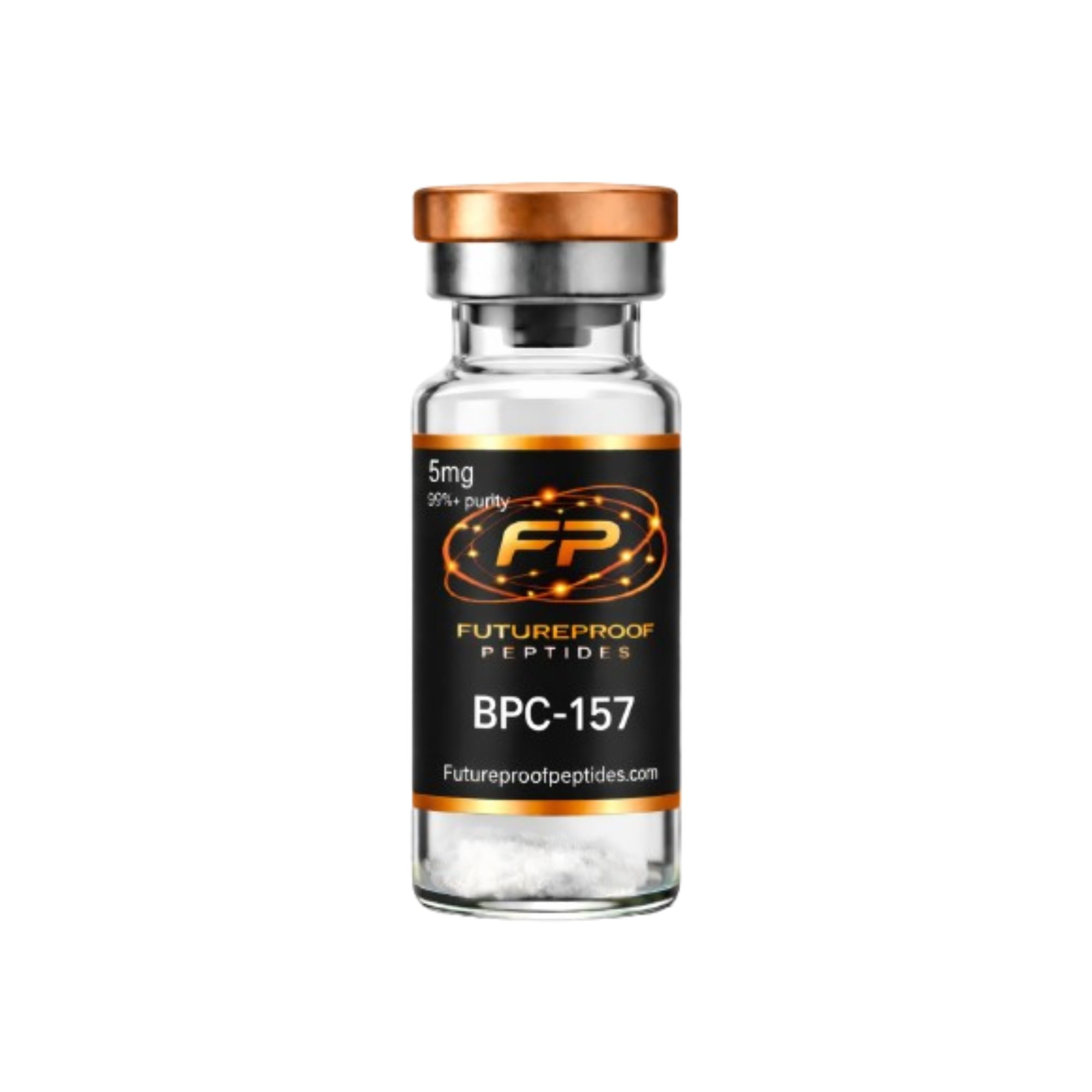
Our BPC-157 5mg is supplied as a lyophilized peptide powder.
Lyophilization is a commonly used process for producing research peptides in a dry format.
The final appearance of a lyophilized peptide can vary depending on manufacturing and processing conditions.
Researchers should follow the product-specific documentation supplied with their material.
Appropriate laboratory handling should minimize unnecessary exposure to environmental factors that could compromise sample integrity.
Researchers should also maintain accurate records of batch information, storage conditions, and experimental procedures.
Peptide Stability Considerations
Peptide stability can be affected by environmental conditions.
Factors such as temperature, moisture, light exposure, and repeated temperature cycling may influence the integrity of research materials.
For this reason, researchers should follow validated laboratory procedures and the specific storage recommendations associated with the product.
Repeated freeze-thaw cycles should be avoided where possible.
Exact storage requirements should be determined from the applicable product documentation rather than relying on generalized recommendations.
Quality Control for BPC-157 5mg
Quality control is an important part of responsible peptide research.
Researchers should consider the available product documentation before beginning an experiment.
Depending on the product and laboratory, quality assessment may include analytical methods such as high-performance liquid chromatography or mass spectrometry.
Useful quality information may include:
- Product name
- Peptide identity
- Batch number
- Quantity
- Purity specification
- Analytical testing
- Manufacturing information
- Storage requirements
Proper documentation helps researchers maintain consistency between experimental projects.
Research-Grade BPC-157 5mg
A research-grade peptide should be treated as an experimental laboratory material.
It is not a nutritional supplement.
It is not a pharmaceutical product.
It is not intended for diagnosis or treatment.
The BPC-157 5mg format is intended for qualified researchers who require a measured quantity of synthetic peptide for controlled laboratory investigation.
Researchers should determine whether the product meets the requirements of their particular project before use.
BPC-157 5mg for Laboratory Studies
The 5mg format provides a defined quantity of BPC-157 for research applications.
This can be useful when a laboratory requires a measured amount of peptide for analytical or experimental work.
Potential research areas include cellular biology, tissue response, vascular signalling, wound models, connective-tissue research, and peptide mechanism studies.
The quantity required for any particular project depends entirely on the experimental design.
No human dosing or administration protocol is provided because this material is intended exclusively for laboratory research.
Responsible Research Practices
Research involving experimental peptides should follow appropriate scientific procedures.
Researchers should establish suitable controls and clearly define experimental endpoints.
Accurate documentation is also important.
Records may include product identification, batch information, experimental conditions, analytical results, and observations.
Appropriate controls can help researchers distinguish genuine experimental effects from background variation.
Where biological models are involved, researchers should also follow applicable institutional and ethical requirements.
Frequently Asked Questions About BPC-157 5mg
What is BPC-157 5mg?
BPC-157 5mg is a research-oriented format containing 5mg of synthetic BPC-157 peptide for laboratory investigation.
What is BPC-157?
BPC-157 is a synthetic 15-amino-acid peptide that has been investigated primarily in preclinical research involving tissue biology, cellular signalling, vascular responses, and related biological processes.
What is BPC-157 researched for?
Research has examined BPC-157 in areas including tissue response, wound models, vascular biology, angiogenesis, connective-tissue research, gastrointestinal models, and cellular signalling.
Is BPC-157 naturally occurring?
BPC-157 is a synthetic peptide. Its research history is associated with a sequence originally identified in gastric proteins.
Is BPC-157 approved for human use?
BPC-157 should not be represented as an approved medicine. Human clinical evidence remains limited.
Is BPC-157 5mg intended for human use?
No. BPC-157 5mg is supplied for laboratory research only and is not intended for human or veterinary use.
What form is BPC-157 supplied in?
BPC-157 is commonly supplied as a lyophilized peptide powder for research purposes.
What research areas involve BPC-157?
Research areas include tissue biology, wound models, vascular signalling, angiogenesis, connective tissue, gastrointestinal research, cellular signalling, and experimental muscle models.
Does BPC-157 have established long-term human safety data?
No. Long-term human safety has not been adequately established.
Why is BPC-157 studied in laboratories?
Researchers are interested in its potential interactions with several biological pathways involving cellular signalling, vascular activity, tissue response, and structural biology.
Can animal research be considered proof of human effectiveness?
No. Animal and laboratory findings cannot automatically be translated into human clinical outcomes.
How should BPC-157 5mg be handled?
Researchers should follow the product-specific documentation and appropriate laboratory procedures for storage and handling.
Does BPC-157 5mg include administration instructions?
No. This product is supplied strictly for research purposes, and no human administration protocol is provided.
BPC-157 5mg Research Summary
BPC-157 5mg is a synthetic research peptide supplied in a measured 5mg format for laboratory investigation.
Its scientific background includes extensive preclinical research into tissue biology, wound models, cellular signalling, vascular activity, angiogenesis, connective-tissue response, gastrointestinal biology, and other biological pathways.
Researchers have investigated the compound in numerous experimental models.
These studies have contributed to scientific interest in how synthetic peptides may interact with cellular and tissue processes.
At the same time, important limitations remain.
Much of the available evidence is preclinical, while robust human clinical evidence remains limited.
Long-term human safety and clinical effectiveness have not been adequately established.
For these reasons, BPC-157 5mg should be considered a laboratory research material rather than a medical product.
Futureproof supplies this product for scientific research only.
Research Use Only. Not for Human or Veterinary Use. Not a Medicine.
Product Specifications
Product Name: BPC-157 5mg
Product Type: Synthetic Research Peptide
Quantity: 5mg per vial
Form: Lyophilized Peptide Powder
Research Category: Peptide Research
Intended Application: Laboratory and Scientific Research
Human Use: Not intended for human use
Veterinary Use: Not intended for veterinary use
Quality Information: Refer to applicable batch documentation
Storage: Follow product-specific storage instructions and validated laboratory procedures
Important Disclaimer
BPC-157 5mg is supplied strictly for laboratory research and scientific investigation.
This product is not intended to diagnose, treat, cure, prevent, or mitigate any disease or medical condition.
Information concerning BPC-157 describes areas of scientific research and should not be interpreted as medical advice.
The existence of preclinical research does not establish clinical effectiveness or safety in humans.
Researchers are responsible for ensuring that their use of experimental materials complies with applicable laws, institutional requirements, laboratory standards, and research protocols.
For laboratory research only. Not for human or veterinary use.