CJC-1295 No DAC 10mg: Advanced Research Peptide for GH Studies
CJC-1295 No DAC 10mg Research Peptide
CJC-1295 No DAC 10mg is a synthetic peptide analogue of growth hormone-releasing hormone (GHRH) that is widely investigated in laboratory research involving growth hormone signalling, endocrine pathways, receptor activity, and the regulation of GH secretion.
Also commonly associated with Mod GRF 1-29, the non-DAC form is structurally distinct from long-acting CJC-1295 formulations that contain the Drug Affinity Complex modification.
This difference is important when researchers are investigating the timing and dynamics of GHRH receptor signalling.
CJC-1295 No DAC is designed around the biologically active region of GHRH and is studied for its interaction with the GHRH receptor.
Research involving CJC-1295 No DAC 10mg can therefore provide a useful model for investigating how GHRH-related signalling influences growth hormone release.
The peptide is also frequently discussed alongside other research compounds that interact with different components of the GH regulatory system.
For example, researchers may investigate GHRH receptor signalling separately from ghrelin receptor signalling to better understand how multiple pathways contribute to growth hormone regulation.
The CJC-1295 No DAC 10mg format provides a defined quantity of research peptide for controlled laboratory investigations.
Research Use Only. Not for Human or Veterinary Use.
What Is CJC-1295 No DAC?
CJC-1295 No DAC is a synthetic peptide analogue related to growth hormone-releasing hormone.
GHRH is a naturally occurring signalling hormone involved in the regulation of growth hormone secretion from the pituitary gland.
Researchers use synthetic GHRH analogues to investigate how this signalling system operates.
The “No DAC” designation distinguishes this form from CJC-1295 molecules modified with the Drug Affinity Complex.
The DAC modification was developed to alter the pharmacokinetic behaviour of the peptide.
Without that modification, the research compound is studied as a shorter-acting GHRH analogue.
This makes CJC-1295 No DAC 10mg particularly interesting for experimental models where researchers want to examine GHRH receptor signalling over a more controlled time period.
Understanding GHRH
Growth hormone-releasing hormone is an important component of the endocrine system.
It is produced primarily in the hypothalamus and acts on the pituitary gland.
When GHRH interacts with its receptor, intracellular signalling can stimulate the release of growth hormone.
Growth hormone itself has numerous biological effects.
Its activity is associated with growth, metabolism, protein synthesis, and regulation of other endocrine pathways.
Researchers therefore study GHRH signalling to understand how the endocrine system controls GH secretion.
CJC-1295 No DAC 10mg provides a synthetic research model for examining this receptor-mediated signalling process.
How CJC-1295 No DAC Works in Research
CJC-1295 No DAC is studied because it mimics important characteristics of GHRH.
The peptide can interact with the GHRH receptor.
This interaction activates signalling mechanisms associated with growth hormone secretion.
At a simplified level, the pathway can be understood as:
GHRH-related peptide signal → GHRH receptor → intracellular signalling → growth hormone secretion
The process is considerably more complex biologically.
Multiple hormones, feedback systems, receptors, and signalling molecules influence the final GH response.
Researchers therefore use controlled experimental systems to examine individual components of the pathway.
CJC-1295 No DAC 10mg and GHRH Receptor Activity
The GHRH receptor is a membrane receptor expressed primarily on pituitary somatotroph cells.
Activation of the receptor initiates intracellular signalling.
One important signalling pathway involves cyclic AMP and protein kinase A.
These pathways can contribute to the regulation of growth hormone secretion.
Research involving CJC-1295 No DAC 10mg can therefore be used to investigate how activation of the GHRH receptor influences downstream signalling.
This is relevant to endocrinology, molecular biology, pharmacology, and peptide research.
Why the No DAC Structure Matters
The distinction between DAC and No DAC versions is an important part of CJC research.
The Drug Affinity Complex modification changes the pharmacokinetic properties of the molecule.
CJC-1295 with DAC has been designed to remain associated with circulating albumin, which can substantially extend its persistence in biological systems.
The No DAC form does not contain this modification.
As a result, researchers investigating CJC-1295 No DAC 10mg can study a peptide with different duration and exposure characteristics.
This can be particularly useful when experimental design depends on the timing of receptor stimulation.
Shorter-Acting GHRH Research
One of the primary reasons researchers distinguish CJC-1295 No DAC from DAC-containing forms is its shorter-acting research profile.
Shorter exposure can be useful when studying biological responses over defined experimental periods.
Researchers can investigate how GHRH receptor signalling changes following controlled peptide exposure.
They can also compare different experimental conditions.
This type of work may help scientists better understand the relationship between peptide exposure and endocrine signalling.
CJC-1295 No DAC 10mg and Growth Hormone Research
Growth hormone is a peptide hormone produced by the anterior pituitary gland.
It plays a major role in growth and has effects on metabolism and tissue biology.
GH secretion is not constant.
It occurs in pulses influenced by several biological factors.
These include GHRH, somatostatin, sleep, metabolic status, exercise, and other endocrine signals.
Research involving CJC-1295 No DAC 10mg can help scientists investigate how GHRH-related signalling participates in this pulsatile secretion system.
Growth Hormone Secretion Patterns
Growth hormone secretion follows a complex pattern.
Rather than being released continuously, GH is secreted in pulses.
The size and timing of these pulses can change depending on biological conditions.
Researchers studying GH secretion therefore pay close attention to temporal patterns.
A shorter-acting GHRH analogue can be useful in models where researchers are examining the relationship between receptor stimulation and subsequent GH release.
This is one reason the No DAC structure is scientifically relevant.
CJC-1295 No DAC and Endocrine Signalling
Endocrine signalling involves communication between glands, hormones, receptors, and target tissues.
The GH axis is an important endocrine network.
It includes the hypothalamus, pituitary gland, liver, and peripheral tissues.
GHRH and somatostatin act as important regulators of pituitary GH secretion.
Other signals can also influence the system.
Researchers investigating CJC-1295 No DAC 10mg may therefore examine how GHRH receptor activation interacts with the broader endocrine environment.
Relationship Between GHRH and Somatostatin
Growth hormone regulation depends on a balance between stimulatory and inhibitory signals.
GHRH promotes GH secretion.
Somatostatin generally suppresses GH release.
The interaction between these signals contributes to the pulsatile nature of growth hormone secretion.
This balance is an important subject in endocrine research.
CJC-1295 No DAC research can provide a model for investigating the stimulatory side of this regulatory system.
CJC-1295 No DAC and Ghrelin Research
Ghrelin is another important regulator of growth hormone secretion.
It interacts with the growth hormone secretagogue receptor, commonly known as GHS-R.
This receptor system is distinct from the GHRH receptor.
The distinction makes ghrelin-related compounds particularly interesting when studying GH regulation.
Researchers can investigate how GHRH receptor signalling and ghrelin receptor signalling contribute separately or together to growth hormone secretion.
CJC-1295 No DAC and Ipamorelin Research
CJC-1295 No DAC is sometimes investigated alongside Ipamorelin in experimental research.
The two compounds are associated with different receptor systems.
CJC-1295 No DAC is studied in relation to the GHRH receptor.
Ipamorelin is a growth hormone secretagogue investigated in relation to the ghrelin receptor system.
Studying these pathways separately or together can help researchers investigate how different signalling mechanisms influence GH secretion.
This does not mean that the compounds are clinically recommended or that combined use produces a specific human outcome.
The relevance is primarily experimental.
Growth Hormone Secretagogues
A growth hormone secretagogue is a compound that stimulates growth hormone release through a biological signalling pathway.
Secretagogues can act through different mechanisms.
GHRH analogues act through the GHRH receptor.
Other secretagogues may interact with the ghrelin receptor.
Understanding these distinctions is important in peptide and endocrine research.
CJC-1295 No DAC is particularly relevant to studies focused on GHRH receptor-mediated stimulation.
Research Into Growth Hormone Regulation
Growth hormone regulation is a complex biological process.
Several signals can influence GH secretion.
These include:
- GHRH
- Somatostatin
- Ghrelin
- Sleep
- Metabolic status
- Glucose levels
- Nutritional conditions
- Exercise
- Other endocrine signals
Researchers studying CJC-1295 No DAC can isolate or examine specific parts of this regulatory system.
Controlled models can help scientists determine how individual signalling pathways contribute to GH release.
CJC-1295 No DAC 10mg and Metabolic Research
Growth hormone has important relationships with metabolism.
GH signalling can influence lipid metabolism, glucose regulation, protein metabolism, and other physiological processes.
Because of this, researchers may examine GHRH-related compounds in metabolic models.
Potential research areas include:
- Hormonal regulation
- Lipid metabolism
- Glucose-related pathways
- Protein metabolism
- Energy balance
- Endocrine signalling
These are research areas rather than established therapeutic applications of CJC-1295 No DAC.
Research Into Body Composition
Growth hormone signalling has been investigated in relation to changes in body composition.
Researchers may study relationships between GH activity, adipose tissue, lean tissue, and metabolic pathways.
These studies are designed to understand biological mechanisms.
They should not be interpreted as evidence that CJC-1295 No DAC produces a specific change in body composition in humans.
The available evidence and experimental design must always be considered.
CJC-1295 No DAC and Muscle Research
Growth hormone and related endocrine pathways are relevant to research involving skeletal muscle.
Researchers investigate GH signalling in relation to protein metabolism, tissue growth, and cellular processes.
CJC-1295 No DAC may therefore appear in laboratory studies examining the relationship between GHRH receptor activation and downstream biological effects.
These studies can involve cellular systems, animal models, or other controlled experimental environments.
The purpose is to understand the underlying biology.
Research Into Fat Metabolism
Growth hormone signalling is also associated with lipid metabolism.
Experimental research has investigated relationships between GH activity and the mobilization and utilization of fatty acids.
Researchers may therefore investigate GHRH analogues when examining endocrine influences on metabolic pathways.
These experiments can help characterize how hormonal signals affect different aspects of metabolism.
Again, these research observations should not be converted into human weight-loss claims.
CJC-1295 No DAC and Pituitary Research
The pituitary gland plays a central role in endocrine regulation.
Somatotroph cells within the anterior pituitary produce growth hormone.
These cells respond to signals including GHRH.
Because CJC-1295 No DAC interacts with the GHRH receptor, it is relevant to experimental pituitary research.
Scientists can use receptor-based models to examine how GHRH signalling influences cellular activity and hormone secretion.
Molecular Research
Peptide research frequently involves investigating receptor binding and downstream molecular pathways.
CJC-1295 No DAC provides a model for examining the molecular characteristics of GHRH receptor activation.
Researchers may investigate:
- Receptor binding
- Intracellular signalling
- Cyclic AMP pathways
- Protein kinase activity
- Hormone secretion
- Gene expression
- Feedback mechanisms
These areas contribute to the broader understanding of endocrine signalling.
CJC-1295 No DAC 10mg and Pharmacology
Pharmacology examines how compounds interact with biological systems.
For peptides, this can include receptor affinity, activity, duration, distribution, metabolism, and elimination.
The No DAC form is particularly useful for comparative pharmacological research because its properties differ from those of DAC-modified CJC-1295.
Researchers can therefore compare different molecular structures and their effects on receptor signalling and biological duration.
Comparing CJC-1295 No DAC and DAC-Modified CJC-1295
The main distinction is the presence or absence of the Drug Affinity Complex modification.
CJC-1295 No DAC
- GHRH analogue
- No DAC modification
- Studied as a shorter-acting peptide
- Relevant to controlled GHRH receptor research
- Useful for examining temporal signalling
CJC-1295 With DAC
- Contains the Drug Affinity Complex modification
- Designed for extended persistence
- Associated with longer pharmacokinetic behaviour
- Used in different experimental designs
The two forms should not be treated as interchangeable research materials.
Why Researchers May Prefer the No DAC Format
Experimental design determines which peptide format is appropriate.
A researcher interested in longer-term exposure may investigate a DAC-containing analogue.
A researcher interested in shorter-duration receptor signalling may select a No DAC form.
This distinction can make CJC-1295 No DAC 10mg useful for experiments where temporal control is an important consideration.
Areas of Ongoing Research
Research involving CJC-1295 No DAC may include:
- GHRH receptor activity
- Growth hormone secretion
- Pituitary signalling
- Endocrine regulation
- Ghrelin and GH pathways
- Metabolic signalling
- Growth hormone pulse patterns
- Receptor pharmacology
- Peptide structure and activity
- Comparative peptide research
These areas remain subjects of scientific investigation.
Research Into Growth Hormone Deficiency
The GH axis is an established subject of endocrinology research.
Scientists investigate growth hormone deficiency to understand how altered endocrine signalling affects biological systems.
GHRH analogues can be useful experimental tools for studying the mechanisms involved in GH secretion.
However, research use should not be confused with clinical treatment.
CJC-1295 No DAC 10mg is supplied as a laboratory research material and is not intended to treat growth hormone deficiency or any other medical condition.
Research Methodology
Laboratory investigations involving CJC-1295 No DAC should use appropriate scientific controls.
Researchers may compare experimental samples against suitable control conditions.
Measurements can then be used to investigate changes in GH-related signalling.
Depending on the research design, analytical methods may include hormone assays, receptor studies, molecular analysis, or other validated laboratory techniques.
Accurate documentation is important.
Researchers should record product information, batch details, experimental conditions, and analytical results.
Understanding Experimental Results
Results involving endocrine peptides can vary significantly depending on the model.
Species differences can influence receptor activity, metabolism, hormone secretion, and peptide clearance.
Cellular models may also produce results that do not accurately represent whole-organism physiology.
For this reason, researchers should interpret results within the specific context in which they were generated.
A finding in one model should not automatically be generalized to humans.
CJC-1295 No DAC 10mg Research Format
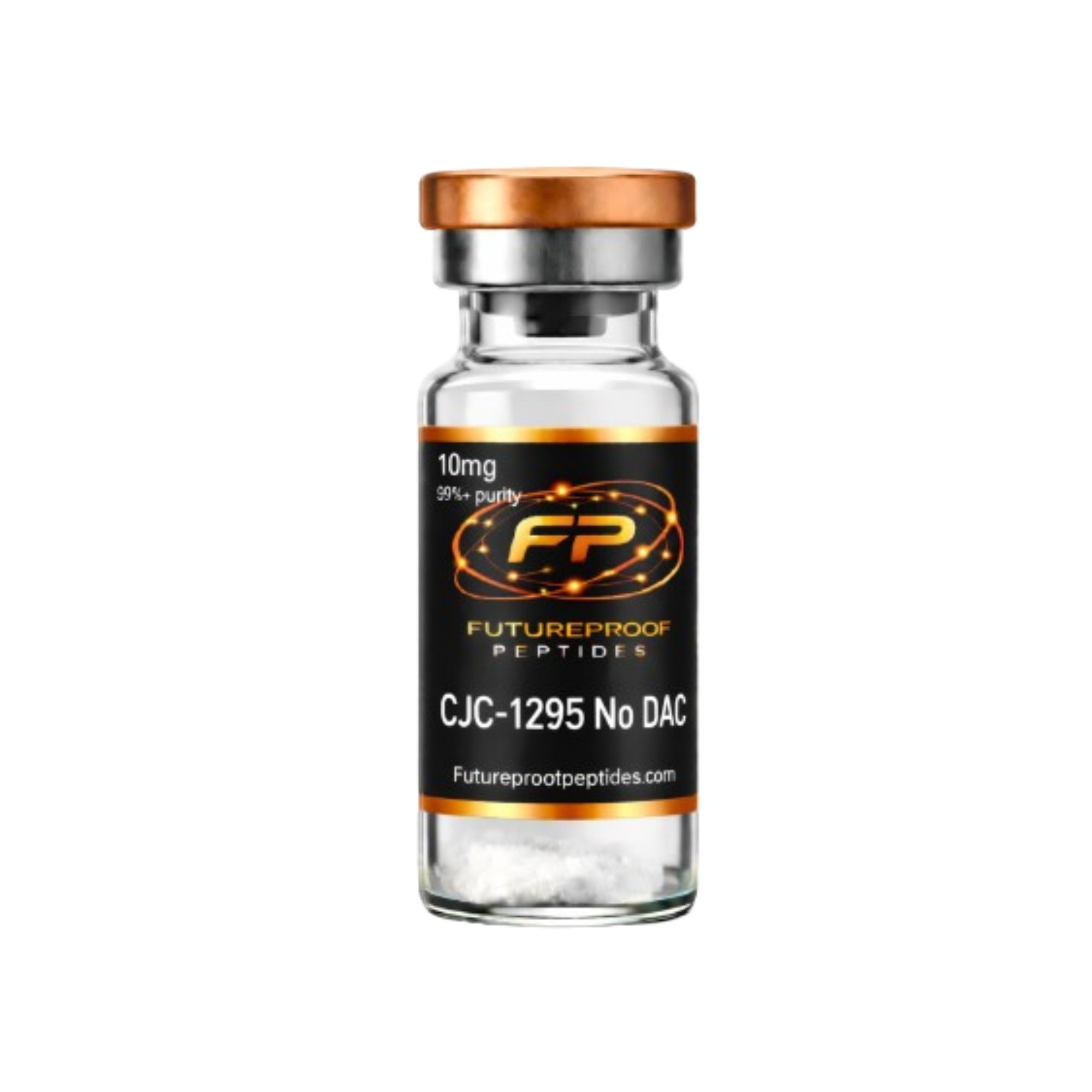
The CJC-1295 No DAC 10mg vial provides a defined quantity of lyophilized research peptide.
A lyophilized format is commonly used for laboratory peptides because removing water can improve the practicality of storage and transport.
The exact appearance of a lyophilized peptide can vary.
Depending on manufacturing conditions, it may appear as a powder or dried cake.
Researchers should always consult product-specific documentation when evaluating appearance, storage, and handling requirements.
Handling and Storage
Research peptides should be handled according to appropriate laboratory procedures.
Environmental conditions can influence peptide integrity.
Factors such as temperature, moisture, light, and repeated temperature changes should be managed appropriately.
Researchers should follow the storage instructions supplied with the specific product.
Repeated freeze-thaw cycles should be avoided where practical because unnecessary temperature cycling may affect peptide integrity.
Specific storage conditions should be determined from product documentation rather than generalized recommendations.
Quality Control
Quality control is an important consideration when working with research peptides.
Researchers should review available analytical documentation before using a research material.
Depending on the product, analytical characterization may involve techniques such as HPLC, mass spectrometry, or other laboratory methods.
Relevant information may include:
- Product identity
- Batch number
- Quantity
- Purity specification
- Analytical results
- Manufacturing information
- Storage requirements
Maintaining accurate documentation can improve reproducibility across experiments.
CJC-1295 No DAC 10mg for Laboratory Research
The CJC-1295 No DAC 10mg format can be considered for research projects investigating GHRH-related biological pathways.
Its research relevance comes from its relationship with the GHRH receptor and growth hormone signalling.
Laboratory researchers may investigate receptor activation, GH secretion patterns, endocrine regulation, or comparative peptide pharmacology.
The 10mg format provides a defined quantity of material for research workflows.
The amount required for any experiment depends entirely on the experimental design and applicable laboratory methodology.
No human dosing protocol is provided because this product is intended exclusively for research.
Safety and Limitations
CJC-1295 No DAC interacts with an endocrine signalling pathway.
This makes careful experimental design particularly important.
The available scientific information does not establish long-term human safety for research formulations of CJC-1295 No DAC.
Responses can also vary according to experimental model, biological system, peptide preparation, and study conditions.
Researchers should therefore avoid assuming that results observed in experimental models will translate directly to humans.
Why Research-Only Status Matters
A research peptide is not automatically a pharmaceutical product.
Scientific investigation can identify interesting biological activity without establishing clinical safety or efficacy.
CJC-1295 No DAC remains relevant primarily as an experimental tool for studying growth hormone and endocrine signalling.
The distinction between research and clinical use is therefore essential.
CJC-1295 No DAC 10mg is supplied for laboratory research only and is not intended for human or veterinary use.
Frequently Asked Questions
What is CJC-1295 No DAC 10mg?
CJC-1295 No DAC 10mg is a synthetic GHRH analogue supplied as a research peptide for laboratory studies involving growth hormone signalling and endocrine pathways.
What does No DAC mean?
“No DAC” means the peptide does not contain the Drug Affinity Complex modification associated with longer-acting CJC-1295 formulations.
What is Mod GRF 1-29?
Mod GRF 1-29 is a commonly used name associated with a modified GHRH fragment that forms the basis of research involving No DAC CJC-1295-type peptides.
What receptor does CJC-1295 No DAC interact with?
CJC-1295 No DAC is studied primarily for its interaction with the growth hormone-releasing hormone receptor.
What does the GHRH receptor do?
The GHRH receptor is involved in signalling within pituitary somatotroph cells and contributes to the regulation of growth hormone secretion.
Is CJC-1295 No DAC the same as CJC-1295 with DAC?
No. The presence of the Drug Affinity Complex modification creates important differences in the pharmacokinetic characteristics of the two forms.
Why is the No DAC form studied?
Researchers may investigate the No DAC form when examining GHRH receptor signalling and growth hormone responses over shorter experimental timeframes.
Is CJC-1295 No DAC a growth hormone product?
No. It is a synthetic peptide analogue that is studied for its ability to interact with the GHRH receptor and influence endogenous GH signalling.
Is CJC-1295 No DAC the same as Ipamorelin?
No. They are different compounds associated with different receptor systems. CJC-1295 No DAC is studied as a GHRH analogue, while Ipamorelin is investigated as a growth hormone secretagogue associated with the ghrelin receptor pathway.
Can CJC-1295 No DAC be researched with Ipamorelin?
Researchers may investigate the two compounds together to examine interactions between GHRH receptor signalling and ghrelin receptor-related pathways. Such research is experimental and does not constitute a human-use recommendation.
Is CJC-1295 No DAC approved for human use?
This product is supplied strictly for laboratory research and should not be represented as an approved human medicine.
What form is CJC-1295 No DAC 10mg supplied in?
The product is supplied as a lyophilized peptide powder in a 10mg research format.
Does this product include human dosing instructions?
No. It is supplied for research use only, and no human dosing or administration protocol is provided.
How should the peptide be stored?
Researchers should follow the specific storage requirements supplied with the product and use appropriate laboratory handling procedures.
Does CJC-1295 No DAC have established long-term human safety data?
Long-term human safety has not been adequately established. Available information should be interpreted within the limitations of the existing research.
CJC-1295 No DAC 10mg CJC-1295 No DAC 10mg CJC-1295 No DAC 10mg CJC-1295 No DAC 10mg CJC-1295 No DAC 10mg CJC-1295 No DAC 10mg CJC-1295 No DAC 10mg CJC-1295 No DAC 10mg CJC-1295 No DAC 10mg CJC-1295 No DAC 10mg CJC-1295 No DAC 10mg
CJC-1295 No DAC 10mg Research Summary
CJC-1295 No DAC 10mg is a synthetic GHRH analogue used as a research material for investigating growth hormone signalling and endocrine regulation.
Its scientific relevance comes primarily from its interaction with the GHRH receptor.
Researchers can use experimental models to examine how GHRH receptor activity influences growth hormone secretion and how this signalling system interacts with other endocrine pathways.
The absence of the Drug Affinity Complex distinguishes the No DAC form from longer-acting CJC-1295 formulations.
This makes the compound particularly relevant to research investigating receptor signalling and temporal patterns of GH activity.
CJC-1295 No DAC is also frequently discussed in relation to ghrelin-pathway research and compounds such as Ipamorelin.
These comparisons can help researchers understand how separate receptor systems contribute to growth hormone regulation.
Research involving this peptide may extend into endocrinology, molecular biology, receptor pharmacology, metabolic research, and peptide science.
However, the research status of the compound remains important.
Laboratory and preclinical findings should not be interpreted as evidence of human therapeutic efficacy or safety.
Futureproof supplies CJC-1295 No DAC 10mg for research purposes only.
Research Use Only. Not for Human or Veterinary Use. Not a Medicine.
Product Specifications
Product Name: CJC-1295 No DAC 10mg
Product Type: Synthetic Research Peptide
Category: GHRH Analogue
Quantity: 10mg per vial
Format: Lyophilized Peptide Powder
Research Focus: Growth Hormone and GHRH Receptor Research
Intended Use: Laboratory Research Only
Human Use: Not intended for human use
Veterinary Use: Not intended for veterinary use
Quality Information: Refer to applicable batch-specific documentation
Storage: Follow product-specific storage instructions and validated laboratory procedures
Important Research Disclaimer
CJC-1295 No DAC 10mg is supplied strictly for laboratory research and scientific investigation.
This product is not intended to diagnose, treat, cure, prevent, or mitigate any disease or medical condition.
Information about CJC-1295 No DAC describes scientific research areas and should not be interpreted as medical advice.
The existence of preclinical or experimental research does not establish clinical effectiveness or safety in humans.
Researchers are responsible for ensuring that their use of experimental materials complies with applicable laws, institutional requirements, laboratory standards, and research protocols.
For laboratory research only. Not for human or veterinary use.