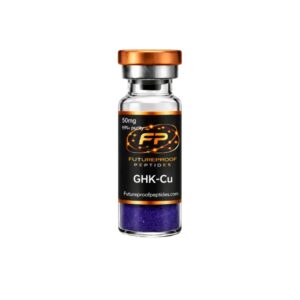
GHRP-2 10mg: Advanced Research Peptide for Growth Hormone Studies
GHRP-2 10mg Overview
GHRP-2 10mg is a synthetic research peptide known as GHRP-2 (Growth Hormone-Releasing Peptide-2). It is studied for its interaction with biological pathways involved in growth hormone (GH) secretion and endocrine signalling.
Rather than providing growth hormone directly, GHRP-2 is investigated for its ability to influence signalling pathways associated with the body’s endogenous GH release. This makes it a useful compound for laboratory research involving hormone secretion, receptor activity, and the relationship between growth hormone and other endocrine pathways.
GHRP-2 is associated with activity at the growth hormone secretagogue receptor (GHS-R). This receptor is involved in signalling processes that can influence growth hormone release from the pituitary gland.
Because of this receptor activity, GHRP-2 research commonly focuses on GH secretion patterns, downstream insulin-like growth factor-1 (IGF-1) signalling, endocrine regulation, and metabolic pathways.
The 10mg format provides researchers with a defined quantity of lyophilised material for controlled laboratory investigation.
What Is GHRP-2?
GHRP-2 belongs to a class of compounds known as growth hormone secretagogues.
Growth hormone secretagogues are researched for their ability to influence endogenous growth hormone secretion through receptor-mediated signalling. GHRP-2 is particularly interesting because its mechanism differs from compounds that primarily act through growth hormone-releasing hormone (GHRH) receptors.
This distinction allows researchers to investigate different components of the regulatory network controlling GH secretion.
The compound is studied in relation to the growth hormone secretagogue receptor, sometimes referred to as the ghrelin receptor. Activation of this receptor can participate in signalling pathways associated with pituitary GH release.
Research involving GHRP-2 therefore provides an opportunity to examine how receptor activation influences hormone secretion without simply adding exogenous growth hormone to a model.
Growth Hormone Secretagogue Receptor Research
The growth hormone secretagogue receptor is an important part of endocrine research.
This receptor belongs to the G-protein-coupled receptor family and has been investigated for its involvement in growth hormone regulation and related physiological signalling.
GHRP-2 is studied because it interacts with this receptor system.
Researchers can therefore use GHRP-2 models to investigate how receptor activation affects downstream signalling and hormone secretion.
This can be particularly valuable when studying the relationship between:
- GHS-R activity
- Pituitary signalling
- Growth hormone release
- GH pulsatility
- IGF-1 pathways
- Metabolic signalling
- Endocrine feedback mechanisms
Understanding these interactions can help researchers investigate the complex regulation of growth hormone within controlled experimental systems.
How GHRP-2 Works
GHRP-2 is researched primarily for its ability to stimulate signalling associated with growth hormone release.
The peptide interacts with the growth hormone secretagogue receptor, initiating signalling events that can influence the activity of GH-producing cells in the pituitary.
This is different from directly supplying growth hormone.
Instead, research models can examine how receptor activation influences the body’s own GH secretion mechanisms.
The resulting research may involve measuring changes in GH concentration, examining secretion patterns, and assessing relationships between GH and downstream signalling molecules.
GHRP-2 and Growth Hormone Secretion
Growth hormone is not normally released at a constant rate.
Instead, GH secretion occurs in pulses that vary depending on biological conditions, endocrine feedback, developmental stage, sleep-related processes, and other factors.
This pulsatile behaviour makes GH secretion an interesting area of research.
GHRP-2 can be used in controlled models to investigate how activation of the growth hormone secretagogue receptor affects these secretion patterns.
Researchers may therefore examine:
- GH release following receptor stimulation
- Differences in GH secretion patterns
- Relationships between receptor activity and hormone output
- Endocrine feedback responses
- Interactions between GH and IGF-1
The objective is not simply to measure whether GH changes. Researchers can also investigate the timing, magnitude, and broader endocrine context of those changes.
GHRP-2 and IGF-1 Research
Growth hormone and insulin-like growth factor-1 are closely connected within the endocrine system.
GH can influence IGF-1 production and signalling, making the relationship between these two pathways an important area of research.
GHRP-2 provides a model for studying this relationship because its primary activity is associated with stimulation of GH secretion.
Researchers can therefore investigate whether changes in GH signalling are accompanied by changes in downstream IGF-1-related pathways.
Research may examine:
- GH concentration
- IGF-1 activity
- Endocrine feedback
- Receptor signalling
- Growth-related cellular pathways
- Metabolic responses
This provides a broader picture of how growth hormone participates in interconnected endocrine systems.
GHRP-2 Compared With GHRH Pathways
One important feature of GHRP-2 research is the distinction between growth hormone secretagogue signalling and GHRH signalling.
GHRH is a hypothalamic hormone that acts primarily through the GHRH receptor on pituitary cells.
GHRP-2, in contrast, is studied for activity involving the growth hormone secretagogue receptor.
These pathways are distinct but can influence the same overall physiological process: growth hormone secretion.
This makes GHRP-2 particularly interesting for experimental models investigating how different signalling pathways interact.
Researchers may investigate the effects of secretagogue receptor activation independently or examine interactions between secretagogue and GHRH-related signalling.
Research Into Endocrine Signalling
Hormone secretion is controlled by interconnected biological systems rather than isolated pathways.
For this reason, GHRP-2 research can extend beyond GH itself.
Studies may examine how receptor activation affects wider endocrine signalling networks.
Areas of investigation can include:
- Pituitary signalling
- Hypothalamic regulation
- GH secretion
- IGF-1 signalling
- Hormonal feedback
- Metabolic regulation
- Receptor-mediated signalling
This broader approach can provide insight into how endocrine systems respond to specific receptor activity.
GHRP-2 and Pituitary Research
The pituitary gland plays an important role in regulating growth hormone secretion.
Specialised cells within the pituitary are responsible for releasing GH in response to regulatory signals.
Because GHRP-2 interacts with the growth hormone secretagogue receptor system, it can be used in experimental models examining pituitary responsiveness.
Researchers may investigate how pituitary cells respond to secretagogue activity and how those responses influence hormone release.
This makes GHRP-2 relevant to laboratory studies involving endocrine physiology and pituitary signalling.
Research Into Body Composition
Growth hormone has broad biological effects, which is why GH-related signalling is frequently investigated in body composition research.
Experimental models may examine relationships between GH activity and:
- Lean tissue
- Adipose tissue
- Protein metabolism
- Lipid metabolism
- Energy balance
- Cellular growth signalling
GHRP-2 can be incorporated into research designs where investigators want to examine how stimulating GH-related pathways influences these systems.
Importantly, laboratory findings should not automatically be interpreted as evidence of predictable effects in humans.
Research outcomes can vary significantly depending on the experimental model, study conditions, peptide concentration, duration, and biological system being investigated.
Metabolic Research
Growth hormone signalling intersects with several metabolic pathways.
Researchers studying GHRP-2 may therefore examine metabolic responses associated with changes in GH activity.
Potential research areas include:
- Glucose regulation
- Insulin signalling
- Lipid metabolism
- Energy metabolism
- Adipose tissue biology
- Endocrine-metabolic interactions
The relationship between GH and metabolic regulation is complex.
For example, changes in GH signalling may interact differently with glucose and lipid pathways depending on experimental conditions.
This makes controlled laboratory models particularly important.
GHRP-2 and Insulin Sensitivity Research
Insulin and growth hormone are both important metabolic regulators.
Their pathways can interact, meaning that changes in GH signalling may be relevant to studies investigating insulin-related processes.
GHRP-2 research can therefore be used to explore relationships between secretagogue receptor activity, GH secretion, and glucose-related pathways.
Research questions may include:
- How does GH signalling interact with insulin pathways?
- How does receptor stimulation affect glucose-related signalling?
- What changes occur in metabolic models following altered GH secretion?
- How do endocrine feedback mechanisms influence these responses?
These questions help researchers better understand the relationship between endocrine and metabolic regulation.
GHRP-2 and Muscle Research
Growth hormone is associated with pathways involved in tissue growth and protein metabolism.
Consequently, GH secretagogue compounds are frequently investigated in models involving muscle biology.
GHRP-2 research may examine relationships between GH signalling and:
- Protein metabolism
- Muscle-related signalling
- Cellular growth pathways
- Tissue composition
- Recovery-related biological processes
Such research is generally performed under controlled experimental conditions.
Results from laboratory or animal models should not be interpreted as proof of a specific outcome in humans.
GHRP-2 and Fat Metabolism Research
Another area of interest is the relationship between GH signalling and lipid metabolism.
Growth hormone can interact with pathways involved in fat mobilisation and energy utilisation.
GHRP-2 therefore provides researchers with a tool for investigating how stimulation of GH-related pathways may influence lipid-associated processes.
Research may include examination of:
- Adipose tissue biology
- Lipid metabolism
- Fatty acid pathways
- Energy balance
- Hormonal regulation
These investigations can help clarify the complex relationship between endocrine signalling and metabolic activity.
GHRP-2 in Cellular Research
Although GHRP-2 is most strongly associated with endocrine research, receptor-mediated signalling can also be studied at the cellular level.
Researchers may examine how cells respond to activation of relevant receptors and how intracellular signalling changes following exposure to experimental compounds.
This can involve analysis of:
- Receptor activity
- Intracellular signalling
- Hormone secretion
- Cellular responses
- Gene-expression changes
- Downstream molecular pathways
These approaches can help connect molecular receptor activity with broader biological outcomes.
GHRP-2 Research and Hormone Balance
Hormonal systems operate through feedback loops.
The release of one hormone can influence other hormones, while downstream signals can feed back into the original regulatory pathway.
GHRP-2 research is therefore relevant to studies examining hormonal relationships rather than focusing exclusively on GH concentration.
Researchers may investigate the relationship between:
GHRP-2 → GHS-R signalling → GH release → IGF-1-related pathways → endocrine feedback
This simplified pathway illustrates why secretagogue research can provide insight into interconnected hormonal systems.
Why Researchers Study GHRP-2
There are several reasons why GHRP-2 remains relevant to laboratory research.
Receptor-specific investigation
GHRP-2 provides a model for studying growth hormone secretagogue receptor activity.
Growth hormone research
It can be incorporated into controlled studies examining GH secretion.
Endocrine pathway research
The compound can help researchers investigate relationships between GH, IGF-1, and related hormonal pathways.
Metabolic research
GH signalling can be examined alongside glucose and lipid metabolism.
Comparative research
GHRP-2 can be compared with other compounds that influence GH secretion through different mechanisms.
GHRP-2 Research Applications
GHRP-2 may be relevant to several categories of laboratory research.
Endocrinology
Researchers can investigate hormone secretion and endocrine feedback mechanisms.
Receptor pharmacology
The compound can be studied in relation to growth hormone secretagogue receptor activity.
Metabolic research
GHRP-2 can be incorporated into experimental models examining relationships between GH signalling and metabolism.
Pituitary research
Researchers can examine signalling associated with GH-producing pituitary cells.
Molecular biology
Cellular and molecular responses to receptor activation can be investigated under controlled conditions.
Comparative peptide research
GHRP-2 can be studied alongside other secretagogues and GH-related research compounds.
GHRP-2 and Growth Hormone Pulsatility
One important feature of growth hormone biology is pulsatile secretion.
GH levels can change considerably over relatively short periods, making timing an important consideration in experimental research.
GHRP-2 provides a way to investigate how secretagogue receptor stimulation affects GH secretion dynamics.
Researchers may compare baseline secretion with experimental conditions and evaluate changes in the frequency or magnitude of hormone release.
This type of research can help distinguish between simple changes in hormone concentration and more complex changes in endocrine signalling patterns.
GHRP-2 and Receptor Signalling
Receptor signalling is central to understanding how GHRP-2 produces biological activity.
When a signalling compound interacts with its receptor, downstream intracellular processes can be activated.
The resulting response may depend on:
- Receptor expression
- Cell type
- Experimental concentration
- Signalling environment
- Biological model
- Duration of exposure
For this reason, research findings can vary across different experimental systems.
GHRP-2 should therefore be viewed as an experimental research compound rather than a substance with a single predictable biological outcome.
GHRP-2 and Experimental Model Design
Research involving GHRP-2 can be designed around different biological questions.
A molecular study might focus on receptor activity.
A cellular study could examine hormone secretion.
An animal model might investigate broader endocrine or metabolic responses.
Each model provides different information.
Researchers should therefore consider the limitations of the experimental system when interpreting results.
Observations from isolated cells cannot automatically be applied to whole organisms, and animal findings cannot automatically be translated into human outcomes.
Purity and Research Quality
For peptide research, material quality is an important consideration.
Researchers require consistent material to reduce uncertainty between experiments.
Important quality-control considerations can include:
- Identity confirmation
- Purity assessment
- Batch consistency
- Appearance
- Quantity
- Appropriate packaging
- Storage stability
Analytical methods such as chromatography and mass spectrometry may be used by laboratories to evaluate peptide identity and purity.
Where applicable, researchers should review available analytical documentation before beginning experimental work.
GHRP-2 10mg Format
This product is supplied as a 10mg vial of lyophilised GHRP-2.
Lyophilisation, also known as freeze-drying, is widely used for peptide research materials because removing water from the preparation can support product stability when stored under appropriate conditions.
The 10mg format provides a defined quantity of research material suitable for laboratory workflows where a measured amount of peptide is required.
The exact appearance of lyophilised material can vary according to manufacturing and processing conditions.
Storage and Handling
GHRP-2 10mg should be stored according to the supplier’s specified storage conditions and handled using appropriate laboratory procedures.
Peptide stability can be affected by environmental conditions such as:
- Temperature
- Moisture
- Light exposure
- Repeated temperature changes
- Container integrity
- Handling conditions
Researchers should minimise unnecessary exposure to environmental stressors.
Repeated freeze-thaw cycling can affect some peptide preparations, so appropriate laboratory storage practices are recommended.
Any prepared research solution should be managed according to the laboratory’s validated procedures and the applicable material documentation.
Research-Use Only
GHRP-2 10mg is intended for research and laboratory use only.
It is not presented as a medicine, dietary supplement, cosmetic product, or approved therapeutic treatment.
This product should not be used for self-administration or for diagnosing, treating, curing, or preventing disease.
Research involving GHRP-2 should be conducted by appropriately qualified personnel using suitable laboratory controls, institutional procedures, and applicable regulations.
Limitations of GHRP-2 Research
Although GHRP-2 has been investigated extensively in the context of growth hormone secretion, research findings have important limitations.
Biological responses can differ according to species, model, receptor expression, experimental conditions, and study design.
Results from laboratory experiments should therefore be interpreted within the context of the specific study.
Research findings should not automatically be treated as evidence of safety, effectiveness, or suitability for human use.
Long-term outcomes and broader biological effects may also require additional investigation.

GHRP-2 10mg GHRP-2 10mg GHRP-2 10mg GHRP-2 10mg GHRP-2 10mg GHRP-2 10mg GHRP-2 10mg GHRP-2 10mg GHRP-2 10mg GHRP-2 10mg GHRP-2 10mg GHRP-2 10mg GHRP-2 10mg GHRP-2 10mg GHRP-2 10mg GHRP-2 10mg GHRP-2 10mg GHRP-2 10mg
Frequently Asked Questions
What is GHRP-2 10mg?
GHRP-2 10mg is a synthetic research peptide supplied as a lyophilised powder. It is studied for its interaction with the growth hormone secretagogue receptor and its influence on growth hormone signalling.
What does GHRP-2 stand for?
GHRP-2 stands for Growth Hormone-Releasing Peptide-2.
Is GHRP-2 a growth hormone?
No. GHRP-2 is not growth hormone itself. It is a research peptide investigated for its ability to influence signalling pathways associated with endogenous GH secretion.
What receptor does GHRP-2 interact with?
GHRP-2 is primarily studied in relation to the growth hormone secretagogue receptor (GHS-R).
Is GHRP-2 related to GHRH?
GHRP-2 and GHRH are associated with different receptor pathways. GHRP-2 is studied primarily through the growth hormone secretagogue receptor, while GHRH acts through the GHRH receptor.
Why is GHRP-2 studied with IGF-1?
GH and IGF-1 are interconnected components of endocrine signalling. Researchers can therefore investigate whether changes in GH secretion are associated with downstream IGF-1-related activity.
Is GHRP-2 used in metabolic research?
Yes. GHRP-2 can be investigated in experimental models involving relationships between growth hormone signalling, glucose regulation, lipid metabolism, and energy balance.
What form is GHRP-2 10mg supplied in?
The product is supplied as a 10mg lyophilised powder in a vial.
Does GHRP-2 require laboratory handling procedures?
Yes. Research materials should be handled using appropriate laboratory procedures, environmental controls, and the manufacturer’s applicable storage information.
Is GHRP-2 approved for human use?
This product is supplied as a research material and should not be represented as an approved human therapeutic product.
Can research results be used to predict human outcomes?
No. Findings from laboratory or animal research cannot automatically be translated into human outcomes. Further research and appropriate clinical evidence would be required to establish human safety or efficacy.
Final Summary
GHRP-2 10mg is a synthetic research peptide investigated primarily for its interaction with the growth hormone secretagogue receptor and its influence on growth hormone secretion.
Its research value comes from its ability to provide a model for studying receptor-mediated endocrine signalling rather than simply supplying growth hormone directly.
Research involving GHRP-2 can explore GH secretion patterns, IGF-1 relationships, pituitary signalling, endocrine feedback, metabolism, body composition, muscle-related pathways, and receptor pharmacology.
The 10mg lyophilised format provides researchers with a defined quantity of experimental material for controlled laboratory studies.
As with all experimental peptide materials, results should be interpreted according to the specific research model and available evidence.
For research use only. Not for human consumption or self-administration.