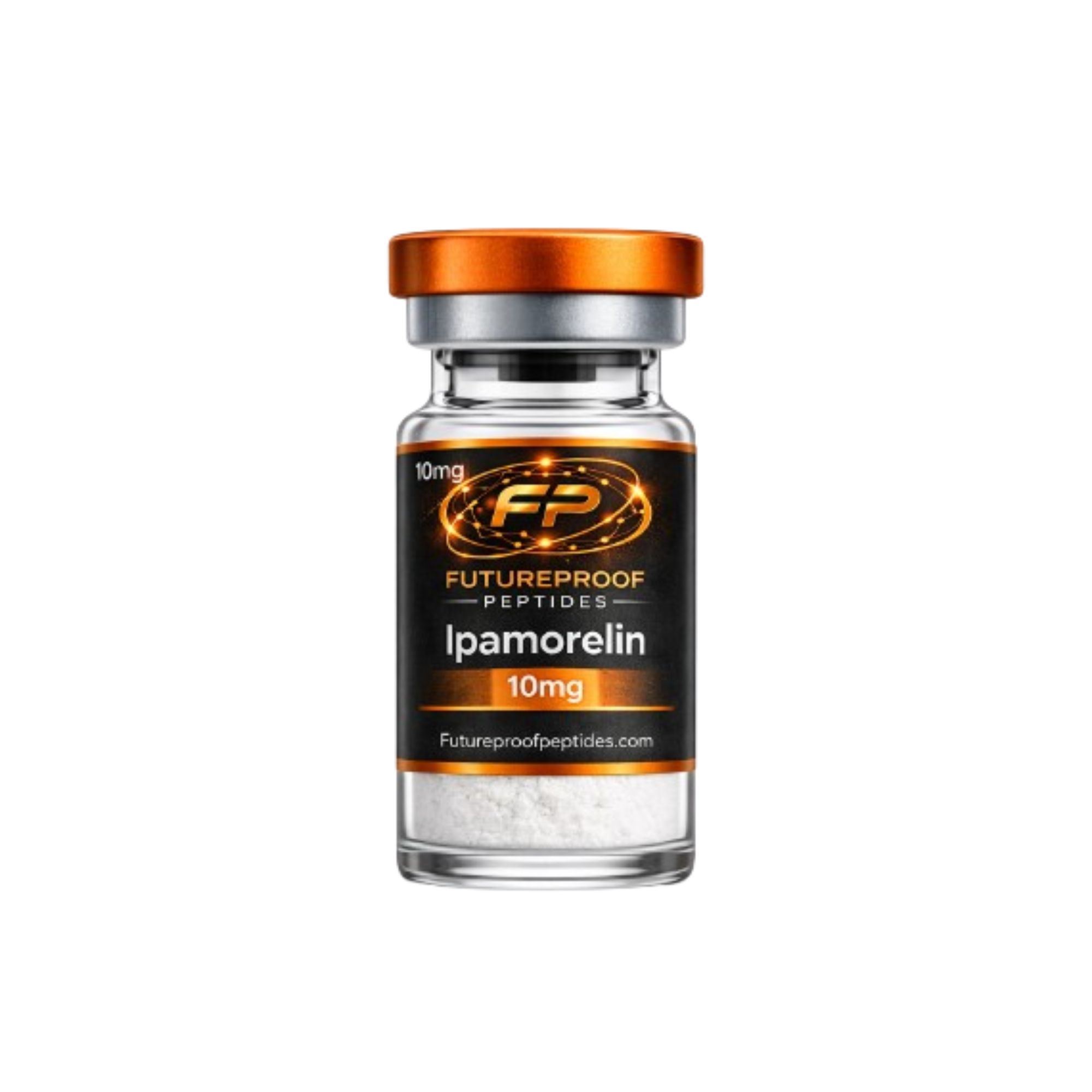
Ipamorelin 10mg Research Peptide
Ipamorelin 10mg is a synthetic research peptide studied extensively in connection with growth hormone signalling and the mechanisms involved in growth hormone release. It is commonly described within scientific literature as a selective growth hormone secretagogue, making it an important research material for investigating pathways associated with endogenous growth hormone secretion.
Unlike research compounds that introduce growth hormone directly, Ipamorelin is studied for its interaction with signalling pathways involved in the body’s own growth hormone release mechanisms. In particular, researchers have investigated its relationship with the ghrelin receptor and the downstream processes associated with growth hormone secretion.
The selective characteristics of Ipamorelin have contributed to its continued interest within peptide research. Scientists have investigated how selective growth hormone secretagogues interact with hormonal signalling systems and how these pathways respond under controlled experimental conditions.
Ipamorelin research has included investigations into growth hormone release, endocrine signalling, body composition models, metabolic processes, and other biological systems associated with growth hormone activity.
The Ipamorelin 10mg format provides researchers with a defined quantity of lyophilised peptide material for controlled laboratory investigation. Its dry powder presentation can support appropriate storage before preparation and allows researchers to work according to their validated experimental protocols.
Ipamorelin 10mg is supplied strictly for laboratory and scientific research purposes.
Not for human use. Not for animal use.
What Is Ipamorelin?
Ipamorelin is a synthetic peptide classified as a growth hormone secretagogue.
Growth hormone secretagogues are compounds investigated for their ability to stimulate signalling pathways involved in growth hormone release.
Ipamorelin has attracted particular research interest because of its interaction with the ghrelin receptor, also known as the growth hormone secretagogue receptor.
The ghrelin receptor is part of a signalling system involved in the regulation of growth hormone secretion. By studying compounds that interact with this receptor, researchers can investigate how growth hormone release is regulated and how endocrine signalling changes under different experimental conditions.
Research involving Ipamorelin can therefore provide an experimental model for studying:
- Growth hormone release
- Ghrelin receptor signalling
- Endocrine regulation
- Hormonal signalling pathways
- Growth hormone secretagogue activity
- Metabolic research
- Body composition models
- Longitudinal hormone studies
The scientific importance of Ipamorelin is primarily related to its pharmacological selectivity and its interaction with growth hormone-related signalling pathways.
How Ipamorelin Is Studied
Ipamorelin is generally studied by examining its interaction with the signalling pathways associated with growth hormone secretion.
In experimental systems, researchers can observe how growth hormone levels respond following exposure to a growth hormone secretagogue.
These investigations can help scientists understand:
- How growth hormone secretion is regulated
- How ghrelin receptor pathways respond
- How hormonal signalling changes over time
- How selective secretagogues differ from other compounds
- How growth hormone-related pathways interact with broader metabolic systems
The exact response observed in an experiment can depend on the model used, experimental conditions, concentration, timing, species, and analytical methods.
For this reason, findings from one research model should not automatically be interpreted as evidence of the same effect in humans.
Ipamorelin and the Ghrelin Receptor
The ghrelin receptor is central to the scientific interest surrounding Ipamorelin.
Ghrelin is a naturally occurring peptide hormone involved in several biological processes, including signalling associated with growth hormone secretion.
The receptor through which ghrelin produces many of its effects is commonly referred to as the growth hormone secretagogue receptor.
Ipamorelin has been investigated because of its ability to interact with this receptor and stimulate signalling associated with growth hormone release.
Researchers studying this pathway may investigate receptor activation, downstream signalling, hormone release patterns, and differences between various growth hormone secretagogues.
Understanding receptor selectivity is particularly valuable because biological signalling systems are interconnected. A compound that interacts with multiple receptors can introduce additional variables into an experiment.
Ipamorelin’s selective characteristics therefore make it useful in experimental models designed to focus more specifically on growth hormone-related signalling.
What Is a Growth Hormone Secretagogue?
A growth hormone secretagogue is a compound investigated for its ability to stimulate growth hormone release.
Growth hormone is naturally produced by the pituitary gland and released in response to complex physiological signals.
Growth hormone secretion is not constant. Instead, it occurs in pulses that can vary according to factors such as age, sleep, metabolic conditions, physical activity, and other biological influences.
Researchers can study secretagogues such as Ipamorelin to better understand the signalling mechanisms involved in these release patterns.
This is different from directly introducing growth hormone into an experimental system.
The distinction is important because research into secretagogues focuses on the mechanisms regulating endogenous growth hormone secretion rather than simply measuring the effects of externally supplied growth hormone.
Ipamorelin and Growth Hormone Research
Growth hormone research is a broad scientific field covering endocrine regulation, metabolism, development, tissue biology, and cellular signalling.
Ipamorelin provides researchers with a tool for investigating one component of this system: stimulation of growth hormone release through secretagogue-related signalling.
Experimental studies may measure growth hormone concentrations at different time points to determine how the hormone responds to a particular research condition.
Researchers can also examine the duration and magnitude of hormone responses under controlled conditions.
Such experiments can contribute to a better understanding of:
- Growth hormone pulse patterns
- Secretagogue activity
- Receptor-mediated signalling
- Hormonal regulation
- Endocrine feedback mechanisms
- Differences between experimental compounds
These studies are valuable for understanding biological mechanisms, but they should not be interpreted as establishing a medical benefit.
Ipamorelin and Hormonal Signalling
Hormonal signalling involves communication between cells, tissues, and organs through chemical messengers.
Growth hormone is one component of this complex signalling network.
Researchers studying Ipamorelin can investigate how stimulation of growth hormone-related pathways influences measurable hormonal responses.
Hormonal research often requires careful timing because many hormones are released in cycles or pulses.
Experimental researchers may therefore examine hormone concentrations at multiple time points rather than relying on a single measurement.
This approach can provide a more detailed picture of how a signalling pathway behaves over time.
Why Ipamorelin Is Considered Selective
Selectivity is one of the characteristics that distinguishes Ipamorelin from some other growth hormone secretagogues.
Research has investigated Ipamorelin’s ability to stimulate growth hormone-related signalling through the ghrelin receptor while producing comparatively limited activity across certain other hormonal pathways associated with some older secretagogues.
This characteristic has made Ipamorelin particularly interesting for researchers attempting to isolate growth hormone-related effects within controlled experimental systems.
However, “selective” does not mean that a compound has no biological activity outside the pathway being investigated.
Experimental responses can depend on concentration, receptor expression, biological model, and other variables.
Researchers should therefore evaluate selectivity within the context of the specific scientific evidence available.
Ipamorelin and Body Composition Research
Growth hormone has been investigated in relation to body composition and metabolic biology.
Because Ipamorelin is studied for its influence on growth hormone secretion, it has also been included in research examining biological systems associated with body composition.
Experimental models may investigate changes in:
- Lean tissue
- Fat-related measurements
- Metabolic markers
- Hormonal signalling
- Energy metabolism
- Growth hormone-related pathways
These studies are designed to examine biological mechanisms and responses.
They should not be interpreted as evidence that Ipamorelin is a weight-loss product, bodybuilding supplement, or established treatment for changing body composition.
Ipamorelin and Metabolic Research
Growth hormone signalling interacts with several aspects of metabolism.
Researchers can investigate these relationships by examining how changes in growth hormone activity correspond with metabolic markers.
Ipamorelin may therefore be included in experimental models involving:
- Glucose metabolism
- Lipid metabolism
- Energy regulation
- Hormonal balance
- Growth hormone signalling
- Metabolic adaptation
The interaction between endocrine signalling and metabolism is complex, meaning that researchers must account for multiple variables when interpreting results.
Ipamorelin and Physical Activity Research
Growth hormone pathways are also relevant to research involving physical activity and physiological stress.
During physical activity, the body undergoes changes in energy demand, hormone secretion, metabolism, and cellular signalling.
Researchers can use controlled experimental models to investigate how growth hormone secretagogue pathways respond under different conditions.
Ipamorelin may therefore be of interest in research examining:
- Hormonal responses to activity
- Growth hormone release patterns
- Metabolic changes
- Energy demand
- Endocrine adaptation
These areas represent scientific research topics rather than established performance applications.
The Ipamorelin 10mg product is not intended to be marketed or used as an athletic performance enhancer.
Ipamorelin and Sleep Research
Growth hormone secretion is closely associated with sleep-related physiological processes, particularly specific stages of sleep.
This has made the relationship between growth hormone signalling and sleep an area of scientific investigation.
Researchers can investigate whether changes in growth hormone secretagogue activity correspond with changes in hormone release during controlled sleep-related studies.
This type of research can contribute to a better understanding of endocrine regulation.
However, scientific investigation into growth hormone and sleep does not establish Ipamorelin as a sleep treatment or sleep-enhancement product.
Ipamorelin and Long-Term Research
Researchers may conduct longer observation periods to investigate how endocrine signalling changes over time.
Longitudinal research can provide information that cannot always be obtained from a single experimental measurement.
Researchers may monitor:
- Hormonal responses
- Receptor signalling
- Metabolic markers
- Changes over repeated observations
- Biological adaptation
- Experimental consistency
Long-term studies require careful experimental design because biological responses can change over time.
The availability of a defined 10mg research format can be useful for projects requiring material across multiple experimental preparations, depending on the laboratory’s validated protocol.
Ipamorelin and Peptide Research
Ipamorelin 10mg is part of a broader class of research peptides used to investigate biological signalling.
Peptides can interact with receptors, enzymes, and other biological structures, making them valuable tools for studying cellular communication.
Research into Ipamorelin provides an example of how a relatively small synthetic peptide can be investigated within a complex endocrine signalling system.
Scientists can compare Ipamorelin 10mg with other research compounds to better understand differences in receptor activity, signalling selectivity, and biological responses.
Comparative research can help identify which characteristics are associated with particular experimental outcomes.
Ipamorelin 10mg Product Format
The Ipamorelin 10mg vial is supplied as a lyophilised peptide powder.
Lyophilisation, or freeze-drying, is a commonly used format for research peptides because it allows the material to be supplied in a dry state.
The 10mg format provides researchers with a defined quantity of peptide for laboratory investigation.
Product documentation should be reviewed before beginning an experiment, particularly where researchers require batch-specific information.
Product Specifications
Product: Ipamorelin 10mg
Quantity: 10mg
Classification: Growth hormone secretagogue research peptide
Form: Lyophilised powder
Primary research area: Growth hormone signalling
Related research areas: Ghrelin receptor signalling, endocrine biology, metabolic research, hormonal regulation
Intended application: Laboratory and scientific research
Human use: Not intended
Animal use: Not intended
Why Choose an Ipamorelin 10mg Format?
The 10mg format provides a defined quantity of research material suitable for laboratory projects requiring controlled preparation.
Different experimental protocols can require different concentrations and quantities depending on the research model.
A defined vial format can help researchers maintain consistency across experimental groups and document the material used in individual studies.
The 10mg specification refers only to the quantity of research material supplied.
It should not be interpreted as a recommended human dose, administration quantity, or therapeutic amount.
Laboratory Preparation
Ipamorelin 10mg is supplied in lyophilised form and may require preparation before incorporation into a laboratory experiment.
Preparation should be conducted by appropriately trained laboratory personnel according to validated institutional procedures and the specific requirements of the research protocol.
The appropriate preparation method and experimental concentration depend on the intended research model.
This product page does not provide instructions for human administration, injection, dosing, or personal use.
Storage and Handling
Appropriate storage and handling are important considerations when working with peptide research materials.
Researchers should follow the storage conditions specified for their particular batch and formulation.
General laboratory considerations include:
- Protecting the lyophilised material from excessive heat
- Protecting the material from direct light
- Maintaining appropriate temperature conditions
- Minimising unnecessary exposure to environmental conditions
- Avoiding repeated freeze-thaw cycles where applicable
- Following validated laboratory procedures
Once prepared for experimental use, research solutions should be handled according to the laboratory’s established procedures.
Research Quality and Consistency
Consistency is essential for reliable experimental research.
Variations in peptide identity, preparation, storage, or experimental conditions can introduce variables that affect results.
Researchers should therefore maintain appropriate records relating to their Ipamorelin research material.
Useful documentation may include:
- Product name
- Batch identification
- Quantity
- Storage conditions
- Preparation records
- Experimental concentrations
- Research conditions
- Analytical documentation where available
Accurate documentation can help researchers compare experiments and improve reproducibility.
Understanding the Limitations of Ipamorelin Research
Ipamorelin has been investigated in a variety of experimental contexts, but research findings should be interpreted carefully.
The presence of biological activity in an experimental model does not establish that a compound is safe or effective for human use.
Results may vary according to:
- Experimental model
- Species
- Age
- Biological conditions
- Receptor expression
- Experimental concentration
- Observation period
- Analytical methodology
Research findings should therefore remain connected to the conditions under which they were obtained.
Ipamorelin Research and Clinical Evidence
It is important to distinguish between research into growth hormone secretagogue mechanisms and established clinical applications.
Laboratory research can demonstrate receptor activity, hormonal responses, and biological mechanisms.
Clinical research, however, requires controlled studies in humans designed to establish safety, efficacy, appropriate use, and potential risks.
These are separate levels of evidence.
Ipamorelin 10mg should therefore be discussed as an experimental research peptide rather than as an approved medicine or established treatment.
Frequently Asked Questions
What is Ipamorelin 10mg?
Ipamorelin 10mg is a synthetic growth hormone secretagogue research peptide supplied as a lyophilised powder for laboratory and scientific research.
What does Ipamorelin do in research?
Researchers investigate Ipamorelin primarily in relation to growth hormone signalling and the mechanisms involved in stimulating growth hormone release.
What receptor is associated with Ipamorelin?
Ipamorelin 10mg has been studied in relation to the ghrelin receptor, also known as the growth hormone secretagogue receptor.
Is Ipamorelin a growth hormone?
No. Ipamorelin 10mg is a synthetic peptide studied as a growth hormone secretagogue. It is not growth hormone itself.
How is Ipamorelin different from growth hormone?
Growth hormone is a naturally produced hormone, whereas Ipamorelin is a peptide secretagogue investigated for its ability to stimulate signalling associated with endogenous growth hormone release.
Why is Ipamorelin described as selective?
Ipamorelin has been investigated for relatively selective activity at the growth hormone secretagogue receptor compared with some other compounds in the same research category.
Is Ipamorelin studied for body composition?
Yes. Growth hormone signalling has been investigated in relation to body composition and metabolic biology, and Ipamorelin has been studied within experimental models involving these pathways.
Is Ipamorelin studied in metabolic research?
Yes. Researchers have investigated growth hormone secretagogue pathways in relation to metabolism, including glucose and lipid-related biological processes.
Is Ipamorelin studied in physical activity research?
Yes. Researchers have investigated growth hormone signalling and secretagogue pathways in experimental models involving physical activity and changing energy demands.
Is Ipamorelin studied in sleep research?
Growth hormone secretion is associated with sleep-related physiology, and researchers have investigated secretagogue pathways in relation to hormone release and sleep biology.
Does Ipamorelin improve sleep?
This product should not be presented as a sleep treatment. Research into growth hormone signalling and sleep does not establish a therapeutic benefit from
Does Ipamorelin increase growth hormone?
Ipamorelin has been studied specifically for its ability to stimulate growth hormone secretion through growth hormone secretagogue signalling. Experimental responses can vary according to the research model and conditions.
Is Ipamorelin a bodybuilding product?
No. Ipamorelin 10mg is supplied as a laboratory research material and is not intended as a bodybuilding supplement or performance product.
What does the 10mg specification mean?
The 10mg specification refers to the stated quantity of Ipamorelin research material contained in the vial. It is not a recommended human administration amount.
What form is Ipamorelin 10mg supplied in?
Ipamorelin 10mg is supplied as a lyophilised peptide powder.
Does Ipamorelin require preparation?
Lyophilised research material may require preparation according to a laboratory’s validated research protocol. Preparation should be conducted by appropriately trained personnel in a suitable research environment.
How should Ipamorelin be stored?
Researchers should follow the storage conditions provided for their specific product and batch. General considerations include protecting the material from excessive heat and direct light and avoiding unnecessary repeated freeze-thaw cycles.
Is Ipamorelin intended for human use?
No. Ipamorelin 10mg is strictly supplied for laboratory and scientific research and is not intended for human use.
Is Ipamorelin intended for animals?
No. This product is not intended for veterinary or animal use.
Ipamorelin 10mg Ipamorelin 10mg Ipamorelin 10mg Ipamorelin 10mg Ipamorelin 10mg Ipamorelin 10mg Ipamorelin 10mg Ipamorelin 10mg Ipamorelin 10mg Ipamorelin 10mg Ipamorelin 10mg Ipamorelin 10mg Ipamorelin 10mg Ipamorelin 10mg Ipamorelin 10mg
Important Research-Use Disclaimer
Ipamorelin 10mg is supplied strictly for laboratory and scientific research purposes only.
This product is not intended for human consumption, human administration, veterinary use, diagnosis, treatment, prevention, or cure of any disease or medical condition.
The information provided on this page is intended for scientific and educational purposes. Descriptions of growth hormone signalling, ghrelin receptor activity, metabolic research, body composition research, sleep biology, physical activity research, or other biological processes should not be interpreted as claims that Ipamorelin provides a particular medical, therapeutic, bodybuilding, anti-ageing, sleep-related, weight-management, or performance-enhancing benefit.
Researchers are responsible for ensuring that their use of research materials complies with applicable laws, regulations, institutional requirements, laboratory safety procedures, and ethical standards.
For research use only. Not for human or animal use.