

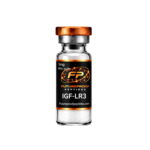
IGF-LR3 1mg
Our IGF-LR3 1mg is a modified research peptide based on insulin-like growth factor-1, commonly known as IGF-1.
IGF-LR3 is studied because structural modifications to the native IGF-1 molecule alter its interaction with binding proteins and contribute to a substantially longer duration of activity in experimental systems.
This makes IGF-LR3 1mg particularly relevant to laboratory research where researchers want to investigate IGF-related signalling over extended experimental periods.
IGF-1 is naturally involved in several biological processes, including cellular growth, differentiation, metabolism, and tissue development.
The modified structure of IGF-LR3 provides researchers with an experimental model for examining these pathways under different controlled conditions.
The IGF-LR3 1mg format is supplied as a lyophilised research material intended for laboratory investigation.
It is not intended for human consumption, self-administration, veterinary use, diagnosis, treatment, or prevention of disease.
What Is IGF-LR3?
IGF-LR3 is a modified analogue of human insulin-like growth factor-1.
The name LR3 refers to structural modifications made to the IGF-1 molecule.
These modifications include an additional N-terminal sequence and a substitution within the IGF-1 structure.
These changes are important because they influence the interaction between the molecule and IGF-binding proteins.
Native IGF-1 is strongly regulated by a group of proteins known as insulin-like growth factor binding proteins, or IGFBPs.
IGF-LR3 was developed as a research analogue with reduced binding to IGFBPs compared with native IGF-1.
This characteristic makes IGF-LR3 1mg useful for experiments investigating IGF receptor signalling under conditions where binding-protein interactions are reduced.
IGF-LR3 And IGF-1
To understand IGF-LR3 research, it is useful to understand native IGF-1.
Insulin-like growth factor-1 is an important peptide hormone involved in growth and cellular regulation.
It is produced primarily by the liver in response to growth hormone signalling, although many other tissues can also produce IGF-1.
IGF-1 interacts with the IGF-1 receptor, which is located on the surface of many cell types.
When the receptor is activated, intracellular signalling pathways can influence processes such as cell growth, survival, metabolism, and protein synthesis.
IGF-LR3 provides researchers with a modified experimental form of this signalling molecule.
How IGF-LR3 Works
The primary research interest surrounding IGF-LR3 1mg is its interaction with the IGF-1 receptor.
The IGF-1 receptor belongs to the receptor tyrosine kinase family.
When an appropriate ligand interacts with the receptor, the receptor can undergo activation and initiate intracellular signalling.
Several downstream pathways may then become involved.
Important pathways associated with IGF-1 receptor signalling include:
- PI3K/Akt signalling
- MAPK/ERK signalling
- Cellular growth pathways
- Protein synthesis pathways
- Metabolic signalling
- Cell survival pathways
Research involving IGF-LR3 can therefore be used to investigate how these pathways respond to IGF-related stimulation.
The IGF-1 Receptor
The IGF-1 receptor, often abbreviated IGF1R, is a major component of IGF research.
It is expressed by numerous cell types and participates in signalling associated with growth and metabolism.
When IGF-related ligands interact with IGF1R, the receptor can activate a network of intracellular proteins.
Researchers can monitor these pathways to understand how receptor stimulation influences cellular behaviour.
The IGF-LR3 1mg format can therefore be relevant to experiments involving receptor activation and downstream signalling.
IGF-LR3 And PI3K/Akt Signalling
The PI3K/Akt pathway is one of the important signalling networks associated with IGF-1 receptor activation.
Activation of this pathway can influence cellular metabolism, protein synthesis, growth, and survival.
Researchers may examine changes in proteins associated with the pathway to determine how IGF-related signalling affects cellular responses.
This makes PI3K/Akt signalling an important area of IGF-LR3 1mg research.
Laboratory studies may use molecular markers to investigate pathway activation and compare responses under different experimental conditions.
IGF-LR3 And MAPK/ERK Signalling
Another major signalling pathway associated with IGF-1 receptor activity is the MAPK/ERK pathway.
This pathway participates in processes involving cell proliferation, differentiation, and gene regulation.
Research into IGF-LR3 can examine how receptor activation influences MAPK/ERK signalling.
Comparing PI3K/Akt and MAPK/ERK responses can provide a more complete understanding of how IGF-related signals are processed inside cells.
Why IGF-LR3 Is Studied
There are several reasons researchers investigate IGF-LR3.
The molecule provides a modified model of IGF-1 signalling.
Its reduced interaction with IGF-binding proteins can make it useful for specific experimental designs.
Its longer activity profile compared with native IGF-1 can also allow researchers to investigate signalling over extended periods.
Common areas of interest include:
- IGF receptor signalling
- Cellular growth
- Protein synthesis
- Metabolic regulation
- Cell survival
- Cellular differentiation
- Tissue biology
- Growth-related signalling
These areas make IGF-LR3 1mg relevant to a variety of laboratory research projects.
IGF-LR3 And Extended Activity
One of the distinguishing characteristics of IGF-LR3 is its extended activity compared with native IGF-1.
Native IGF-1 is regulated by binding proteins and other biological mechanisms.
IGF-LR3 has been modified to reduce its interaction with several IGFBPs.
This can result in a substantially different activity profile in experimental systems.
Rather than focusing only on short-term receptor activation, researchers can investigate how prolonged IGF-related signalling influences experimental outcomes.
The exact duration of activity can vary according to the experimental model and conditions.
Therefore, reported half-life values should be understood as model-dependent rather than as a universal biological constant.
IGF Binding Proteins
Insulin-like growth factor binding proteins are an important part of IGF biology.
Several IGFBPs circulate in biological systems and regulate the availability, transport, and activity of IGF molecules.
This regulation allows the body to control how much IGF-1 is available to interact with its receptor.
IGF-LR3 is of research interest because its structural modifications reduce its affinity for certain IGFBPs.
This characteristic makes it useful when researchers want to examine IGF receptor signalling with less influence from normal binding-protein interactions.
IGF-LR3 And Cellular Growth
Cellular growth is one of the major areas associated with IGF research.
IGF signalling can influence processes that regulate cell proliferation and growth.
Researchers use experimental systems to examine how IGF receptor activation changes cellular behaviour.
Depending on the model, researchers may monitor:
- Cell proliferation
- Cell size
- Protein synthesis
- Gene expression
- Receptor activation
- Intracellular signalling
The purpose of these experiments is to better understand the biological mechanisms involved in IGF signalling.
IGF-LR3 And Protein Synthesis
IGF-related signalling is also associated with pathways involved in protein synthesis.
The PI3K/Akt pathway can interact with downstream regulators of translation and cellular growth.
Researchers may therefore use IGF-LR3 models to examine changes in protein synthesis under controlled conditions.
These studies can involve measuring protein expression, signalling markers, or changes in cellular metabolism.
The results can provide insight into how growth-related signals influence cellular protein production.
IGF-LR3 And Glucose Metabolism
IGF signalling has connections with metabolic pathways.
The IGF-1 receptor shares structural similarities with the insulin receptor, and there can be interactions between their respective signalling networks.
Because of this relationship, IGF-LR3 research can include investigations into glucose metabolism and cellular nutrient handling.
Researchers may examine glucose uptake, signalling proteins, and metabolic responses.
These experiments help clarify the relationship between growth-related signalling and metabolism.
IGF-LR3 And Cell Survival
IGF signalling can also influence pathways involved in cell survival.
Activation of intracellular signalling networks can affect proteins that regulate survival and programmed cell death.
Researchers investigate these mechanisms to understand how growth-factor signalling influences cellular responses.
This is particularly relevant in cellular biology research where scientists are studying the balance between proliferation, differentiation, and survival.
IGF-LR3 And Cell Differentiation
Cell differentiation describes the process through which cells develop specialized characteristics.
IGF signalling can participate in differentiation processes in certain cell types.
Research models can therefore examine how IGF-related stimulation influences cellular development.
These studies can be performed using specific cell lines or other experimental systems.
The response may vary significantly depending on the cell type and experimental conditions.
IGF-LR3 And Muscle Research
IGF-related pathways have long been studied in connection with muscle biology.
Researchers investigate how IGF signalling interacts with pathways involved in muscle-cell development, protein metabolism, and cellular growth.
The purpose is to understand the underlying biology rather than to establish a particular performance or therapeutic outcome.
Experimental studies may examine markers of muscle-cell activity and protein synthesis.
The IGF-LR3 1mg format can be incorporated into controlled research models examining these pathways.
IGF-LR3 And Tissue Research
IGF signalling is involved in numerous tissues.
Researchers therefore investigate IGF-related pathways in different cellular environments.
Experimental models can explore how IGF receptor activation affects tissue-specific processes.
Research may involve:
- Muscle cells
- Connective tissue models
- Bone-related cells
- Neural cells
- Fibroblasts
- Other receptor-expressing cell types
Each model can provide different information about IGF signalling.
IGF-LR3 And Tissue Repair Research
Growth-factor signalling is relevant to research into tissue maintenance and repair.
IGF-related pathways can participate in cellular proliferation, protein production, and other processes involved in tissue biology.
Researchers may therefore investigate IGF-LR3 in experimental models related to tissue repair.
However, observations from laboratory studies should not be interpreted as proof of therapeutic or regenerative effects in humans.
The purpose of these studies is to investigate cellular mechanisms under controlled conditions.
IGF-LR3 And Metabolic Research
Metabolism is another important area of interest.
IGF-related signalling intersects with pathways involved in glucose handling, nutrient metabolism, and energy regulation.
Researchers can examine how experimental stimulation affects metabolic markers.
Such studies may investigate:
- Glucose uptake
- Cellular energy metabolism
- Insulin-related signalling
- Protein metabolism
- Lipid metabolism
These areas demonstrate the interconnected nature of growth-factor biology.
IGF-LR3 And Growth Hormone
IGF-1 is closely connected to growth hormone.
The two form part of the broader GH–IGF-1 axis.
Growth hormone can stimulate IGF-1 production, particularly in the liver.
IGF-1 then participates in downstream signalling through its receptor.
This creates a biological relationship between pituitary GH secretion and peripheral growth-factor activity.
Researchers can study IGF-LR3 independently to examine IGF receptor signalling without relying entirely on the upstream growth hormone pathway.
IGF-LR3 Research Compared With Native IGF-1
Native IGF-1 and IGF-LR3 share important structural similarities, but they are not identical.
IGF-LR3 contains structural modifications designed to alter its interaction with IGF-binding proteins.
This difference can influence how the molecules behave in experimental environments.
Researchers may compare the two compounds to investigate:
- Receptor activation
- Binding-protein interactions
- Duration of activity
- Cellular signalling
- Metabolic responses
Comparative research can help clarify how structural changes influence biological behaviour.
Why Use IGF-LR3 1mg?
The IGF-LR3 1mg format provides a defined quantity of research material for controlled laboratory investigations.
A defined format can be useful for experiments requiring consistent material across different experimental stages.
Potential research applications include:
- Receptor signalling studies
- Cellular growth models
- Protein synthesis research
- Metabolic research
- Comparative IGF studies
- Cell culture experiments
- Molecular pathway analysis
The appropriate quantity and experimental concentration should always be determined by the validated research protocol.
Lyophilised Format
The IGF-LR3 1mg vial is supplied in lyophilised form.
Lyophilisation is a freeze-drying process commonly used for peptide materials.
Removing water from the product can support stability during appropriate storage and transportation.
The dry format also allows qualified laboratories to prepare research material according to their validated procedures.
Once prepared, stability can depend on several factors.
These may include temperature, solvent conditions, concentration, light exposure, and handling.
Preparation And Handling
The lyophilised IGF-LR3 1mg material requires appropriate laboratory preparation before being used in experiments that require a solution.
Laboratories should follow their own validated preparation procedures and applicable product documentation.
Preparation conditions should be selected according to the intended experimental application.
Important considerations can include:
- Maintaining appropriate temperature conditions
- Using suitable laboratory equipment
- Maintaining consistent preparation methods
- Minimising unnecessary temperature changes
- Avoiding repeated freeze-thaw exposure where appropriate
- Maintaining suitable contamination-control procedures
No human administration or dosing instructions are provided for this research product.
Storage
The IGF-LR3 1mg vial should be stored according to applicable product and batch documentation.
The lyophilised material should be protected from excessive heat, moisture, and unnecessary exposure to light.
Maintaining stable storage conditions can help preserve product integrity.
After preparation, the storage requirements may differ from those of the original lyophilised material.
Prepared material should therefore be handled according to validated laboratory stability procedures.
Quality And Research Consistency
Reliable research requires consistency.
Differences in peptide quality, storage conditions, preparation methods, or experimental design can influence results.
Researchers should maintain appropriate documentation for research materials.
Where available, batch-specific information may include:
- Product identity
- Batch number
- Purity information
- Analytical testing
- Manufacturing information
- Storage requirements
Using consistent research material across experiments can help reduce unnecessary variation.
Limitations Of IGF-LR3 Research
Although IGF-related pathways have been extensively studied, research involving modified analogues such as IGF-LR3 should be interpreted carefully.
Results can vary between experimental models.
A response observed in cultured cells may not occur in the same way in an intact organism.
Likewise, findings from animal research cannot automatically be interpreted as evidence of human safety or effectiveness.
The long-term biological effects of experimental IGF analogues also require careful evaluation.
Safety And Research Considerations
Because IGF-LR3 interacts with growth-factor signalling pathways, researchers should consider the broader biological effects of manipulating these systems.
Growth-factor pathways can influence multiple cellular processes.
This makes appropriate controls particularly important.
Research protocols should monitor relevant experimental endpoints and account for potential changes in cellular behaviour.
Researchers should also distinguish between short-term experimental observations and long-term biological conclusions.
Frequently Asked Questions
What is IGF-LR3 1mg?
IGF-LR3 1mg is a research formulation containing a modified analogue of insulin-like growth factor-1. It is studied primarily for its interaction with IGF-related signalling pathways.
What does IGF-LR3 stand for?
IGF-LR3 refers to a modified form of insulin-like growth factor-1 containing structural changes designed to alter its interaction with IGF-binding proteins.
How is IGF-LR3 different from IGF-1?
IGF-LR3 is structurally modified compared with native IGF-1. One important research characteristic is its reduced interaction with several IGF-binding proteins.
What receptor does IGF-LR3 interact with?
IGF-LR3 is studied primarily in relation to the insulin-like growth factor-1 receptor, or IGF1R.
Why is IGF-LR3 used in research?
Researchers investigate IGF-LR3 to study growth-factor receptor signalling, cellular growth, protein synthesis, metabolism, and related biological pathways.
Is IGF-LR3 a growth hormone?
No. IGF-LR3 is not human growth hormone. It is a modified analogue of insulin-like growth factor-1 and belongs to a different part of the endocrine signalling system.
Is IGF-LR3 related to IGF-1?
Yes. IGF-LR3 is a modified analogue based on IGF-1 and is used to investigate IGF-related biological signalling.
What is the 1mg format?
The IGF-LR3 1mg format contains a defined 1mg quantity of the research material in a lyophilised format.
Is IGF-LR3 intended for human use?
No. This product is supplied strictly for laboratory research and analytical purposes.
How should IGF-LR3 be handled?
IGF-LR3 should be handled according to appropriate laboratory procedures and the applicable product documentation. Researchers should use validated preparation, storage, and handling methods.
Research Use Only
Our IGF-LR3 1mg is intended exclusively for laboratory research and scientific investigation.
It is not intended for human consumption, self-administration, veterinary use, diagnosis, treatment, or disease prevention.
The information provided on this page is educational and describes scientific areas of interest rather than established medical benefits.
Conclusion
IGF-LR3 1mg is a modified insulin-like growth factor research peptide used to investigate IGF-related receptor signalling and cellular pathways.
Its structural differences from native IGF-1 make it particularly interesting for research involving IGF-binding proteins, receptor activity, and extended signalling.
Laboratory studies involving IGF-LR3 1mg can explore cellular growth, protein synthesis, metabolic signalling, cell survival, differentiation, and tissue-related research pathways.
The lyophilised format provides a practical research presentation for controlled laboratory environments where consistent storage and preparation are important.
Because IGF-related signalling is involved in numerous biological processes, researchers should use appropriate controls and carefully interpret experimental findings.
IGF-LR3 1mg is supplied for research use only and is not intended for human or veterinary use.
IGF-LR3 1mg IGF-LR3 1mg IGF-LR3 1mg IGF-LR3 1mg IGF-LR3 1mg IGF-LR3 1mg IGF-LR3 1mg IGF-LR3 1mg IGF-LR3 1mg IGF-LR3 1mg IGF-LR3 1mg IGF-LR3 1mg IGF-LR3 1mg IGF-LR3 1mg IGF-LR3 1mg


