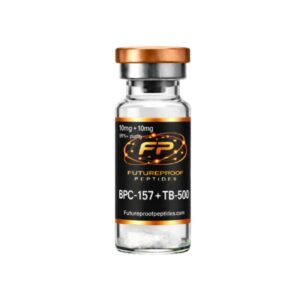
CJC-1295 + Ipamorelin Blend 5mg/5mg: Advanced Research Peptide Combination
CJC-1295 + Ipamorelin Blend 5mg/5mg is a research peptide combination designed for controlled laboratory and in vitro research involving growth hormone signalling, endocrine pathways, peptide interactions, and related biological processes.
The formulation combines two compounds with different but complementary research profiles: CJC-1295, a synthetic growth hormone-releasing hormone analogue, and Ipamorelin, a synthetic growth hormone secretagogue.
Together, these compounds provide researchers with an experimental model for investigating multiple pathways involved in growth hormone regulation.
The balanced 5mg/5mg formulation contains 5mg of CJC-1295 and 5mg of Ipamorelin per vial. This defined composition can be useful for controlled laboratory studies where researchers require a consistent combination of two research compounds.
What Is CJC-1295 + Ipamorelin?
CJC-1295 and Ipamorelin are two synthetic peptides that have been investigated in relation to growth hormone regulation.
Although both compounds are associated with GH research, they interact with different biological signalling systems.
CJC-1295 is a synthetic analogue associated with growth hormone-releasing hormone, commonly abbreviated as GHRH.
Ipamorelin belongs to a different category of compounds known as growth hormone secretagogues.
This difference makes the combination particularly interesting for laboratory research.
Researchers can investigate how signalling through different pathways influences growth hormone-related biological activity.
The purpose of using the combination is not simply to examine one peptide in isolation. It allows researchers to explore interactions between different signalling mechanisms under controlled experimental conditions.
CJC-1295 Research Background
CJC-1295 is a synthetic peptide developed as an analogue of growth hormone-releasing hormone.
GHRH is involved in the regulation of growth hormone secretion by the pituitary gland.
The growth hormone axis is a complex endocrine system involving communication between the hypothalamus, pituitary gland, liver, peripheral tissues, and other biological systems.
Because of this complexity, GHRH analogues have been investigated extensively in endocrine research.
CJC-1295 has attracted scientific interest because of its pharmacological characteristics and its relationship with GH and IGF-1 signalling.
Laboratory and clinical research has investigated how CJC-1295 exposure can influence circulating GH and IGF-1 concentrations.
These observations have made CJC-1295 a useful compound for research involving endocrine signalling.
Ipamorelin Research Background
Ipamorelin is a synthetic peptide belonging to the growth hormone secretagogue class.
It has been investigated for its interaction with the ghrelin receptor, also known as the growth hormone secretagogue receptor.
This receptor is involved in signalling associated with growth hormone release.
Ipamorelin is particularly interesting in research because it has been described as relatively selective for growth hormone secretion compared with some earlier secretagogue compounds.
Researchers have therefore used Ipamorelin in experimental models designed to examine GH-related signalling.
Its research profile provides a useful contrast to compounds that act through GHRH-related pathways.
Why Combine CJC-1295 and Ipamorelin?
The main scientific interest in combining these two compounds comes from their different signalling mechanisms.
CJC-1295 is associated with the GHRH pathway.
Ipamorelin is associated with growth hormone secretagogue receptor signalling.
These pathways are naturally connected within the broader regulation of growth hormone.
Using both compounds in a controlled research model allows investigators to explore how different signalling inputs affect the GH axis.
Researchers can examine whether responses differ when pathways are studied independently compared with when multiple signalling mechanisms are investigated together.
This creates opportunities for research into endocrine signalling and peptide interactions.
Growth Hormone Research
Growth hormone is an important signalling hormone involved in numerous biological processes.
Research into GH includes the study of:
- Endocrine regulation
- Protein metabolism
- Tissue growth
- IGF-1 signalling
- Bone biology
- Muscle-related pathways
- Lipid metabolism
- Cellular signalling
- Energy metabolism
- Growth and development
Because GH interacts with many tissues and signalling systems, researchers often study the hormone as part of a broader biological network.
The CJC-1295 + Ipamorelin Blend 5mg/5mg can be used as an experimental tool for investigating this network.
Understanding the GH Axis
The growth hormone axis involves several stages of biological communication.
The hypothalamus produces signalling molecules that influence pituitary activity.
The pituitary gland then releases growth hormone.
Growth hormone subsequently acts on tissues throughout the body and stimulates production of insulin-like growth factor 1, commonly known as IGF-1.
IGF-1 contributes to several biological processes involving growth and metabolism.
This creates a feedback system rather than a simple one-way pathway.
Research involving CJC-1295 and Ipamorelin can help investigators examine different parts of this signalling network.
CJC-1295 and GHRH Signalling
GHRH is one of the primary hypothalamic regulators of growth hormone secretion.
CJC-1295 is designed to interact with the GHRH-related signalling system.
This makes it relevant to research examining how GHRH receptor activation affects downstream endocrine responses.
Researchers can investigate changes in GH-related signalling under controlled experimental conditions.
These experiments may also examine relationships between GH and IGF-1.
The resulting data can help researchers better understand how synthetic GHRH analogues influence endocrine pathways.
Ipamorelin and Secretagogue Signalling
Ipamorelin provides a different research mechanism.
It is associated with the growth hormone secretagogue receptor.
This receptor belongs to the broader family of G-protein-coupled receptors and plays a role in endocrine signalling.
Activation of this pathway can influence intracellular signalling associated with growth hormone secretion.
Studying Ipamorelin therefore allows researchers to examine a different input into the GH regulatory system.
When combined experimentally with CJC-1295, this creates an opportunity to investigate interactions between GHRH-related and secretagogue-related signalling.
Research Into GH Pulsatility
Growth hormone secretion is naturally pulsatile.
Rather than remaining at a constant concentration, GH levels can rise and fall over time.
The timing and magnitude of these pulses can vary according to biological and environmental factors.
Sleep, age, metabolic status, exercise, nutritional conditions, and other variables can influence GH secretion.
This pulsatile nature is important when interpreting endocrine research.
Researchers investigating CJC-1295 and Ipamorelin may therefore examine hormone concentrations over time rather than relying only on a single measurement.
This can provide more detailed information about endocrine responses.
IGF-1 Research
IGF-1 is one of the major downstream components of growth hormone signalling.
The liver is an important source of circulating IGF-1, although IGF-1 is also produced in other tissues.
GH and IGF-1 are therefore frequently studied together.
Research involving CJC-1295 can include examination of GH and IGF-1 relationships.
The CJC-1295 + Ipamorelin combination can also be studied within this broader endocrine framework.
Researchers may compare changes in GH-related markers under different experimental conditions.
Endocrine Signalling Research
Endocrine signalling involves communication between tissues through hormones and other biological messengers.
Growth hormone provides an important example of this type of communication.
The hormone can influence multiple downstream processes through direct and indirect mechanisms.
Studying synthetic peptides that interact with the GH axis provides researchers with tools for investigating these processes.
The CJC-1295 + Ipamorelin combination can therefore fit into laboratory research focused on endocrine regulation.
Research Into Body Composition
Growth hormone and IGF-1 are associated with biological pathways involved in metabolism and tissue growth.
For this reason, GH-related research sometimes includes body-composition models.
Researchers may investigate:
- Lean tissue biology
- Adipose tissue metabolism
- Protein metabolism
- Lipid-related pathways
- Glucose metabolism
- Energy balance
- Tissue signalling
However, research findings should not automatically be interpreted as evidence that CJC-1295 or Ipamorelin produces predictable body-composition changes in humans.
The experimental model is critical.
Muscle Research
Growth hormone signalling is also relevant to research involving muscle biology.
Researchers can investigate relationships between GH, IGF-1, protein metabolism, muscle cells, and tissue adaptation.
The CJC-1295 + Ipamorelin combination may therefore be relevant to experimental studies involving muscle-related signalling.
These studies can explore molecular pathways without assuming a specific outcome in humans.
Muscle research can involve cell cultures, animal models, biochemical assays, and other experimental systems.
Each model provides different information.
Fat Metabolism Research
GH is involved in several metabolic pathways associated with lipid mobilisation and energy balance.
This has led to scientific interest in the relationship between GH signalling and adipose tissue.
Research may investigate how changes in endocrine signalling affect lipid metabolism.
CJC-1295 and Ipamorelin can be considered within this broader research area because of their relationship with the GH axis.
However, the presence of a biological mechanism does not automatically establish a clinical effect.
Careful experimental design is therefore essential.
Sleep and Growth Hormone Research
Sleep and GH secretion are closely connected areas of endocrine research.
Growth hormone secretion can vary according to sleep patterns and circadian timing.
Deep sleep is particularly relevant to research into pulsatile GH release.
Researchers interested in the GH axis may therefore examine hormone changes alongside sleep-related variables.
This creates an interesting research connection between endocrinology and sleep biology.
The CJC-1295 + Ipamorelin blend may be relevant to laboratory models examining these relationships.
Age-Related Endocrine Research
Growth hormone secretion changes across the lifespan.
GH secretion is generally higher during childhood and adolescence and tends to decline with age.
This natural change has generated considerable research interest.
Scientists study how alterations in the GH/IGF-1 axis relate to ageing, metabolism, body composition, and tissue biology.
CJC-1295 and Ipamorelin can be used as research tools when examining components of this endocrine system.
However, research interest in age-related GH signalling should not be interpreted as proof of anti-ageing effects.
Peptide Interaction Research
One advantage of a combination product is the ability to study interactions between two different peptide signalling systems.
Researchers can compare responses from:
- CJC-1295 alone
- Ipamorelin alone
- The combined experimental condition
- Appropriate controls
Such experimental comparisons can help determine whether observed biological responses are associated with one compound, the other, or their combined presence.
This type of research can be valuable when investigating complex endocrine pathways.
In Vitro Research
The CJC-1295 + Ipamorelin blend can be relevant to laboratory research involving controlled in vitro systems.
In vitro experiments provide researchers with the opportunity to examine biological mechanisms under defined conditions.
Depending on the research question, investigators may examine receptor activity, signalling pathways, cellular responses, peptide stability, or other molecular parameters.
In vitro models can help isolate individual biological mechanisms.
However, results obtained from isolated cells cannot automatically be translated into whole-organism outcomes.
Pharmacology Research
The two compounds also provide an interesting model for pharmacological research.
Researchers may examine properties such as:
- Molecular stability
- Biological activity
- Receptor interactions
- Signal transduction
- Exposure-response relationships
- Pharmacodynamic markers
- Hormonal responses
Such research can help clarify how peptide compounds interact with biological systems.
The exact experimental approach depends on the objectives of the laboratory.
Research Reproducibility
Reproducibility is particularly important when working with peptide compounds.
Researchers need consistent materials and clearly documented experimental conditions.
Differences in peptide purity, storage, preparation, assay methodology, temperature, timing, or analytical techniques can influence results.
A defined 5mg/5mg CJC-1295 + Ipamorelin blend can help researchers maintain consistency between experiments when the combined formulation is appropriate for their study design.
Batch documentation is also important for traceability.
Quality and Purity
Research peptides should be evaluated using appropriate quality-control procedures.
Depending on the laboratory and application, researchers may consider analytical information relating to:
- Peptide identity
- Purity
- Molecular characteristics
- Batch consistency
- Storage stability
- Manufacturing records
High-quality research materials can help reduce unnecessary experimental variables.
This is particularly important when researchers are investigating subtle biological signalling effects.
CJC-1295 + Ipamorelin Blend 5mg/5mg CJC-1295 + Ipamorelin Blend 5mg/5mg CJC-1295 + Ipamorelin Blend 5mg/5mg CJC-1295 + Ipamorelin Blend 5mg/5mg CJC-1295 + Ipamorelin Blend 5mg/5mg CJC-1295 + Ipamorelin Blend 5mg/5mg CJC-1295 + Ipamorelin Blend 5mg/5mg CJC-1295 + Ipamorelin Blend 5mg/5mg CJC-1295 + Ipamorelin Blend 5mg/5mg CJC-1295 + Ipamorelin Blend 5mg/5mg CJC-1295 + Ipamorelin Blend 5mg/5mg CJC-1295 + Ipamorelin Blend 5mg/5mg CJC-1295 + Ipamorelin Blend 5mg/5mg
Product Format
Each vial contains a balanced combination of:
CJC-1295 — 5mg
Ipamorelin — 5mg
The combined formulation provides a total peptide content of 10mg per vial.
The material is supplied in a laboratory-oriented format intended for controlled research applications.
The product should be handled according to appropriate laboratory procedures and the applicable product documentation.
Storage and Handling
Peptide integrity can be affected by environmental conditions.
Researchers should follow the storage specifications supplied with the product and use appropriate laboratory procedures.
General considerations include:
- Keep the container appropriately sealed.
- Protect the material from unnecessary moisture.
- Minimise exposure to unsuitable temperatures.
- Avoid unnecessary temperature fluctuations.
- Limit repeated freeze-thaw exposure where applicable.
- Maintain appropriate batch records.
- Use suitable laboratory safety procedures.
Specific preparation or administration instructions are not provided because this product is intended for research use rather than human or veterinary use.

Research Applications
The CJC-1295 + Ipamorelin combination may be relevant to several laboratory research categories.
Endocrine Research
Studies can examine growth hormone regulation and hormonal signalling.
Receptor Research
Researchers can investigate GHRH-related and secretagogue-related receptor pathways.
Peptide Biology
The combination provides a model for studying interactions between two synthetic peptides.
Metabolic Research
GH-related pathways can be investigated in models involving metabolism and energy regulation.
Muscle Biology
Researchers can explore GH and IGF-1 pathways relevant to muscle-related cellular processes.
Sleep Biology
Studies can examine the relationship between sleep-associated processes and GH secretion.
Ageing Research
The GH/IGF-1 axis can be investigated in models examining age-related endocrine changes.
Benefits of a Defined 5mg/5mg Formulation
A balanced formulation can simplify experimental design when researchers want to investigate both peptides together.
The defined quantity provides a consistent starting material for laboratory studies.
It can also help researchers compare combined experimental conditions against individual peptide controls.
Consistency is particularly valuable in research involving repeated experiments.
Researchers can record the same formulation and batch information across different studies, helping improve experimental traceability.
Limitations of Current Research
Although both CJC-1295 and Ipamorelin have been investigated individually, the evidence base for every possible combination or application remains limited.
Research results can vary depending on the model used.
Findings from animal studies cannot automatically be applied to humans.
Likewise, results from in vitro experiments do not necessarily predict whole-organism responses.
The combined formulation should therefore be regarded as an experimental research tool.
Further research is required to understand the full biological significance of combining these two signalling pathways.
Human Evidence and Clinical Limitations
CJC-1295 and Ipamorelin have attracted interest because of their relationship with growth hormone signalling.
However, research interest does not establish that a specific peptide combination is safe or effective for a particular medical purpose.
The CJC-1295 + Ipamorelin blend should not be represented as an approved treatment for growth hormone deficiency, sleep problems, ageing, obesity, muscle loss, or any other condition.
Clinical decisions should always be based on approved medical therapies and qualified healthcare guidance.
This product is intended for laboratory research only.
Frequently Asked Questions
What is CJC-1295 + Ipamorelin Blend 5mg/5mg?
It is a research peptide combination containing 5mg of CJC-1295 and 5mg of Ipamorelin per vial.
The formulation is designed for controlled laboratory research involving growth hormone and endocrine signalling.
What is CJC-1295?
CJC-1295 is a synthetic peptide analogue associated with the growth hormone-releasing hormone pathway.
It has been investigated in relation to GH and IGF-1 signalling.
What is Ipamorelin?
Ipamorelin is a synthetic growth hormone secretagogue studied for its interaction with the growth hormone secretagogue receptor.
It is commonly investigated in research involving GH-related signalling.
Why are CJC-1295 and Ipamorelin combined?
The two peptides interact with different signalling systems associated with growth hormone regulation.
Combining them provides an experimental model for studying interactions between these pathways.
How much CJC-1295 is in each vial?
Each vial contains 5mg of CJC-1295.
How much Ipamorelin is in each vial?
Each vial contains 5mg of Ipamorelin.
What is the total peptide content?
The vial contains a total of 10mg of peptide, consisting of 5mg CJC-1295 and 5mg Ipamorelin.
Is this product intended for human use?
No.
The product is intended for controlled laboratory research only and is not marketed as a medicine, dietary supplement, or treatment.
Is this blend studied for growth hormone?
Yes.
Both compounds have research profiles associated with growth hormone regulation, although they are associated with different signalling pathways.
Is this the same as using CJC-1295 alone?
No.
The formulation contains both CJC-1295 and Ipamorelin, allowing researchers to study a combined experimental condition.
Can researchers compare the blend with individual peptides?
Experimental designs may include separate control conditions using individual compounds when scientifically appropriate.
Such comparisons can help researchers distinguish individual and combined effects.
Does the blend have established anti-ageing effects?
No established anti-ageing claim should be made.
The GH/IGF-1 axis is studied in ageing research, but research interest does not establish that this combination reverses or prevents ageing.
Is this product approved as a medical treatment?
No.
It is supplied as a research product and should not be used as a substitute for an approved medical therapy.
Product Specifications
Product Name: CJC-1295 + Ipamorelin Blend
Composition: CJC-1295 5mg + Ipamorelin 5mg
Total Peptide Content: 10mg per vial
Product Category: Research Peptide Blend
Format: Laboratory research formulation
Research Areas: Growth hormone signalling, endocrine research, peptide biology, receptor research, IGF-1 research, metabolic biology
Intended Use: Research use only
Important Research Disclaimer
CJC-1295 + Ipamorelin Blend 5mg/5mg is supplied strictly for laboratory research and experimental purposes.
It is not intended for human or veterinary consumption, diagnosis, treatment, prevention, or cure of any disease or medical condition.
Information presented on this product page describes areas of scientific research and should not be interpreted as medical advice or as evidence of established clinical effectiveness.
Researchers are responsible for ensuring that all experimental use complies with applicable laws, institutional policies, laboratory safety requirements, and relevant regulations.
Conclusion
CJC-1295 + Ipamorelin Blend 5mg/5mg provides researchers with a defined combination of two synthetic peptides associated with growth hormone signalling.
CJC-1295 is investigated in relation to the GHRH pathway, while Ipamorelin is associated with growth hormone secretagogue receptor signalling.
The combination therefore offers an interesting model for investigating different inputs into the GH regulatory system.
Research areas can include endocrine signalling, GH and IGF-1 biology, receptor activity, peptide interactions, sleep-related endocrine processes, metabolic pathways, muscle biology, and age-related changes in hormone signalling.
The balanced 5mg/5mg composition can also provide a consistent experimental material for laboratories comparing combined and individual peptide conditions.
However, scientific evidence must always be interpreted within the limitations of the experimental model.
The CJC-1295 + Ipamorelin Blend 5mg/5mg should therefore be regarded as an experimental laboratory research product rather than a therapeutic or consumer health product.