

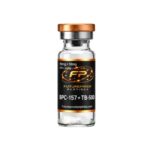
BPC-157 + TB-500 Research Peptide Blend
BPC-157 + TB-500 is a combined research peptide blend supplied exclusively for laboratory and scientific research purposes. The formulation brings together two distinct peptides that have attracted considerable interest within preclinical peptide research: BPC-157 and TB-500.
The two compounds have different molecular structures and research histories. BPC-157 is a synthetic pentadecapeptide consisting of 15 amino acids, while TB-500 is commonly described as a synthetic fragment associated with thymosin beta-4. Researchers have investigated the individual compounds across a variety of laboratory models, including studies examining cellular signalling, tissue-related processes, vascular activity, inflammation-related pathways, and other biological mechanisms.
This product is supplied as a powder formulation and is produced with an emphasis on consistency, purity, and batch-to-batch reliability. Each batch is quality checked to support controlled laboratory research and repeatable experimental work.
BPC-157 + TB-500 is strictly supplied for research use only. It is not intended for human or veterinary use.
Purchasers must be 18 years of age or older.
BPC-157 + TB-500 Research Overview
BPC-157 and TB-500 are frequently discussed together within the broader research-peptide field, but they should not be considered the same compound or assumed to have identical biological properties.
BPC-157 is a synthetic 15-amino-acid peptide that has been investigated primarily in preclinical research. TB-500 is associated with a peptide fragment derived from thymosin beta-4 research and has been investigated in relation to cellular and tissue-related biological processes.
The combination of these two compounds is often of interest to researchers because it provides an opportunity to study two structurally different peptides within the same research programme. However, the scientific literature surrounding each individual compound should be distinguished from evidence specifically investigating the combination.
There is currently limited evidence specifically examining BPC-157 and TB-500 together, meaning researchers should not assume that findings observed with one compound automatically apply to the combined formulation. Existing research should therefore be interpreted according to the individual peptide, experimental model, methodology, and research conditions involved.
What Is BPC-157?
BPC-157 is a synthetic peptide consisting of 15 amino acids. The compound has been investigated extensively in preclinical research, particularly in laboratory and animal models examining biological processes associated with tissue and cellular responses.
The name BPC-157 refers to Body Protection Compound 157, although the term should not be interpreted as an indication of an established therapeutic effect. In a research context, BPC-157 is studied as an experimental peptide whose biological properties continue to be investigated.
Research involving BPC-157 has examined several areas of interest, including cellular signalling, vascular responses, gastrointestinal models, connective-tissue-related processes, and inflammatory pathways.
Much of the available evidence remains preclinical. Consequently, laboratory observations should not be interpreted as proof of effectiveness or safety in humans.
What Is TB-500?
TB-500 is commonly identified in research literature as a synthetic peptide fragment associated with thymosin beta-4 research.
Thymosin beta-4 is a naturally occurring peptide/protein involved in several biological processes, while TB-500 is generally discussed as a synthetic fragment used in experimental research.
Research involving thymosin beta-4 and related peptide fragments has examined cellular migration, actin-related processes, angiogenesis, wound-related models, and other biological pathways.
An important distinction is that research involving the parent thymosin beta-4 molecule should not automatically be treated as direct evidence for TB-500 itself. Molecular structure, formulation, experimental conditions, and biological activity can differ between compounds.
For this reason, researchers should evaluate scientific literature carefully and distinguish studies involving thymosin beta-4 from those specifically involving the TB-500 peptide fragment.
Why BPC-157 and TB-500 Are Studied in Research
The two peptides are frequently discussed together because their individual research histories overlap with several areas of biological investigation.
BPC-157 research has explored cellular and tissue-related responses in experimental models, while thymosin beta-4 and related peptide research has investigated cellular migration, cytoskeletal processes, vascular responses, and wound-related biological models.
These different research areas make the two compounds relevant to researchers investigating complex biological processes.
However, it is important to distinguish research interest from established medical evidence. A biological mechanism observed in a laboratory model does not establish that a compound produces the same result in humans.
Likewise, the fact that two peptides are supplied together does not establish that they produce a synergistic effect.
Research Into BPC-157
Preclinical research into BPC-157 has investigated a broad range of biological models.
Researchers have examined the peptide in experimental models involving:
- Cellular responses
- Gastrointestinal-related models
- Vascular processes
- Connective tissue
- Tendon-related models
- Inflammatory pathways
- Tissue-associated biological responses
- Cellular signalling
- Experimental injury models
These studies contribute to the scientific understanding of how BPC-157 may interact with biological systems under controlled experimental conditions.
However, the quality and relevance of evidence can vary considerably between studies. Results from animal models, cell cultures, and other experimental systems cannot automatically be translated into human outcomes.
For laboratory researchers, this makes experimental design, controls, analytical methodology, and appropriate interpretation particularly important.
Research Into TB-500 and Thymosin Beta-4
TB-500 is associated with research surrounding thymosin beta-4 and its peptide fragments.
Scientific investigation into thymosin beta-4-related biology has included studies examining cellular movement, actin regulation, angiogenesis, wound-related processes, and cellular responses.
These research areas have generated interest in how peptide signalling may influence complex biological processes.
Nevertheless, researchers should carefully distinguish between evidence involving the full thymosin beta-4 molecule and evidence involving synthetic fragments such as TB-500.
The distinction is particularly important when reviewing scientific publications or comparing experimental results.
BPC-157 + TB-500 as a Combined Research Material
The combination of BPC-157 and TB-500 provides researchers with a convenient research formulation containing two distinct peptide components.
The product is intended to support laboratory investigation where researchers require a consistent peptide blend for controlled experimental work.
However, the presence of two compounds in one formulation should not be interpreted as evidence that the compounds necessarily work synergistically.
Combination-specific research remains much more limited than the broader research literature surrounding the individual peptides. Current research resources emphasize that evidence concerning the two compounds separately should not be presented as evidence demonstrating that the combination itself has a particular effect.
This distinction is important for accurate scientific communication and responsible research interpretation.
Product Quality and Consistency
Consistency is an important consideration when working with research peptides.
Variations between batches can introduce unwanted variables into laboratory experiments, potentially affecting repeatability and interpretation.
BPC-157 + TB-500 is supplied with an emphasis on:
- Consistent formulation
- Research-grade production standards
- Batch quality checking
- Purity-focused quality control
- Powder-form presentation
- Experimental consistency
- Transparent product information
Researchers should review the documentation supplied with their specific batch before incorporating any research material into an experimental protocol.
Where analytical documentation is available, researchers can use batch-specific information to support appropriate material identification and experimental record keeping.
Powder Formulation
This BPC-157 + TB-500 product is supplied in powder form.
Powder formulations are commonly used for research peptides because they allow the material to be maintained in a stable laboratory format prior to preparation for a particular experimental application.
Researchers should follow their institution’s laboratory procedures and applicable handling requirements when working with peptide materials.
No preparation, administration, dosing, or injection instructions are provided with this product because it is strictly intended for laboratory research and is not intended for use in humans or animals.
Research Applications
BPC-157 + TB-500 may be of interest to researchers investigating peptide biology and related cellular processes.
Potential areas of scientific investigation include:
Cellular Research
Researchers may investigate how peptide compounds interact with cellular pathways and biological signalling systems under controlled laboratory conditions.
Tissue-Related Research
BPC-157 and thymosin beta-4-related research have been examined in experimental models involving tissue-associated biological responses.
Vascular Research
Both peptide research areas have generated interest in vascular and angiogenesis-related processes, although findings must be evaluated according to the specific compound and experimental model.
Inflammatory Research
Preclinical research has investigated inflammation-related biological pathways involving BPC-157 and thymosin beta-4-related compounds.
Cellular Migration
Research surrounding thymosin beta-4 has examined cellular movement and migration, providing a basis for continued investigation into peptide-mediated cellular behaviour.
Experimental Peptide Biology
The blend may also be relevant to researchers studying peptide structure, biological signalling, experimental interactions, and comparative peptide behaviour.
These areas describe research topics rather than established therapeutic applications.
Understanding the Scientific Evidence
One of the most important considerations when researching experimental peptides is understanding the difference between preclinical evidence and clinical evidence.
Laboratory research can provide valuable information about molecular behaviour, cellular pathways, and biological responses. Animal research can provide additional information about how compounds behave in living biological systems.
However, neither type of evidence automatically establishes that a compound is safe or effective for people.
BPC-157 and TB-500 remain areas of ongoing scientific investigation. Current research sources describe both compounds as investigational rather than approved medicines, and evidence specifically studying their combined use is limited.
Researchers should therefore evaluate published literature carefully and avoid extrapolating beyond what an individual study actually demonstrates.
Research-Only Product Positioning
BPC-157 + TB-500 is supplied strictly as a research material.
It is not:
- A medicine
- A dietary supplement
- A treatment
- A therapeutic product
- A product intended for human consumption
- A veterinary product
- A product intended for self-administration
The product should only be considered within an appropriate laboratory or scientific research environment.
Quality, Purity and Batch Reliability
Reliable research requires consistent materials.
A research peptide should be evaluated according to its identity, purity, formulation, batch information, and available analytical documentation.
For researchers, maintaining accurate records of peptide batches can help improve experimental reproducibility and allow results to be associated with a specific material source.
The BPC-157 + TB-500 blend is produced with a focus on consistent research-grade standards and batch quality checking.
Researchers should retain product documentation and record relevant batch information as part of their laboratory documentation.
Handling and Laboratory Considerations
Research laboratories should establish appropriate procedures for receiving, storing, handling, documenting, and disposing of peptide research materials.
Laboratory personnel should follow applicable institutional safety procedures and relevant regulations.
Because this material is not intended for human or animal administration, this product description does not provide dosing instructions, administration protocols, injection guidance, or recommendations for personal use.
Frequently Asked Questions
What is BPC-157 + TB-500?
BPC-157 + TB-500 is a combined research peptide blend containing two distinct experimental peptides: BPC-157 and TB-500. It is supplied in powder form for laboratory and scientific research purposes only.
Is BPC-157 + TB-500 for human use?
No. This product is strictly for laboratory research and is not intended for human use.
Can BPC-157 + TB-500 be used in animals?
No. This product is not intended for veterinary or animal use. It is supplied exclusively for appropriate laboratory research purposes.
What is BPC-157?
BPC-157 is a synthetic 15-amino-acid peptide that has been investigated in a range of preclinical research models involving cellular, vascular, gastrointestinal, inflammatory, and tissue-related processes.
What is TB-500?
TB-500 is commonly described as a synthetic peptide fragment associated with thymosin beta-4 research. Research surrounding thymosin beta-4 and related peptides has investigated cellular migration, actin-related processes, vascular activity, and other biological pathways.
Are BPC-157 and TB-500 the same peptide?
No. They are structurally distinct peptides with different origins and research histories.
Has the combination of BPC-157 and TB-500 been extensively studied?
No. Research on the individual peptides is considerably broader than research specifically examining the two together. Therefore, individual peptide research should not automatically be interpreted as evidence for the combined formulation.
Does this product come with quality control?
The product is supplied with an emphasis on batch consistency, purity, and quality checking for research applications. Researchers should refer to the documentation associated with their particular batch for specific analytical information.
Is BPC-157 + TB-500 a medicine?
No. This product is supplied as research material and is not presented as a medicine or approved therapeutic product.
Who can purchase this product?
Purchasers must be 18 years of age or older. The material is intended only for legitimate laboratory and scientific research purposes.
Important Research-Use Disclaimer
BPC-157 + TB-500 is supplied strictly for research use only.
This product is not intended for human consumption, human administration, veterinary use, diagnosis, treatment, prevention, or cure of any disease or medical condition.
The information provided about BPC-157 and TB-500 is presented for scientific and educational context and should not be interpreted as medical advice or as evidence of a therapeutic benefit.
Researchers are responsible for ensuring that their work complies with applicable laws, regulations, institutional requirements, laboratory safety procedures, and ethical standards.
For laboratory and scientific research purposes only. Not for human or animal use. Purchasers must be 18+.


