

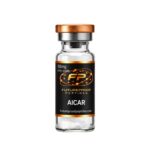
AICAR 50mg – Powerful Advanced Research Compound for AMPK Studies
AICAR 50mg is an experimental research compound widely investigated for its ability to activate AMP-activated protein kinase, commonly known as AMPK. AMPK is an important cellular energy sensor involved in regulating how cells respond when energy availability changes.
The scientific interest surrounding AICAR 50mg comes from its ability to influence AMPK-related signalling pathways in controlled experimental models.
Researchers use AICAR to investigate cellular energy regulation, metabolic signalling, glucose metabolism, fatty-acid oxidation, mitochondrial activity, and responses to changing energy demands.
Our AICAR 50mg is supplied as a research material for laboratory and analytical investigation only.
This product is not intended for human consumption, human administration, veterinary use, diagnosis, treatment, cure, or prevention of any disease.
What Is AICAR 50mg?
AICAR, also known as 5-aminoimidazole-4-carboxamide ribonucleotide, is an experimental adenosine analogue used extensively in cellular and metabolic research.
The compound is particularly well known for its relationship with AMPK activation.
AMPK acts as an energy-sensing system within cells.
When cellular energy levels change, AMPK signalling can help regulate numerous metabolic processes.
Because AICAR can activate this pathway experimentally, it provides researchers with a useful tool for investigating how cells respond to altered energy conditions.
The AICAR 50mg format provides a defined quantity for controlled laboratory applications.
What Is AMPK?
AMPK stands for AMP-activated protein kinase.
It is an important cellular enzyme involved in maintaining energy balance.
Cells constantly monitor their energy availability.
When energy demand increases or cellular energy levels become limited, AMPK can become activated and influence downstream pathways involved in energy production and utilization.
Researchers are particularly interested in AMPK because it connects several important metabolic processes.
These include:
- Cellular energy regulation
- Glucose metabolism
- Fatty-acid oxidation
- Mitochondrial function
- Nutrient utilization
- Metabolic adaptation
- Cellular stress responses
AICAR provides an experimental method for investigating these pathways.
How AICAR Works In Research
The primary research interest surrounding AICAR 50mg is its ability to influence AMPK signalling.
AICAR is converted intracellularly into metabolites that can mimic aspects of AMP signalling.
This can result in activation of AMPK-related pathways under experimental conditions.
Once AMPK signalling is altered, researchers can observe changes in downstream metabolic processes.
This makes AICAR useful when researchers want to investigate how cells respond to an experimentally induced energy-sensing signal.
Rather than simply measuring one biological outcome, scientists can examine multiple pathways simultaneously.
AICAR And Cellular Energy Regulation
Cellular energy regulation is one of the most important areas of AICAR research.
Every cell requires energy to maintain normal biological processes.
Energy is produced and consumed continuously.
When energy requirements increase, cells must adapt their metabolic activity.
AMPK is one of the systems involved in coordinating this response.
By using AICAR in controlled models, researchers can investigate how AMPK activation influences cellular energy management.
Studies may examine changes in metabolic activity, nutrient utilization, mitochondrial processes, and energy-related signalling.
AICAR And Metabolic Research
AICAR has become a widely used experimental tool in metabolic research.
Its ability to activate AMPK makes it particularly useful for investigating how cells adapt to changes in energy availability.
Researchers can examine how AMPK signalling affects metabolic pathways under different experimental conditions.
Areas of interest include:
- Glucose utilization
- Fatty-acid metabolism
- Energy production
- Cellular respiration
- Mitochondrial activity
- Metabolic adaptation
The results of these studies can contribute to a better understanding of cellular energy biology.
AICAR And Glucose Metabolism
Glucose is an important energy source for many cells.
The way cells take up, process, and utilize glucose is influenced by several signalling pathways.
AMPK is one pathway that researchers investigate when studying cellular glucose metabolism.
AICAR 50mg can be used experimentally to activate AMPK and examine changes in glucose-related cellular processes.
Researchers may compare AMPK activity between treated and untreated experimental groups.
These comparisons can help clarify how energy-sensing pathways contribute to metabolic regulation.
AICAR And Fatty-Acid Oxidation
Fatty acids can serve as an important source of cellular energy.
Their oxidation occurs through coordinated metabolic pathways, many of which are influenced by cellular energy status.
AMPK activation is associated with signalling that can promote pathways involved in fatty-acid utilization.
For this reason, AICAR research frequently appears in studies investigating lipid metabolism and fatty-acid oxidation.
Researchers can examine how experimental AMPK activation affects the balance between energy storage and energy utilization.
This provides useful information about cellular metabolic flexibility.
AICAR And Mitochondrial Research
Mitochondria are cellular structures responsible for producing much of the usable energy required by cells.
Because AMPK signalling is closely connected with energy metabolism, researchers have investigated the relationship between AMPK activation and mitochondrial activity.
The use of AICAR 50mg in experimental models allows researchers to study these relationships under controlled conditions.
Research may examine:
- Mitochondrial activity
- Cellular respiration
- Oxidative metabolism
- Energy production
- Metabolic adaptation
These studies can help scientists understand how cells adjust mitochondrial function when energy requirements change.
AICAR And Exercise Research
AICAR has generated considerable scientific interest because AMPK is naturally involved in cellular responses to increased energy demand.
Physical activity can increase energy requirements within skeletal muscle.
This can result in changes to cellular energy signalling, including AMPK-related pathways.
Researchers have therefore used AICAR as an experimental tool to investigate certain aspects of these signalling processes.
This does not mean AICAR is equivalent to exercise.
Instead, the compound provides researchers with a way to investigate specific molecular pathways that may become active during changes in cellular energy demand.
AICAR And Skeletal Muscle Research
Skeletal muscle has high energy requirements, particularly during physical activity.
Researchers studying muscle metabolism are therefore interested in how AMPK coordinates energy production and utilization.
AICAR 50mg can be incorporated into experimental models designed to examine AMPK-related signalling within muscle cells.
Researchers may investigate:
- Energy metabolism
- Glucose utilization
- Fatty-acid oxidation
- Mitochondrial activity
- Cellular adaptation
- Metabolic signalling
These experiments can help researchers better understand the molecular processes involved in muscle energy management.
AICAR And Metabolic Adaptation
Cells must constantly adapt to changes in their environment.
Energy availability can fluctuate according to nutrient supply, cellular activity, and metabolic demand.
AMPK acts as one of the systems that helps coordinate these adaptations.
Experimental activation using AICAR allows scientists to study how cells respond when this energy-sensing pathway is stimulated.
Researchers can then monitor changes over time.
This may provide information about how metabolic pathways respond to altered cellular energy signals.
Why Researchers Use AICAR
One of the main advantages of AICAR as a research compound is its established role as an experimental AMPK activator.
Researchers can use it to investigate AMPK-dependent processes without relying exclusively on naturally occurring changes in cellular energy status.
This can make experimental designs more controlled.
The AICAR 50mg format may therefore be relevant to studies involving:
- AMPK signalling
- Cellular metabolism
- Energy regulation
- Glucose metabolism
- Lipid metabolism
- Mitochondrial biology
- Skeletal muscle research
- Exercise physiology
- Metabolic adaptation
AICAR Research Benefits
When discussing the benefits of AICAR 50mg, it is important to distinguish research applications from medical claims.
The primary benefit from a research perspective is that AICAR provides a well-characterized experimental tool for studying AMPK-related pathways.
Researchers can use the compound to examine:
- How AMPK signalling changes
- How cells respond to altered energy signals
- How glucose metabolism is regulated
- How fatty acids are utilized
- How mitochondrial activity responds
- How metabolic pathways adapt
These applications can help scientists understand cellular energy biology.
They should not be interpreted as established therapeutic benefits in humans.
AICAR And Cellular Signalling
Cellular signalling involves communication networks that allow cells to respond to changes in their environment.
AMPK is part of a wider network of metabolic signalling pathways.
When AMPK is activated, it can influence several downstream targets involved in energy management.
Researchers using AICAR can therefore investigate how these signalling networks respond to experimental activation.
This can include measuring changes in enzyme activity, gene expression, metabolic markers, and cellular energy status.
AICAR And Energy Demand
Energy demand is constantly changing within biological systems.
A cell performing a high-energy process requires different metabolic resources from a cell operating under low-energy conditions.
AMPK helps cells respond to these differences.
AICAR research provides scientists with a method for studying how AMPK activation affects this adaptive process.
This is particularly relevant in research involving muscle cells, metabolic tissues, and cellular models exposed to different energy conditions.
AICAR Research In Laboratory Models
AICAR has been used across various experimental models.
These can include cultured cells, isolated tissues, and preclinical research systems.
The choice of model depends on the scientific question being investigated.
Researchers may use AICAR to investigate metabolic responses at the cellular level before examining more complex biological systems.
This approach allows individual pathways to be studied under controlled conditions.
Results can then be compared across different models to determine whether similar mechanisms are observed.
Quality And Research Consistency
Consistency is important when conducting metabolic research.
Experimental compounds should be clearly identified and documented to support reproducibility.
The AICAR 50mg format provides a defined quantity for laboratory research.
Researchers should maintain appropriate records relating to product identity, batch information, purity, storage, and experimental conditions.
Where applicable, analytical documentation such as a Certificate of Analysis can provide additional information about an individual batch.
Good documentation practices can help researchers compare results between experiments.
Storage And Handling
The AICAR 50mg vial should be stored according to the applicable product documentation and laboratory requirements.
Research material should be protected from excessive heat, moisture, and direct light.
Stable storage conditions can help maintain material integrity.
Laboratory personnel should also minimize unnecessary temperature fluctuations during handling.
Before using the compound in an experimental system, researchers should review the relevant safety information and establish appropriate handling procedures.
Preparation Considerations
AICAR is a small-molecule research compound rather than a peptide.
For this reason, researchers should not automatically apply peptide reconstitution procedures to AICAR.
The appropriate preparation method depends on the compound’s chemical characteristics, experimental design, and validated laboratory protocol.
Researchers should determine suitable solvent compatibility and concentration requirements before preparing experimental solutions.
All preparation should be performed using appropriate laboratory procedures.
Safety And Limitations
AICAR is an experimental research compound.
Its use in scientific studies does not establish it as a safe or effective treatment for humans.
Research findings can vary significantly according to experimental model, concentration, exposure conditions, and study design.
Long-term human safety and therapeutic effectiveness should not be inferred from laboratory or preclinical research.
Researchers should review applicable safety documentation before handling AICAR and follow institutional laboratory procedures.
Frequently Asked Questions
What Is AICAR 50mg?
AICAR 50mg is a defined quantity of the experimental compound AICAR, which is widely studied as an activator of AMPK-related signalling pathways.
What Does AICAR Do In Research?
AICAR is primarily used to investigate AMPK activation and cellular energy regulation.
Researchers use it to examine metabolic pathways involving glucose, fatty acids, mitochondria, and cellular energy balance.
What Is AMPK?
AMPK stands for AMP-activated protein kinase.
It is an important cellular energy-sensing enzyme that helps regulate metabolic processes in response to changes in energy availability.
Is AICAR A Peptide?
No.
AICAR is a small-molecule compound and is chemically different from peptide-based research materials.
Why Is AICAR Studied?
Researchers study AICAR because it provides an experimental method for activating AMPK-related pathways.
This makes it useful for research involving cellular energy metabolism and metabolic adaptation.
Is AICAR Used In Exercise Research?
Yes.
AICAR has been used as an experimental tool in research examining AMPK signalling and cellular responses associated with increased energy demand.
These studies do not mean AICAR is a replacement for physical activity.
Is AICAR A Weight-Loss Product?
No.
The AICAR 50mg product is supplied for laboratory research only.
Research into metabolic pathways should not be interpreted as evidence that AICAR is an established weight-management treatment.
How Should AICAR Be Stored?
The product should be stored according to the applicable product documentation.
Protect it from excessive heat, moisture, direct light, and unsuitable environmental conditions.
Is AICAR Intended For Human Use?
No.
The AICAR 50mg product is intended exclusively for laboratory research and analytical investigation.
It is not intended for human consumption, human administration, veterinary use, diagnosis, treatment, cure, or prevention of disease.
Product Specifications
Product Name: AICAR 50mg
Compound: AICAR
Category: Experimental small molecule
Primary Research Target: AMPK signalling
Format: 50mg vial
Research Areas: Cellular energy metabolism, AMPK activation, glucose metabolism, lipid metabolism, mitochondrial research, metabolic signalling
Intended Purpose: Laboratory and analytical research
Human Use: Not intended for human use
Veterinary Use: Not intended for veterinary use
Research Use Only
Our AICAR 50mg provides researchers with a defined experimental compound for investigating AMPK activation, cellular energy regulation, metabolic signalling, glucose metabolism, lipid utilization, mitochondrial activity, and related biological pathways.
Research findings should always be interpreted according to the specific experimental system, methodology, and available scientific evidence.
The AICAR 50mg product is supplied exclusively for laboratory research, analytical testing, and scientific investigation.
It is not intended for human consumption, human administration, veterinary use, diagnosis, treatment, cure, or prevention of any disease.
All research materials should be handled by appropriately qualified personnel using suitable laboratory procedures and applicable safety practices.


