

Wolverine Stack Pen 20mg – Advanced BPC-157 & TB-500 Research
The Wolverine Stack Pen 20mg is a research-oriented combination containing two extensively investigated peptide compounds: BPC-157 and TB-500.
This combination has attracted attention within experimental peptide research because the two components have been investigated independently across areas including cellular signalling, connective tissue biology, vascular biology, cell migration and tissue-repair mechanisms.
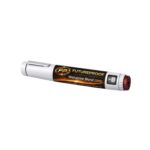
The Wolverine Stack Pen 20mg provides these research compounds in a combined pen-format presentation intended for controlled laboratory investigation and analytical work.
The name “Wolverine Stack” is an informal research-community nickname rather than an established scientific or pharmaceutical classification. It is commonly associated with the combination of BPC-157 and TB-500 because of the extensive experimental interest surrounding both compounds in regenerative and connective-tissue research.
Importantly, the research literature does not establish the Wolverine Stack as a clinically proven regenerative treatment. Current evidence for BPC-157 and TB-500 remains heavily weighted toward preclinical and experimental research, while rigorous human evidence remains limited. Recent reviews have specifically emphasized the gap between promising preclinical findings and established human efficacy or safety data.
What Is the Wolverine Stack Pen 20mg?
The Wolverine Stack Pen 20mg is a combined research formulation containing BPC-157 and TB-500.
Rather than studying the two compounds as completely separate materials, a combined formulation allows researchers to investigate the characteristics of both peptides within a single research product.
BPC-157 and TB-500 have different molecular identities and biological research histories.
BPC-157 is a synthetic pentadecapeptide associated with a sequence derived from a gastric protein fragment. It has been investigated extensively in preclinical models involving tissue biology, vascular signalling, cellular communication and inflammatory pathways.
TB-500, meanwhile, refers to a synthetic peptide fragment associated with Thymosin Beta-4. It should not automatically be treated as chemically identical to full-length Thymosin Beta-4. FDA materials identify TB-500 as the Thymosin Beta-4 fragment LKKTETQ and note that human exposure and safety information remain limited.
This distinction is important when interpreting research involving the Wolverine Stack Pen 20mg.
Understanding BPC-157
BPC-157 is a synthetic 15-amino-acid peptide that has been extensively investigated in preclinical research.
Scientific literature has explored BPC-157 in models involving:
- Connective tissue biology
- Cellular signalling
- Vascular responses
- Gastrointestinal biology
- Inflammatory pathways
- Cell migration
- Tissue-remodelling mechanisms
- Oxidative-stress pathways
- Angiogenesis-related signalling
A 2026 review described BPC-157 as an investigational peptide with substantial preclinical research but significant translational and pharmaceutical-development barriers. The review emphasized that human pharmacokinetic and clinical data remain insufficient to establish a validated therapeutic profile.
For this reason, BPC-157 should be viewed within the context of experimental peptide science rather than as an established clinical therapy.
Understanding TB-500
TB-500 is a synthetic peptide fragment associated with Thymosin Beta-4.
Full-length Thymosin Beta-4 is a naturally occurring 43-amino-acid peptide/protein involved in cellular processes including actin regulation and cell migration. Research has also investigated Thymosin Beta-4 in relation to angiogenesis, tissue remodelling and wound-healing biology.
However, TB-500 and full-length Thymosin Beta-4 should not be treated as interchangeable compounds.
Commercial TB-500 research materials can be described as fragments or derivatives associated with Thymosin Beta-4, and the precise identity of a particular research product should always be verified through its analytical documentation.
This distinction is particularly important when reviewing scientific literature because findings involving full-length Thymosin Beta-4 cannot automatically be attributed to every TB-500 formulation.
Why Combine BPC-157 and TB-500?
The scientific interest in the Wolverine Stack Pen 20mg comes partly from the fact that BPC-157 and TB-500 have overlapping areas of experimental investigation.
Both compounds have been studied in connection with biological processes involving:
- Cellular migration
- Connective tissue biology
- Vascular signalling
- Tissue remodelling
- Cellular communication
- Extracellular matrix processes
- Regenerative biology
This overlap makes the combination interesting from a research perspective.
Researchers can investigate whether different peptide pathways produce distinct, complementary or overlapping biological responses under controlled experimental conditions.
However, the existence of overlapping research areas does not establish that combining the two peptides produces a clinically superior effect.
That question requires dedicated experimental investigation.
Current Scientific Interest in the Wolverine Stack Pen 20mg
The Wolverine Stack Pen 20mg reflects a broader scientific interest in peptides that interact with cellular processes associated with tissue structure and regeneration.
Research involving BPC-157 and Thymosin Beta-4-related compounds has investigated a variety of experimental systems.
Areas of scientific interest include:
- Connective tissue biology
- Tendon research
- Ligament research
- Musculoskeletal models
- Cell migration
- Angiogenesis
- Extracellular matrix biology
- Cellular signalling
- Vascular biology
- Tissue remodelling
- Inflammatory signalling
- Cellular stress
Recent reviews have noted that much of the available evidence surrounding BPC-157, TB-4 and TB-500 comes from preclinical research rather than robust controlled human trials.
Wolverine Stack Pen 20mg and Connective Tissue Research
Connective tissues provide an important research model for investigating cellular migration, extracellular matrix organization and tissue remodelling.
Tendons, ligaments and other connective tissues contain highly organized extracellular structures that respond to mechanical and biochemical signals.
Researchers studying the Wolverine Stack Pen 20mg may therefore be interested in mechanisms involving:
- Fibroblast biology
- Extracellular matrix organization
- Collagen-related pathways
- Cell migration
- Cellular proliferation
- Vascular responses
- Mechanical-stress signalling
- Tissue remodelling
These mechanisms are complex and involve many biological pathways.
Consequently, the presence of BPC-157 or TB-500 in an experimental model does not establish a predictable outcome in every biological system.
Wolverine Stack Pen 20mg and Cell Migration
Cell migration is an important process in tissue biology.
Following cellular stress or tissue disruption, different cell populations can move toward areas requiring biological response.
Thymosin Beta-4 research has particularly investigated mechanisms involving actin organization and cellular movement. Full-length Thymosin Beta-4 is recognized as an actin-sequestering peptide/protein with broader effects on cellular behaviour.
BPC-157 has also been investigated in experimental models involving cell migration and vascular-related pathways.
The Wolverine Stack Pen 20mg therefore provides a research combination through which scientists can investigate these biological processes from multiple peptide perspectives.
Wolverine Stack Pen 20mg and Angiogenesis Research
Angiogenesis refers to the formation of new blood vessels from existing vascular structures.
This process is important in normal biology and is tightly regulated by numerous cellular and molecular pathways.
Thymosin Beta-4 has been investigated extensively in relation to angiogenesis and vascular biology. Research has explored interactions between Thymosin Beta-4, endothelial cells and signalling mechanisms involved in vascular development.
BPC-157 has also appeared in preclinical research involving vascular responses.
These findings make angiogenesis an interesting research area for scientists studying the Wolverine Stack Pen 20mg.
However, laboratory observations involving angiogenesis should not be interpreted as evidence of a therapeutic effect.
Wolverine Stack Pen 20mg and Extracellular Matrix Research
The extracellular matrix is the structural network surrounding cells.
It consists of proteins and other molecules that influence tissue structure, cell attachment, migration and communication.
Researchers studying regenerative biology often investigate extracellular matrix processes because changes in matrix organization can influence cellular behaviour.
The BPC-157 and TB-500 components of the Wolverine Stack Pen 20mg have each been investigated in research areas connected with tissue structure and cellular responses.
Potential laboratory research areas include:
- Matrix organization
- Cell adhesion
- Fibroblast activity
- Collagen-related biology
- Cellular migration
- Tissue remodelling
- Vascular interactions
These mechanisms remain areas of active scientific investigation.
Wolverine Stack Pen 20mg and Cellular Signalling
Peptides can influence cellular behaviour through complex signalling networks.
Research involving BPC-157 and Thymosin Beta-4-related compounds has examined multiple intracellular and extracellular signalling mechanisms.
Researchers may investigate:
- Receptor-associated signalling
- Protein phosphorylation
- Cytoskeletal organization
- Cell migration
- Growth-related pathways
- Vascular signalling
- Inflammatory pathways
- Cellular stress responses
The Wolverine Stack Pen 20mg therefore provides an opportunity to examine two peptide compounds within the broader context of cellular communication.
Wolverine Stack Pen 20mg and Regenerative Biology
Regenerative biology is a broad research field examining how biological systems respond to damage, stress and structural disruption.
It includes investigations into:
- Cellular replacement
- Tissue remodelling
- Extracellular matrix organization
- Vascular development
- Cell migration
- Fibroblast biology
- Cellular signalling
BPC-157 and Thymosin Beta-4-related research has contributed to scientific interest in several of these areas.
A recent 2026 review of regenerative peptides identified BPC-157 and Thymosin Beta-4/TB-500 among experimental compounds being investigated for tissue repair and related mechanisms, while emphasizing the limitations of current clinical evidence.
Wolverine Stack Pen 20mg and Musculoskeletal Research
Musculoskeletal research is one of the areas associated with experimental studies of BPC-157 and TB-500.
Researchers have investigated these compounds in models involving:
- Tendons
- Ligaments
- Muscle tissue
- Bone
- Cartilage
- Connective tissue
- Cellular repair mechanisms
A 2026 scoping review found that the majority of publications involving emerging peptides such as BPC-157 and TB-500 were preclinical animal studies, with relatively limited human clinical evidence.
This distinction is essential when interpreting product descriptions and scientific literature.
Wolverine Stack Pen 20mg and Peptide Chemistry
Both components of the Wolverine Stack Pen 20mg are peptide-based research compounds.
Their biological properties depend on factors including:
- Amino-acid sequence
- Molecular structure
- Purity
- Peptide concentration
- Aggregation state
- Formulation
- Storage conditions
- Experimental environment
Analytical techniques such as high-performance liquid chromatography and mass spectrometry can be used by qualified laboratories to investigate peptide identity and purity.
For combination products, analytical characterization is particularly important because researchers need to understand the identity and composition of each component.
Research-Grade BPC-157 and TB-500
Research-grade peptide materials should be evaluated according to their accompanying analytical documentation.
Important quality considerations can include:
- Identity confirmation
- Purity testing
- Batch information
- Lot number
- Analytical characterization
- Manufacturing information
- Storage requirements
- Product specifications
Researchers should not assume that two products with the same commercial name necessarily have identical analytical characteristics.
This is especially important for Wolverine Stack Pen 20mg products because the exact composition and ratio of the two peptide components should be confirmed through product-specific documentation.
Why the Wolverine Stack Is Called the Wolverine Blend
The term Wolverine Blend is an informal nickname rather than an official scientific classification.
The name references the fictional Marvel character Wolverine, whose fictional biology is associated with rapid recovery and regeneration.
Within peptide communities, the name became associated with combinations containing BPC-157 and TB-500 because both compounds have attracted research interest in connective tissue, cellular migration and regenerative biology.
The nickname should not be interpreted as a scientific claim.
There is no established medical classification known as the “Wolverine Stack.”
The term simply provides an informal way to distinguish the BPC-157 and TB-500 combination from individual peptide products.
Wolverine Stack Pen 20mg Storage and Handling
The Wolverine Stack Pen 20mg should be stored according to the product-specific documentation supplied with the material.
For lyophilised peptide materials, laboratories commonly consider factors such as:
- Temperature
- Moisture
- Light exposure
- Container integrity
- Temperature fluctuations
- Contamination control
If the product documentation specifies frozen storage, the stated storage conditions should be followed.
Researchers should also avoid assuming that a pen-format presentation has the same stability characteristics as a conventional lyophilised vial.
The physical format, formulation and packaging can all influence product stability.
Research Considerations for Wolverine Stack Pen 20mg
Research involving the Wolverine Stack Pen 20mg should take into account the experimental status of both components.
BPC-157 remains an investigational peptide with substantial preclinical literature but limited validated human clinical evidence. A 2026 review highlighted major gaps in pharmacokinetics, formulation science and clinical development.
TB-500 presents an even more important evidence distinction.
FDA materials state that it identified no clinical studies or human exposure data involving TB-500 and that potential human safety risks remain unknown. FDA also identified concerns regarding immunogenicity, aggregation and peptide-related impurities.
These limitations should be considered when designing or interpreting experiments.
Wolverine Stack Pen 20mg and Scientific Evidence
Scientific evidence should always be evaluated according to the type of study involved.
In-Vitro Research
Cell-based experiments can provide valuable information about molecular and cellular mechanisms.
However, cell-culture findings cannot automatically predict effects in an intact organism.
Animal Research
Animal models can provide additional information about biological pathways, tissue responses and pharmacology.
However, animal findings cannot automatically establish human safety or efficacy.
Human Research
Human studies provide a different level of evidence but must be evaluated according to study design, participant numbers, controls, formulation and endpoints.
For BPC-157 and TB-500, high-quality human evidence remains limited.
This is why the Wolverine Stack Pen 20mg should remain positioned as a laboratory research product rather than a clinically established treatment.
Wolverine Stack Pen 20mg and Regulatory Status
Regulatory status is an important consideration when working with experimental peptides.
BPC-157 and TB-500 are not equivalent to approved pharmaceutical products simply because they have been studied in scientific literature.
FDA has specifically identified BPC-157 and TB-500-related substances among compounds for which important safety information is limited and has raised concerns about immunogenicity, impurities and characterization.
The regulatory status of individual peptides can also differ between countries.
Researchers and institutions are responsible for understanding and following the applicable regulations governing their work.
Wolverine Stack Pen 20mg Quality Control
Quality control is essential for reliable peptide research.
For the Wolverine Stack Pen 20mg, laboratories should consider documentation covering:
- Peptide identity
- Composition
- Purity
- Batch number
- Lot information
- Analytical testing
- Storage conditions
- Product format
Where analytical certificates are provided, researchers should review them carefully.
HPLC testing can provide information about chromatographic purity, while mass spectrometry can assist with molecular identity.
For a two-component blend, characterization of the individual components is particularly valuable.
Potential Research Applications
The Wolverine Stack Pen 20mg may be relevant to laboratory research involving:
Connective Tissue Biology
Investigation of cellular and molecular processes associated with connective tissues.
Cell Migration
Research into cellular movement and cytoskeletal organization.
Extracellular Matrix Research
Investigation of collagen-associated and matrix-related cellular processes.
Angiogenesis Research
Study of mechanisms involved in vascular development.
Musculoskeletal Models
Experimental research involving tendon, ligament, muscle, bone and cartilage biology.
Cellular Signalling
Investigation of intracellular and extracellular communication pathways.
Regenerative Biology
Study of biological mechanisms associated with tissue remodelling and cellular responses.
These applications represent research areas rather than therapeutic indications.
Frequently Asked Questions About Wolverine Stack Pen 20mg
What is the Wolverine Stack Pen 20mg?
The Wolverine Stack Pen 20mg is a research-format combination containing BPC-157 and TB-500.
What peptides are in the Wolverine Stack?
The Wolverine Stack contains BPC-157 and TB-500. The precise quantity or ratio of each component should be confirmed through the product’s batch documentation.
Is TB-500 the same as Thymosin Beta-4?
No. TB-500 is generally described as a fragment associated with Thymosin Beta-4 rather than being identical to the full-length 43-amino-acid Thymosin Beta-4 molecule. FDA materials specifically identify TB-500 as the Thymosin Beta-4 fragment LKKTETQ.
Why is it called the Wolverine Stack?
“Wolverine Stack” is an informal nickname used within peptide communities. It references the fictional character Wolverine and the research interest surrounding BPC-157 and TB-500 in regenerative and connective-tissue biology.
What is BPC-157 studied for?
BPC-157 has been investigated primarily in preclinical models involving tissue biology, cellular signalling, vascular responses, connective tissues and other biological systems.
What is TB-500 studied for?
TB-500-related research has examined mechanisms associated with cellular migration, actin-related biology, angiogenesis and tissue remodelling.
Is the Wolverine Stack approved for human use?
The research formulation should not be represented as an approved pharmaceutical treatment. The product is supplied for laboratory research and analytical purposes only.
Does the Wolverine Stack have proven regenerative effects?
No. Although preclinical research has produced findings of scientific interest, current evidence does not establish the Wolverine Stack as a clinically proven regenerative treatment.
Is there human research on BPC-157?
Human evidence remains limited. Recent reviews have emphasized that much of the BPC-157 literature remains preclinical and that significant pharmaceutical-development gaps remain.
Is there human safety data for TB-500?
FDA materials state that it did not identify clinical studies or human exposure data for TB-500 and that potential human safety risks remain unknown.
What is the Wolverine Stack Pen used for?
The product is supplied for laboratory research, analytical testing and scientific investigation involving peptide biology.
Wolverine Stack Pen 20mg Product Specifications
| Specification | Details |
|---|---|
| Product Name | Wolverine Stack Pen 20mg |
| Alternative Name | Wolverine Blend |
| Primary Components | BPC-157 + TB-500 |
| Total Labelled Amount | 20mg |
| Product Type | Research peptide combination |
| Format | Research pen |
| Research Areas | Cellular biology, connective tissue and regenerative research |
| Research Interest | Cell migration, signalling, tissue biology and vascular pathways |
| Intended Use | Laboratory research and analytical testing |
| Human Use | Not intended for human use |
| Veterinary Use | Not intended for veterinary use |
Research Use Only Disclaimer
The Wolverine Stack Pen 20mg is supplied strictly for laboratory research, analytical testing and scientific investigation.
It is not intended for human or veterinary use and should not be used for diagnosis, treatment, prevention or mitigation of any disease or medical condition.
Information presented on this page describes scientific research areas associated with BPC-157, TB-500 and related peptide biology. Research findings should not be interpreted as proof of therapeutic efficacy or as medical advice.
The term “Wolverine Stack” is an informal product/community designation and does not represent an approved pharmaceutical classification.
Researchers are responsible for ensuring that their work complies with applicable laws, institutional requirements, laboratory safety standards and relevant regulations.
Conclusion: Wolverine Stack Pen 20mg for Peptide Research
The Wolverine Stack Pen 20mg combines two scientifically interesting peptide compounds, BPC-157 and TB-500, in a convenient research-format presentation.
BPC-157 has been extensively investigated in preclinical models involving cellular signalling, vascular biology, connective tissues and regenerative mechanisms. TB-500, a peptide fragment associated with Thymosin Beta-4, has attracted research interest involving cellular migration, actin-related biology, angiogenesis and tissue remodelling.
Together, these compounds provide researchers with an interesting platform for investigating overlapping areas of peptide and cellular biology.
However, the scientific distinction between experimental research and established clinical evidence remains essential. Current literature contains promising preclinical observations, but robust human evidence for these unapproved compounds remains limited.
The Wolverine Stack Pen 20mg should therefore be considered a laboratory research product rather than a proven therapeutic formulation.
For qualified researchers investigating connective tissue biology, cellular communication, migration, extracellular matrix processes and regenerative mechanisms, the Wolverine Stack Pen 20mg offers a convenient combined research format for controlled scientific investigation.


