

Peptide Reconstitution Kit
The Peptide Reconstitution Kit is designed as a convenient laboratory supply option for researchers working with lyophilized peptide materials and requiring an organized preparation setup.
Research peptides are frequently supplied in lyophilized, or freeze-dried, form. Before a peptide can be incorporated into an appropriate laboratory experiment or analytical workflow, researchers may need compatible preparation supplies selected according to the individual peptide’s chemistry and the requirements of the experiment.
The Peptide Reconstitution Kit provides a convenient way to organize commonly required preparation accessories in one package.
Because peptides differ substantially in sequence, charge, hydrophobicity, solubility, stability, and sensitivity to environmental conditions, there is no universal preparation procedure that applies to every peptide. Professional peptide suppliers specifically recommend selecting solvents and handling conditions according to the characteristics of the individual peptide.
For this reason, the Peptide Reconstitution Kit should be viewed as a laboratory preparation accessory rather than a universal protocol.
What Is a Peptide Reconstitution Kit?
A Peptide Reconstitution Kit is a collection of laboratory accessories intended to help researchers organize the preparation of lyophilized peptide materials.
The exact contents can vary depending on the supplier and product configuration.
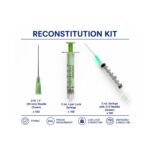
Depending on the kit specification, a peptide preparation kit may contain selected laboratory accessories such as:
- Preparation containers
- Disposable laboratory accessories
- Alcohol preparation swabs
- Protective handling supplies
- Appropriate laboratory water or solvent products where specifically included
- Labels or organization materials
- Other research-use preparation accessories
The actual contents should always be verified against the product listing and packaging.
The purpose of a Peptide Reconstitution Kit is convenience and organization. It does not mean that every component is appropriate for every peptide.
Why Use a Peptide Reconstitution Kit?
Working with research peptides can require multiple laboratory supplies.
Purchasing every accessory individually can make preparation workflows less organized and may result in researchers having to manage several separate products.
A Peptide Reconstitution Kit brings selected preparation supplies together, making it easier to maintain an organized laboratory inventory.
Potential advantages include:
Convenient Organization
Common preparation accessories can be maintained together instead of being stored in multiple locations.
Simplified Inventory
A dedicated Peptide Reconstitution Kit makes it easier to identify preparation supplies and monitor inventory.
Professional Workflow
Organized supplies can support consistent laboratory workflows when used by appropriately trained personnel.
Reduced Supply Searching
Having commonly required accessories together can reduce the time spent locating individual laboratory supplies.
Convenient Packaging
A dedicated kit can be useful for researchers who regularly work with lyophilized research materials.
Lyophilized Peptide Preparation
Many research peptides are supplied as lyophilized powders.
Lyophilization, commonly referred to as freeze-drying, is widely used to provide peptides in a stable dry form for transport and storage.
However, once a peptide is prepared into solution, its stability can differ considerably from its stability in lyophilized form.
Thermo Fisher guidance notes that peptide stability depends on the individual sequence and recommends avoiding repeated freeze-thaw cycles. GenScript similarly recommends careful handling and minimizing repeated exposure of peptide materials to environmental conditions.
This is one reason a well-organized Peptide Reconstitution Kit can be useful in a research environment.
Peptide Solubility Can Vary
One of the most important considerations when preparing a peptide is solubility.
Not every peptide dissolves in the same solvent.
Peptide solubility can be affected by:
- Amino acid sequence
- Molecular structure
- Net charge
- Hydrophobicity
- Peptide length
- pH
- Solvent characteristics
- Temperature
- Concentration
- Buffer composition
- Experimental conditions
GenScript’s peptide solubility guidance specifically emphasizes evaluating peptide length and charge when selecting an appropriate preparation approach.
Consequently, a Peptide Reconstitution Kit provides supplies, but researchers must still select the appropriate preparation conditions for the specific peptide and experiment.
Research-Grade Preparation
A professional laboratory workflow should begin with identification of the peptide and review of the available technical documentation.
Before preparing a research peptide, researchers should verify:
- Peptide identity
- Lot or batch information
- Purity
- Molecular weight
- Formulation
- Lyophilized quantity
- Solubility information
- Recommended storage
- Compatible solvent information
- Experimental requirements
- Applicable safety documentation
This information should come from the peptide manufacturer or supplier whenever available.
The Peptide Reconstitution Kit complements this process by providing preparation accessories, but it does not replace product-specific documentation.
Peptide Storage Before Preparation
Lyophilized peptides generally have different storage requirements from peptide solutions.
Thermo Fisher guidance recommends storing standard lyophilized peptides at approximately −20°C for long-term storage unless product-specific instructions indicate otherwise. GenScript likewise recommends storing lyophilized peptides at −20°C or below and emphasizes avoiding repeated exposure and freeze-thaw cycles.
The manufacturer’s instructions should always take priority.
A Peptide Reconstitution Kit does not change the recommended storage requirements of the peptide itself.
Protecting Peptide Quality
Maintaining peptide quality requires attention to environmental exposure.
Depending on the peptide sequence, certain peptides can be particularly sensitive to:
- Oxidation
- Moisture
- Light
- Temperature
- Repeated freeze-thaw cycles
- Prolonged storage in solution
- Inappropriate solvents
- Contamination
GenScript notes that peptides containing residues such as cysteine, methionine, or tryptophan can be susceptible to oxidation and recommends limiting exposure to air for such materials.
These factors demonstrate why preparation should be based on the characteristics of the individual research peptide.
Laboratory Organization With a Peptide Reconstitution Kit
A major benefit of the Peptide Reconstitution Kit is organization.
Research workflows can involve multiple materials, containers, labels, and preparation accessories. Keeping appropriate supplies together can make it easier to establish a repeatable laboratory workflow.
An organized preparation area can help researchers:
- Identify supplies quickly
- Maintain clean working practices
- Separate unused and used materials
- Track product information
- Reduce unnecessary handling
- Keep documentation with the appropriate supplies
The exact workflow should always be determined by the laboratory’s established procedures and safety requirements.
Peptide Reconstitution Kit for Research Laboratories
The Peptide Reconstitution Kit can be useful in environments where research peptides are regularly evaluated.
Potential settings include:
- Pharmaceutical research laboratories
- Biotechnology laboratories
- Academic research environments
- Analytical laboratories
- Peptide chemistry laboratories
- Research and development facilities
- Contract research organizations
- Laboratory testing environments
The kit is intended to support laboratory preparation and organization rather than provide a therapeutic product.
Research Use Only
The Peptide Reconstitution Kit is intended for appropriate laboratory research applications.
Research peptides and their preparation materials should not be assumed to be approved for human use.
Thermo Fisher and GenScript both provide peptide materials specifically for research applications and emphasize that peptide handling should follow appropriate laboratory procedures.
This product should therefore be marketed and handled according to its actual labeling and applicable regulations.
What May Be Included in a Peptide Reconstitution Kit?
The exact contents of a Peptide Reconstitution Kit should be listed clearly on the product page.
Depending on the configuration, a kit may include selected accessories such as:
Preparation Supplies
Accessories intended to support organized laboratory preparation.
Cleaning or Preparation Swabs
Where included, alcohol preparation swabs can provide a convenient disposable cleaning accessory.
Laboratory Containers
Appropriate containers may be supplied depending on the kit configuration.
Water or Solvent Components
If a specific water or solvent product is included, its exact identity and specifications should be stated separately.
Labels
Labels can help researchers identify materials, batches, preparation dates, or experimental samples.
Because kit contents vary, customers should verify the actual contents before purchasing.
Peptide Preparation and Documentation
Good laboratory practice includes documenting important information associated with prepared research materials.
Depending on the laboratory’s procedures, documentation may include:
- Peptide name
- Batch or lot number
- Date received
- Date prepared
- Storage conditions
- Preparation conditions
- Solvent or buffer identity
- Research application
- Experimental identifier
A Peptide Reconstitution Kit can help provide a consistent physical supply setup, while documentation helps maintain traceability.
Quality Control Considerations
Quality control is important when working with research peptides.
The quality of a final experimental preparation depends on multiple factors, including the original peptide quality, storage conditions, preparation materials, handling practices, and analytical requirements.
Researchers may review supplier documentation such as:
- Certificate of analysis
- Purity data
- HPLC results
- Mass spectrometry results
- Lot information
- Molecular weight
- Storage information
- Safety documentation
The preparation kit itself does not establish the purity or identity of the peptide being prepared.
Peptide Reconstitution Kit and Contamination Control
Contamination control is another important part of laboratory peptide preparation.
Peptide suppliers emphasize the importance of appropriate handling practices to reduce contamination. Thermo Fisher specifically recommends wearing gloves when handling peptides to help prevent enzymatic or bacterial contamination.
The appropriate laboratory environment should be determined by the experiment.
Depending on the research application, laboratories may have additional requirements involving:
- Personal protective equipment
- Clean working surfaces
- Sterile supplies
- Appropriate containers
- Environmental controls
- Sample labeling
- Waste management
Always follow the laboratory’s established standard operating procedures.
Peptide Reconstitution Kit Storage
The storage requirements of individual components can differ.
For example, a peptide may require refrigerated or frozen storage while a dry accessory may have different storage requirements.
Therefore, the Peptide Reconstitution Kit should not automatically be stored under the same conditions as the peptide unless the manufacturer specifically indicates this.
Check each component’s packaging for:
- Temperature requirements
- Humidity requirements
- Light protection
- Expiration information
- Sterility information
- Handling instructions
Where components have different requirements, store them accordingly.
Professional Research Supply Solution
The Peptide Reconstitution Kit is designed to provide convenience without replacing the technical judgment required for peptide research.
Different peptides require different approaches.
For example, Thermo Fisher notes that some peptides may be readily soluble in water or aqueous buffers, while hydrophobic peptides may require alternative solvent systems.
This means researchers should never assume that the same preparation material or procedure is appropriate for every peptide.
The value of the kit is primarily its convenience, organization, and availability of selected laboratory accessories.
Important Product Information
Before using any component of a Peptide Reconstitution Kit, verify:
- The identity of the component.
- Its intended laboratory application.
- Its compatibility with the specific research material.
- Its storage requirements.
- Its expiration information where applicable.
- Its manufacturer’s instructions.
- Applicable laboratory safety requirements.
Do not substitute components simply because they appear visually similar.
Product Specifications
Product Name: Peptide Reconstitution Kit
Product Type: Laboratory preparation accessory kit
Primary Application: Research peptide preparation workflows
Format: Kit/package
Contents: See product listing and package contents
Peptide Included: Not included unless specifically stated
Intended Use: Laboratory research and preparation support
Storage: Component-specific; follow manufacturer instructions
Sterility: Component-specific; do not assume sterility unless labeled
Regulatory Status: Depends on individual components and manufacturer
Human Use: Not intended for human use unless specifically authorized and labeled for such use
Frequently Asked Questions
What is a Peptide Reconstitution Kit?
A Peptide Reconstitution Kit is a collection of laboratory supplies designed to help researchers organize preparation workflows involving lyophilized research peptides.
Does the kit contain the peptide?
Not necessarily. The Peptide Reconstitution Kit is a preparation accessory product. Whether a peptide is included depends entirely on the product configuration.
Can the same kit be used for every peptide?
Not necessarily. Peptides have different chemical and physical properties, so preparation requirements can vary. Researchers should review the technical information for each peptide before selecting preparation materials.
Why are peptides supplied in lyophilized form?
Lyophilization is commonly used to provide peptide materials in a dry form that can be stored and transported under appropriate conditions.
Does reconstitution change peptide stability?
It can. Peptide stability may differ substantially between lyophilized material and peptide solution. GenScript recommends minimizing long-term storage in solution and avoiding repeated freeze-thaw cycles.
How should research peptides be stored?
Storage depends on the individual peptide. Many lyophilized research peptides are stored frozen, commonly around −20°C or below, but the manufacturer’s instructions should always be followed.
Does the kit provide a universal peptide preparation protocol?
No. A Peptide Reconstitution Kit provides supplies, not a universal protocol. Preparation conditions depend on the peptide’s sequence, charge, hydrophobicity, solvent compatibility, and experimental requirements.
Is the Peptide Reconstitution Kit for human use?
No. Unless a particular component is specifically labeled and authorized for human use, the kit should be treated as a laboratory research supply.
How should the kit be stored?
Store each component according to its manufacturer’s instructions. Different components may have different temperature, light, humidity, or storage requirements.
Benefits of the Peptide Reconstitution Kit
The Peptide Reconstitution Kit offers several practical advantages for research environments:
- Convenient preparation supplies
- Organized laboratory workflow
- Simplified inventory management
- Easy access to selected accessories
- Suitable for research environments
- Helps reduce the need to source multiple accessories separately
- Supports organized handling of lyophilized research materials
- Convenient boxed or packaged format
Research and Handling Disclaimer
Research peptides can have chemical, physical, and biological properties that require appropriate technical handling. Thermo Fisher specifically notes that peptide properties may not be fully characterized and recommends handling peptides only by, or under the supervision of, technically qualified personnel.
The Peptide Reconstitution Kit should be used only in accordance with the manufacturer’s instructions and appropriate laboratory procedures.
This product is not a medication, treatment, dietary supplement, or medical therapy.
No claim is made that the Peptide Reconstitution Kit is suitable for human administration or clinical use.
Final Summary
The Peptide Reconstitution Kit provides a convenient and organized solution for laboratories working with lyophilized research peptides.
Because peptide chemistry varies considerably, preparation requirements must be determined individually rather than using a one-size-fits-all approach. Solubility, storage, solvent compatibility, environmental sensitivity, and experimental requirements can all influence the appropriate laboratory workflow.
With its focus on organization and convenience, the Peptide Reconstitution Kit can help researchers maintain a more structured preparation environment while keeping commonly required supplies together.
For best results, always verify the contents of the kit, review the manufacturer’s documentation, maintain appropriate laboratory practices, and use each component only for its labeled purpose.
Peptide Reconstitution Kit — organized supplies for professional research workflows.
Important Disclaimer
This product is intended for laboratory research use only. It is not intended to diagnose, treat, cure, or prevent any disease and is not intended for human or animal administration. Exact kit contents, specifications, compatibility, storage requirements, and intended applications may vary. Always follow the manufacturer’s instructions and applicable laboratory safety procedures.


