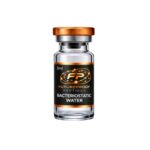
Bacteriostatic Water 3ml Vial – Reliable Research Laboratory Solution
Bacteriostatic Water 3ml Vial is a sterile water-based laboratory solution formulated with a bacteriostatic preservative and supplied in a compact vial format for controlled research and laboratory applications.
Bacteriostatic water is commonly discussed in pharmaceutical, analytical, and laboratory environments because the presence of a suitable preservative can help inhibit the growth of microorganisms under specified conditions.
The Bacteriostatic Water 3ml Vial format provides a defined volume in a convenient container, making it suitable for laboratory environments where controlled quantities of sterile water are required for validated experimental procedures.
This product should be handled only by appropriately qualified personnel following applicable laboratory procedures and product documentation.
It is supplied strictly for research and laboratory use only. It is not intended for human consumption, self-administration, veterinary use, diagnosis, treatment, or prevention of disease.
What Is Bacteriostatic Water?
Bacteriostatic water is sterile water containing a bacteriostatic preservative designed to inhibit the growth of bacteria and other microorganisms under appropriate conditions.
The term “bacteriostatic” refers to inhibition of microbial growth rather than complete destruction of microorganisms.
This distinction is important in laboratory science.
Bacteriostatic water should not automatically be considered interchangeable with every other type of sterile water. Different laboratory applications can have different requirements relating to sterility, preservatives, compatibility, pH, packaging, and intended use.
The Bacteriostatic Water 3ml Vial is therefore best understood as a defined laboratory solution rather than simply ordinary purified water.
What Makes the Bacteriostatic Water 3ml Vial Different?
The primary difference between bacteriostatic water and preservative-free sterile water is the inclusion of a bacteriostatic agent.
The preservative is intended to help limit microbial proliferation when the product is handled according to its specified conditions.
The Bacteriostatic Water 3ml Vial also provides a relatively small, clearly defined volume.
A defined volume can be useful in laboratory environments where researchers require controlled quantities for specific experimental procedures.
The vial format can also simplify storage, identification, and inventory management.
Understanding the 3ml Format
The Bacteriostatic Water 3ml Vial contains a nominal 3ml volume.
A smaller-format vial can be useful when a research project requires only a limited quantity of solution.
Using appropriately sized containers can help laboratories manage materials efficiently.
It can also reduce unnecessary storage of larger volumes when a smaller quantity is more appropriate for the intended research application.
The 3ml format may therefore be relevant to laboratory workflows where precise volume control and convenient sample management are important.
Researchers should always verify the actual product specification and applicable documentation before incorporating any laboratory solution into an experimental protocol.
Why Is Bacteriostatic Water Used in Research?
Water is one of the most widely used materials in laboratory science.
It can function as a solvent, preparation medium, analytical component, or processing material depending on the experimental design.
However, not every type of water is appropriate for every application.
Laboratory researchers consider factors such as purity, sterility, conductivity, pH, particulate content, microbial contamination, and the presence or absence of preservatives.
Bacteriostatic water is particularly relevant when the experimental procedure requires a sterile aqueous solution containing a preservative.
The Bacteriostatic Water 3ml Vial provides researchers with a defined product format for controlled laboratory applications where its specifications are appropriate.
Bacteriostatic Water and Microbial Growth
Microorganisms require suitable environmental conditions to grow.
Water availability is one factor that can influence microbial activity, although many other conditions also contribute.
Bacteriostatic formulations contain preservatives intended to inhibit microbial proliferation.
The precise behaviour of a preservative depends on its concentration, the surrounding environment, microbial species, temperature, and other factors.
For this reason, bacteriostatic water should always be handled according to the manufacturer’s specifications.
It should not be assumed that the presence of a bacteriostatic preservative makes a product indefinitely resistant to contamination.
Good laboratory practice remains essential.
The Role of Benzyl Alcohol
Many bacteriostatic water formulations use benzyl alcohol as the preservative.
Benzyl alcohol is an organic compound that has been used as a preservative in certain pharmaceutical and laboratory formulations.
Its antimicrobial properties are one reason it can be incorporated into bacteriostatic water products.
The exact formulation, concentration, packaging, and specification can vary between products.
Researchers should therefore consult the applicable product documentation rather than relying solely on generic information about bacteriostatic water.
The Bacteriostatic Water 3ml Vial should be evaluated according to its specific formulation and accompanying quality documentation.
Bacteriostatic Water Versus Sterile Water
Bacteriostatic water and sterile water are not necessarily the same product.
Sterile water refers to water that has been processed and packaged to meet defined sterility requirements.
Bacteriostatic water generally contains a preservative intended to inhibit microbial growth.
The distinction is important because preservatives can affect compatibility with certain experimental systems.
A laboratory protocol may specifically require preservative-free water rather than bacteriostatic water.
Researchers should therefore select the appropriate solution based on the validated requirements of the experiment.
Why Purity Matters
Water quality can have a significant influence on laboratory research.
Even small quantities of contaminants can potentially interfere with sensitive analytical methods or biological experiments.
Potential concerns can include:
- Particulate contamination
- Microbial contamination
- Endotoxin contamination
- Dissolved impurities
- Chemical contaminants
- Variations in pH
- Variations in conductivity
The importance of each factor depends on the application.
A research laboratory should select water based on the specific requirements of the experimental protocol.
The Bacteriostatic Water 3ml Vial is intended to provide a defined laboratory solution rather than an unspecified water source.
Research Applications
Bacteriostatic water can be relevant to a variety of laboratory procedures.
Potential applications depend on the specific formulation and its documented specifications.
Research environments may use sterile aqueous solutions in:
- Laboratory sample preparation
- Analytical research
- Controlled experimental procedures
- Reagent preparation
- Laboratory method development
- Pharmaceutical research
- Peptide-related analytical workflows
- Controlled formulation studies
- Scientific investigation
The appropriate application depends on the requirements of the individual experiment.
Researchers should never assume that one water formulation is universally suitable for every laboratory procedure.
Bacteriostatic Water in Peptide Research
Water-based laboratory solutions are frequently encountered in peptide research.
Lyophilised research materials may require an appropriate solvent or diluent during certain experimental procedures.
However, the correct choice depends on the chemical and physical properties of the material being studied.
Some compounds may be sensitive to preservatives, pH changes, ionic strength, temperature, or other environmental factors.
For this reason, researchers should review the relevant experimental protocol and product documentation before selecting a diluent.
The Bacteriostatic Water 3ml Vial should only be incorporated into an experiment when its formulation is compatible with the intended laboratory application.
Why a Defined Volume Is Useful
Research reproducibility depends partly on controlling variables.
Using a defined volume of laboratory solution can help researchers maintain consistency between experimental preparations.
The Bacteriostatic Water 3ml Vial provides a clearly specified quantity that can be documented as part of a laboratory workflow.
Defined packaging can also make inventory management easier.
Researchers can identify how much material is available without having to estimate the contents of an open container.
This can be particularly useful in laboratories where multiple experimental materials are maintained simultaneously.
Laboratory Reproducibility
Reproducibility is an important principle in scientific research.
An experiment should ideally be capable of producing comparable observations when repeated under equivalent conditions.
Variables such as water quality, temperature, storage, handling, concentration, and preparation technique can influence experimental outcomes.
Using documented laboratory materials can help researchers control some of these variables.
The Bacteriostatic Water 3ml Vial is therefore suitable for workflows where researchers need a defined water-based solution with known product specifications.
Quality Control
Quality control is an important part of laboratory material management.
Before using a laboratory solution, researchers may review available documentation relating to:
- Product identity
- Batch number
- Manufacturing information
- Expiry information
- Sterility specifications
- Preservative concentration
- Quality testing
- Packaging
- Storage requirements
The appropriate quality-control requirements depend on the intended application.
Laboratories conducting sensitive experiments may have additional qualification procedures.
The Bacteriostatic Water 3ml Vial should be assessed using the documentation supplied for the specific batch.
Certificate of Analysis
Where a Certificate of Analysis is provided, it can offer useful information about the individual production batch.
A Certificate of Analysis may contain information concerning identity, specifications, analytical results, or other quality parameters.
Researchers should use batch-specific documentation whenever possible.
Generic information found online should not replace the manufacturer’s documentation for a particular product.
This is especially important when laboratory procedures require documented traceability.
Packaging and Vial Format
The vial format provides a practical container for laboratory storage.
A closed vial can protect its contents from environmental exposure when stored under appropriate conditions.
The packaging also provides a surface for product identification and batch information.
Researchers should check the vial label before use.
Information such as product name, lot or batch number, expiration information, and storage requirements can be important for laboratory records.
Maintaining accurate records helps support traceability throughout a research project.
Storage of Bacteriostatic Water
Storage requirements should always follow the manufacturer’s product documentation.
The Bacteriostatic Water 3ml Vial should be protected from unsuitable environmental conditions.
Potential storage considerations include:
- Excessive heat
- Freezing where not specified
- Direct sunlight
- Excessive moisture
- Physical damage
- Contamination
- Unnecessary temperature fluctuations
Stable storage conditions help maintain the intended quality of laboratory materials.
Researchers should verify the specific storage requirements supplied with the product.
Temperature Control
Temperature can influence the stability of many laboratory materials.
Extreme temperatures may affect chemical properties, packaging, or product integrity.
Repeated temperature changes may also create unnecessary stress on laboratory materials.
For this reason, laboratories should maintain appropriate storage conditions based on the manufacturer’s recommendations.
Temperature-controlled storage should be monitored where required by the laboratory’s quality system.
Handling Considerations
Appropriate laboratory handling is essential when working with sterile or bacteriostatic solutions.
Personnel should follow established procedures appropriate to the laboratory environment.
This may include:
- Inspecting the container before use
- Confirming product identity
- Checking expiry information
- Maintaining clean working conditions
- Avoiding unnecessary exposure
- Following institutional laboratory procedures
- Recording relevant batch information
The exact procedures should be determined by the laboratory’s validated methods.
Importance of Contamination Control
Even a bacteriostatic formulation should be treated as a laboratory material requiring careful handling.
Bacteriostatic does not mean contamination is impossible.
Environmental exposure, improper handling, damaged packaging, or unsuitable storage can compromise a laboratory solution.
Researchers should therefore use appropriate contamination-control procedures.
Maintaining clean laboratory conditions can help reduce variables that might interfere with experimental results.
Bacteriostatic Does Not Mean Sterilisation After Opening
A common misunderstanding is that bacteriostatic water can never become contaminated because it contains a preservative.
This is incorrect.
A bacteriostatic preservative is intended to inhibit microbial growth under specified conditions.
It does not provide unlimited protection against contamination.
Once a container is exposed to the environment, laboratory personnel must follow the applicable handling and discard requirements.
Researchers should consult the manufacturer’s documentation for information concerning the product’s intended handling period after opening.
Compatibility Considerations
The suitability of bacteriostatic water depends partly on what it is being used with.
A preservative-containing solution may behave differently from preservative-free water.
Some research materials may be sensitive to preservatives.
Other materials may have specific solvent requirements.
For this reason, compatibility should be established before an experimental procedure begins.
Researchers should consult relevant technical documentation and validated laboratory methods.
Bacteriostatic Water in Analytical Research
Analytical laboratories frequently require carefully controlled solvents and preparation materials.
The quality of these materials can influence analytical measurements.
Depending on the analytical method, researchers may need water with defined characteristics concerning purity, conductivity, organic content, microbial levels, or other parameters.
Bacteriostatic water may be appropriate for some research workflows but unsuitable for others.
The analytical method should determine the required water specification.
Research Into Formulation Science
Bacteriostatic water can also be relevant to formulation research.
Scientists may investigate how aqueous environments influence the physical and chemical characteristics of research materials.
Factors such as:
- Solubility
- pH
- Temperature
- Preservative compatibility
- Concentration
- Stability
- Container interaction
can all influence formulation behaviour.
The Bacteriostatic Water 3ml Vial provides a defined aqueous environment that can be evaluated in appropriately designed laboratory experiments.
Why Small Vials Can Be Convenient
Laboratory storage space is often limited.
Smaller containers can make inventory management easier while allowing researchers to maintain appropriate quantities for individual workflows.
A 3ml vial can be particularly convenient where only a small volume is required.
It also provides a clearly defined unit that can be recorded in laboratory inventory systems.
This can help researchers maintain better control over material usage.
Bacteriostatic Water 3ml Vial for Controlled Research
The compact Bacteriostatic Water 3ml Vial format is suited to research environments where controlled quantities of bacteriostatic water are required.
Its value comes from the combination of a defined volume, water-based formulation, bacteriostatic preservation, and convenient vial packaging.
The product can support laboratory workflows where the specified characteristics match the requirements of the research procedure.
However, the suitability of any laboratory solution should always be determined by the experimental protocol.
Product Quality and Consistency
Consistency is important when experiments are repeated.
If the preparation material changes between experiments, it can introduce another variable into the research process.
Researchers therefore often seek laboratory materials with defined specifications and documented production characteristics.
The Bacteriostatic Water 3ml Vial provides a standardised product format that can be incorporated into documented laboratory workflows.
Batch information should be retained as part of appropriate laboratory records.
Research Documentation
Good documentation is essential for scientific reproducibility.
Researchers should record relevant information about materials used during experiments.
Depending on the laboratory’s requirements, this may include:
- Product name
- Batch number
- Date received
- Expiration date
- Storage conditions
- Experimental application
- Relevant quality documentation
Maintaining these records can make it easier to investigate unexpected results and reproduce successful experiments.
Limitations of Bacteriostatic Water
Bacteriostatic water is not universally suitable for every laboratory procedure.
The presence of a preservative can be beneficial in some applications while making the product inappropriate for others.
Researchers should consider the specific requirements of their experimental system.
Factors such as cell type, analytical method, compound compatibility, preservative sensitivity, and sterility requirements may influence the appropriate choice.
The Bacteriostatic Water 3ml Vial should therefore be treated as a specialised laboratory solution rather than a universal diluent.
Safety Considerations
Laboratory personnel should review the applicable safety information before handling the product.
Appropriate laboratory protective equipment should be used where required.
The container should be inspected for damage or visible abnormalities before use.
Any material that appears compromised should be managed according to institutional laboratory procedures.
Safety requirements can vary according to the surrounding experimental materials and laboratory environment.
Storage and Inventory Management
Proper inventory management helps laboratories maintain material quality.
Products should be stored according to their documented conditions and organised so that batch and expiration information remain accessible.
Researchers should avoid using materials that are expired or improperly stored.
A well-managed inventory system can also reduce unnecessary temperature exposure and repeated handling.
Bacteriostatic Water and Experimental Consistency
Experimental consistency depends on controlling as many relevant variables as possible.
Using a defined water formulation is one method researchers may use to standardise preparation conditions.
The Bacteriostatic Water 3ml Vial offers a consistent volume and defined formulation that can be documented within an experimental workflow.
This can be especially valuable when experiments involve repeated preparation or comparison between different research groups.
Frequently Asked Questions
What is Bacteriostatic Water 3ml Vial?
Bacteriostatic Water 3ml Vial is a sterile water-based laboratory solution containing a bacteriostatic preservative and supplied in a 3ml vial format.
What does bacteriostatic mean?
Bacteriostatic means that the formulation is designed to inhibit the growth of bacteria under specified conditions. It does not mean that microbial contamination is impossible.
Why is bacteriostatic water used in research?
It may be used in laboratory procedures requiring a sterile aqueous solution containing a bacteriostatic preservative. The appropriate application depends on the experimental protocol.
Is bacteriostatic water the same as sterile water?
Not necessarily. Bacteriostatic water generally contains a preservative, while sterile water may be formulated without one. Researchers should select the appropriate product based on the requirements of their procedure.
How much water is contained in the product?
The Bacteriostatic Water 3ml Vial is supplied in a nominal 3ml format.
Does bacteriostatic water prevent all contamination?
No. The preservative is intended to inhibit microbial growth under specified conditions. Proper laboratory handling and contamination-control procedures remain important.
Can bacteriostatic water be used with every research compound?
No. Compatibility depends on the compound and experimental system. Researchers should verify that the formulation is appropriate for their specific laboratory procedure.
Why is the 3ml format useful?
The smaller format provides a defined quantity that can be convenient for controlled research workflows, inventory management, and experiments requiring limited volumes.
How should Bacteriostatic Water 3ml Vial be stored?
Storage should follow the manufacturer’s stated requirements. The product should generally be protected from unsuitable temperatures, excessive heat, direct light, moisture, and unnecessary environmental exposure.
Is Bacteriostatic Water 3ml Vial intended for human use?
No. This product is supplied for laboratory research and analytical purposes only and is not intended for human consumption, self-administration, or therapeutic use.
Should researchers keep batch documentation?
Yes. Maintaining product and batch information can improve traceability and support reproducibility in controlled laboratory research.
Research Use Only
The Bacteriostatic Water 3ml Vial is supplied exclusively for laboratory research, analytical testing, formulation investigation, and scientific study.
It is intended for use by appropriately qualified personnel working within suitable laboratory environments.
This product is not intended for human consumption, self-administration, veterinary use, diagnosis, treatment, cure, or prevention of any disease.
Researchers should review applicable product documentation, safety information, storage requirements, and institutional procedures before handling or incorporating the product into an experimental workflow.
The suitability of bacteriostatic water depends on the requirements of the individual research protocol. Researchers are responsible for determining compatibility, maintaining appropriate laboratory controls, and following all applicable regulations and procedures.
Bacteriostatic Water 3ml Vial provides a convenient, defined-volume format for controlled laboratory research where a bacteriostatic aqueous solution is appropriate. Its compact vial format, documented formulation, and suitability for controlled handling make it a practical laboratory material for appropriately designed scientific investigations.