
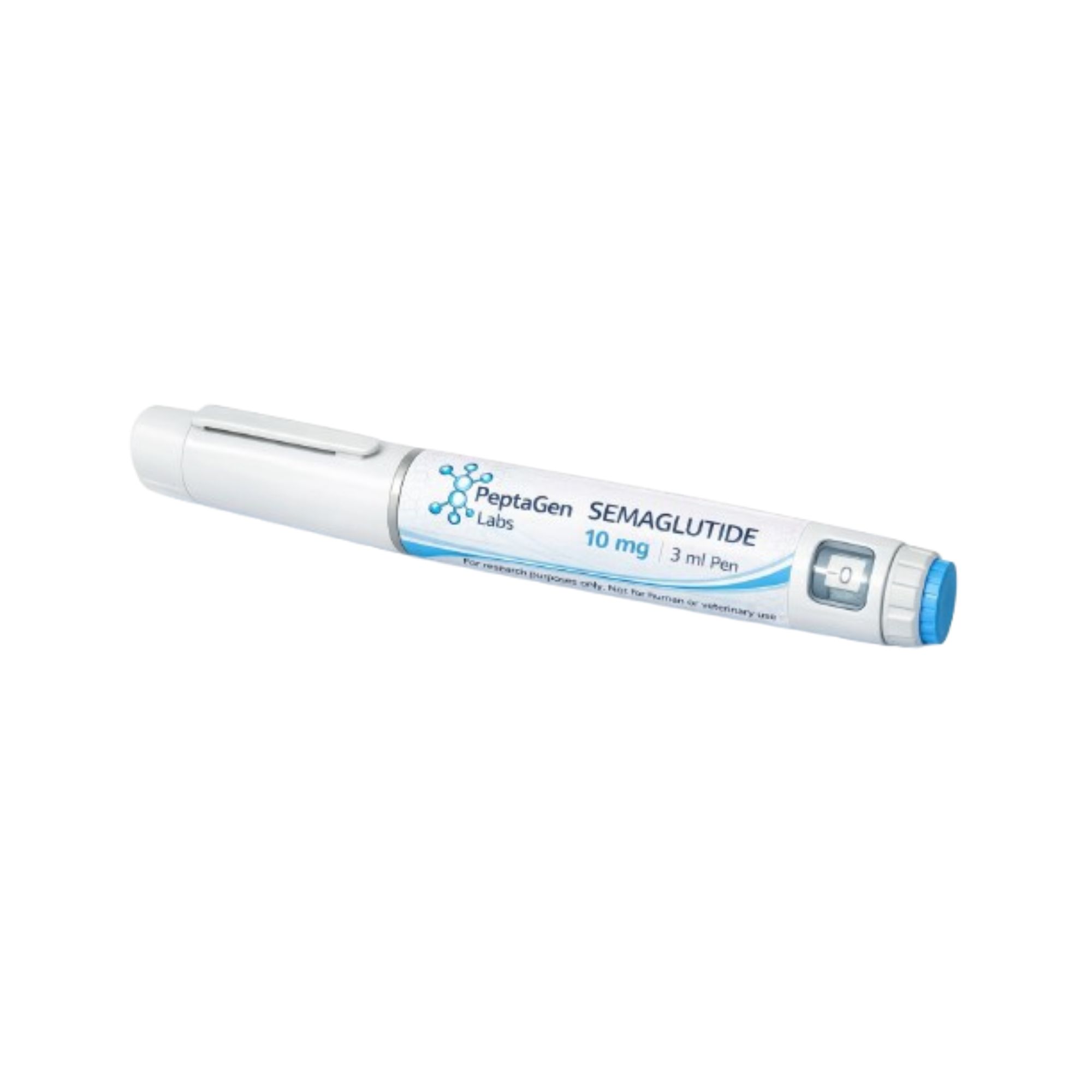
Semaglutide 10mg Pen – Powerful & Remarkable GLP-1 Research Product
SEO INFORMATION
Focus Keyword: Semaglutide 10mg Pen
SEO Title: Semaglutide 10mg Pen: Powerful & Remarkable GLP-1 Research Product
Meta Description: Semaglutide 10mg Pen for research into GLP-1 receptor signalling, glucose metabolism, appetite pathways, energy balance and metabolic regulation.
URL Slug: semaglutide-10mg-pen
Suggested H1: Semaglutide 10mg Pen – Powerful GLP-1 Research Product
Secondary Keywords:
- Semaglutide 10mg research
- Semaglutide 10mg research product
- Semaglutide pen
- Semaglutide GLP-1 research
- Semaglutide metabolic research
- Semaglutide receptor research
- GLP-1 receptor research
- metabolic signalling research
- glucose metabolism research
- appetite signalling research
SEO Tags: Semaglutide 10mg Pen, Semaglutide 10mg, Semaglutide Research, Semaglutide Pen, GLP-1 Research, GLP-1 Receptor, Metabolic Research, Glucose Metabolism, Hormone Receptor Research, Laboratory Research, Metabolic Signalling, Research Product
Semaglutide 10mg Pen
At Futureproof Peptides, our Semaglutide 10mg Pen is presented as a research-focused product for laboratory investigations involving GLP-1 receptor signalling and metabolic biology.
Semaglutide is a synthetic peptide analogue related to the naturally occurring hormone glucagon-like peptide-1, commonly known as GLP-1.
Its interaction with the GLP-1 receptor has made semaglutide an important compound in metabolic and endocrine research.
Scientific investigations have examined GLP-1 signalling in relation to glucose regulation, appetite-related pathways, gastrointestinal processes, energy balance and broader metabolic communication.
The Semaglutide 10mg Pen provides a defined product format for research environments where investigators are studying GLP-1 receptor pharmacology and related biological pathways.
This product is presented for laboratory research purposes and should be evaluated within applicable scientific, regulatory and institutional requirements.
What Is Semaglutide?
Semaglutide is a synthetic peptide analogue of GLP-1.
GLP-1 is an incretin hormone involved in communication between the gastrointestinal system, pancreas, nervous system and other tissues associated with metabolic regulation.
Native GLP-1 has a relatively short biological duration.
Semaglutide incorporates structural modifications that alter its pharmacological characteristics and allow researchers to study more sustained GLP-1 receptor activity.
This characteristic has contributed to the compound’s extensive scientific investigation.
The Semaglutide 10mg Pen can therefore be relevant to experimental studies examining how prolonged GLP-1 receptor activation relates to downstream cellular and metabolic signalling.
Understanding GLP-1
Glucagon-like peptide-1 is a naturally occurring peptide hormone.
It is produced within the body and participates in several biological signalling processes.
GLP-1 research has become an important field because of the hormone’s relationship with:
- Glucose-dependent signalling
- Pancreatic endocrine activity
- Gastrointestinal signalling
- Appetite-related pathways
- Energy balance
- Nutrient sensing
The GLP-1 receptor is a major target of pharmacological research.
Semaglutide provides an experimental model for studying this receptor and its associated signalling pathways.
GLP-1 Receptor Research
The GLP-1 receptor belongs to the G protein-coupled receptor family.
When activated, it can initiate intracellular signalling processes involving secondary messenger systems.
Researchers can investigate these pathways to better understand how receptor activation produces downstream biological responses.
Research involving semaglutide may examine:
- Receptor activation
- Intracellular signalling
- Second-messenger pathways
- Cellular responses
- Hormonal communication
- Metabolic regulation
The Semaglutide 10mg Pen is therefore relevant to research focused on GLP-1 receptor pharmacology.
Semaglutide and Metabolic Research
Metabolism involves a highly interconnected network of hormones, organs and cellular pathways.
GLP-1 signalling represents one important component of this network.
Semaglutide has been extensively investigated in metabolic research because of its ability to activate the GLP-1 receptor.
Research may examine relationships between GLP-1 activity and:
- Glucose metabolism
- Energy balance
- Appetite signalling
- Nutrient response
- Endocrine communication
- Gastrointestinal pathways
These areas continue to be studied in laboratory and clinical research.
Semaglutide and Glucose Regulation
Glucose metabolism is a major area of GLP-1 research.
GLP-1 receptor signalling is associated with glucose-dependent endocrine responses.
Researchers investigating this pathway can examine how receptor activation interacts with glucose-related biological processes.
Experimental research may focus on:
- Glucose homeostasis
- GLP-1 receptor activation
- Pancreatic signalling
- Hormonal responses
- Cellular metabolism
- Metabolic adaptation
The Semaglutide 10mg Pen can be considered within research projects examining these mechanisms.
Semaglutide and Appetite Signalling
Appetite regulation involves communication between the brain, gastrointestinal tract, endocrine system and metabolic tissues.
GLP-1 is one of several biological signalling systems involved in this complex network.
Research has investigated how GLP-1 receptor activity relates to appetite and food-intake signalling.
Potential research areas include:
- Satiety-related signalling
- Central GLP-1 pathways
- Gut-brain communication
- Hormonal signalling
- Nutrient sensing
- Energy balance
These mechanisms are complex and remain an active subject of scientific investigation.
Research findings should not be interpreted as personal weight-management advice.
Semaglutide and Energy Balance
Energy balance describes the relationship between energy intake and energy expenditure.
It is influenced by numerous biological systems.
GLP-1 signalling is one pathway researchers investigate when examining how hormonal signals contribute to metabolic regulation.
Semaglutide offers a research model for examining sustained GLP-1 receptor activity.
Researchers may investigate relationships involving:
- Energy intake
- Metabolic signalling
- Hormonal communication
- Nutrient sensing
- Appetite-related pathways
- Energy utilisation
The Semaglutide 10mg Pen can therefore be relevant to experimental research into energy balance.
Pharmacological Characteristics of Semaglutide
Semaglutide is structurally related to human GLP-1 while incorporating modifications that influence its pharmacological properties.
These structural characteristics contribute to its longer persistence compared with native GLP-1.
From a research perspective, this makes semaglutide useful for studying sustained receptor activation.
Researchers can investigate how prolonged interaction with the GLP-1 receptor affects downstream signalling compared with shorter-duration GLP-1 activity.
Semaglutide and Cellular Signalling
Receptor activation can initiate a series of intracellular events.
For GLP-1 receptor research, these events involve signalling systems that ultimately influence cellular responses.
Researchers can investigate:
- Receptor binding
- Signal transduction
- Second-messenger activity
- Protein signalling
- Gene-expression responses
- Cellular adaptation
These studies contribute to a broader understanding of how peptide hormones communicate with cells.
Semaglutide in Endocrine Research
The endocrine system coordinates many physiological processes through hormones and receptors.
GLP-1 is part of this broader hormonal network.
Semaglutide research can therefore provide insight into interactions between GLP-1 receptor signalling and endocrine processes.
Areas of interest include:
- Pancreatic signalling
- Gastrointestinal hormones
- Hormonal communication
- Nutrient sensing
- Metabolic regulation
- Endocrine receptor activity
This makes semaglutide relevant to researchers working in endocrinology and metabolic biology.
Gastrointestinal Research
GLP-1 signalling is closely connected to gastrointestinal biology.
Researchers have investigated relationships between GLP-1 receptor activation and gastrointestinal processes.
Research areas can include:
- Gastric signalling
- Nutrient sensing
- Gastrointestinal hormone communication
- Gut-brain signalling
- Digestive-system pathways
These pathways are relevant because the gastrointestinal system plays an important role in metabolic communication.
The Semaglutide 10mg Pen can be incorporated into appropriately designed research investigating these signalling mechanisms.
Brain and GLP-1 Research
GLP-1 receptor signalling is also relevant to neurological research.
Researchers have investigated GLP-1 pathways within the nervous system, including their relationship with appetite and metabolic communication.
Potential areas of investigation include:
- Central GLP-1 signalling
- Appetite-related neural pathways
- Brain-gut communication
- Neuroendocrine signalling
- Nutrient-response pathways
- Behavioural research models
These areas should be interpreted carefully because findings can vary significantly between experimental models.
Semaglutide and Weight-Related Research
Semaglutide has been extensively investigated in research involving body-weight-related outcomes.
The scientific interest in this area is closely connected with GLP-1 receptor activity and its relationship with appetite and energy regulation.
Researchers can use this field of study to investigate relationships between:
- GLP-1 signalling
- Appetite pathways
- Energy balance
- Metabolic regulation
- Hormonal responses
However, research findings should not be interpreted as an endorsement of personal use.
The Semaglutide 10mg Pen is presented for research applications rather than as a consumer weight-management product.
Semaglutide Compared With Other Research Compounds
Modern metabolic research includes compounds with different receptor profiles.
Some compounds primarily target GLP-1 receptors.
Others interact with multiple metabolic receptors.
These differences are important when designing comparative experiments.
Semaglutide provides a GLP-1-focused research model.
Other compounds can provide dual- or multi-receptor models.
Researchers can therefore investigate differences in:
- Receptor activity
- Hormonal signalling
- Metabolic pathways
- Glucose regulation
- Appetite signalling
- Energy balance
Semaglutide and Tirzepatide
Semaglutide and tirzepatide are both extensively studied metabolic compounds, but they have different receptor profiles.
Semaglutide primarily acts through the GLP-1 receptor.
Tirzepatide has activity at both the GLP-1 and GIP receptors.
This distinction makes them useful subjects for comparative pharmacology.
Research may investigate how single-receptor and dual-receptor activity produces different signalling patterns.
Potential research areas include:
- Receptor pharmacology
- Metabolic signalling
- Glucose pathways
- Hormonal communication
- Appetite-related pathways
- Energy balance
Semaglutide and Clinical Research
Semaglutide has been investigated extensively in clinical research.
Clinical studies have examined its pharmacological activity and relationships with metabolic outcomes.
Research has included areas such as:
- GLP-1 receptor activity
- Glucose regulation
- Body-weight-related outcomes
- Metabolic parameters
- Appetite-related pathways
- Cardiometabolic research
Clinical evidence can contribute to understanding the pharmacology of a compound.
However, the availability of clinical research does not mean that every research formulation or presentation is an approved pharmaceutical product.
Regulatory status and product presentation must always be considered separately.
Research Applications
The Semaglutide 10mg Pen may be relevant to research involving:
GLP-1 Receptor Pharmacology
Researchers can investigate receptor activation and downstream signalling.
Metabolic Biology
Studies may examine glucose and energy-related pathways.
Endocrine Research
Researchers can investigate hormonal communication and receptor activity.
Appetite Signalling
Experimental models can examine pathways associated with appetite regulation.
Gastrointestinal Research
GLP-1-related gastrointestinal signalling can be investigated in appropriate research models.
Brain-Gut Research
Researchers can explore interactions between metabolic hormones and neurological signalling.
Comparative Pharmacology
Semaglutide can be evaluated alongside compounds with different receptor profiles.
Semaglutide 10mg Pen Format
The Semaglutide 10mg Pen is supplied in a pen-style format with a stated 10mg quantity.
A defined product format can be useful when researchers require consistent material identification and presentation within their research environment.
Researchers should independently review applicable product documentation and analytical information before incorporating any research material into an experimental protocol.
Laboratory Handling Considerations
Research compounds should be handled by appropriately qualified personnel.
Laboratory procedures should take into account:
- Product identification
- Storage requirements
- Sample tracking
- Environmental exposure
- Batch information
- Laboratory safety
- Institutional requirements
Specific preparation or administration procedures should be determined by qualified researchers according to the intended experimental application.
This product page does not provide human-use dosing or injection instructions.
Stability and Storage
Peptide materials can be affected by environmental conditions.
Temperature, moisture, light and repeated handling can influence stability.
Researchers should therefore follow appropriate storage procedures based on the available product documentation and intended research application.
Unnecessary environmental exposure should be minimised.
Clear sample identification and appropriate laboratory storage practices can also help support reproducibility.
Quality Control
Quality control is essential when conducting peptide research.
Researchers should understand the characteristics of experimental material before incorporating it into a study.
Relevant quality considerations may include:
- Identity
- Purity
- Quantity
- Batch information
- Physical characteristics
- Storage requirements
- Analytical documentation
Where appropriate, independent analytical testing can provide additional confirmation of material characteristics.
Research Reproducibility
Reproducibility is a fundamental principle of scientific research.
Researchers need consistent experimental materials when comparing different study conditions.
A defined Semaglutide 10mg Pen format can support research workflows where product identification and consistency are important.
Researchers may use appropriate documentation to track:
- Batch information
- Experimental conditions
- Storage history
- Analytical results
- Research observations
Maintaining detailed records can help researchers interpret experimental outcomes more reliably.
Research Limitations
Semaglutide has a substantial research history, but scientific evidence must always be interpreted according to the specific study.
Results may vary between:
- Cellular research
- Biochemical experiments
- Animal studies
- Pharmacological investigations
- Clinical studies
A result observed in one model does not automatically establish the same outcome in another.
Researchers should consider study design, experimental conditions and available evidence when evaluating findings.
Safety Considerations
Clinical investigations involving GLP-1 receptor agonists have reported gastrointestinal effects among some participants.
Examples reported in clinical research include:
- Nausea
- Vomiting
- Diarrhoea
- Abdominal discomfort
- Other gastrointestinal symptoms
The occurrence and severity of these effects can vary between study populations and experimental conditions.
This information should not be considered a complete safety profile.
Any laboratory research involving biologically active compounds should be conducted according to appropriate safety procedures and institutional requirements.
Future Directions in GLP-1 Research
GLP-1 research continues to expand across metabolic, endocrine, gastrointestinal and neurological fields.
Future research may investigate:
- GLP-1 receptor pharmacology
- Long-term receptor signalling
- Metabolic adaptation
- Brain-gut communication
- Glucose regulation
- Appetite pathways
- Energy balance
- Cardiometabolic signalling
- Hormonal interactions
As scientific knowledge develops, researchers may gain a more detailed understanding of the relationships between GLP-1 signalling and broader metabolic systems.
Frequently Asked Questions
What is Semaglutide 10mg Pen?
The Semaglutide 10mg Pen is a research-focused product containing a stated 10mg quantity of semaglutide in a pen-style format.
It is presented for appropriate laboratory research applications.
What receptor does semaglutide target?
Semaglutide primarily acts as an agonist of the GLP-1 receptor.
Why is semaglutide studied?
Semaglutide is studied extensively in relation to GLP-1 receptor signalling, glucose metabolism, appetite-related pathways, energy balance and metabolic biology.
What is GLP-1?
GLP-1 is a naturally occurring incretin hormone involved in metabolic and endocrine signalling.
Its receptor is an important target in metabolic research.
Is Semaglutide 10mg Pen a weight-loss treatment?
No.
The Semaglutide 10mg Pen is presented strictly as a research product and should not be considered a personal weight-management treatment.
Is semaglutide the same as tirzepatide?
No.
Semaglutide primarily targets GLP-1 receptors, whereas tirzepatide acts on both GLP-1 and GIP receptors.
What does 10mg mean?
The 10mg designation refers to the stated quantity of semaglutide associated with the product presentation.
Researchers should verify the applicable product documentation.
Is this product intended for human use?
No.
It is presented for research purposes and should not be treated as an approved medicine or recommendation for human administration.
Does this page provide administration instructions?
No.
Specific human-use dosing, injection and administration instructions are intentionally not provided.
Qualified researchers should establish appropriate procedures according to their laboratory protocols, product documentation and applicable regulations.
What research areas can semaglutide support?
Research areas may include GLP-1 receptor pharmacology, metabolic signalling, glucose pathways, appetite-related signalling, endocrine biology, gastrointestinal research and brain-gut communication.
Product Specifications
Product Name: Semaglutide 10mg Pen
Category: Research Product
Quantity: 10mg
Format: Pen
Primary Research Target: GLP-1 Receptor
Research Areas: Metabolic, Endocrine and Receptor Signalling Research
Application: Laboratory Research Only
Research Areas at a Glance
The Semaglutide 10mg Pen may be relevant to investigations involving:
- GLP-1 receptor signalling
- Metabolic regulation
- Glucose metabolism
- Appetite-related pathways
- Energy balance
- Endocrine signalling
- Gastrointestinal research
- Brain-gut communication
- Receptor pharmacology
- Hormonal signalling
- Comparative metabolic research
These categories describe areas of scientific investigation and should not be interpreted as established medical applications.
Final Research Overview
The Semaglutide 10mg Pen provides a defined research format for investigators studying GLP-1 receptor biology and associated metabolic pathways.
Semaglutide has attracted substantial scientific interest because of its activity at the GLP-1 receptor and its relevance to metabolic signalling.
Research has examined its relationship with glucose regulation, appetite-related pathways, energy balance, gastrointestinal signalling and endocrine communication.
Its pharmacological characteristics also make semaglutide an important compound for investigating sustained GLP-1 receptor activity.
The Semaglutide 10mg Pen can therefore be considered within appropriately designed research projects involving receptor pharmacology and metabolic biology.
As with all research materials, findings should be interpreted according to the specific experimental model and scientific evidence available.
Researchers should follow appropriate laboratory safety procedures, institutional requirements and applicable regulations when working with experimental materials.
Research Use Disclaimer
The Semaglutide 10mg Pen is presented strictly for research and laboratory purposes.
It is not intended to diagnose, treat, cure or prevent any disease or medical condition.
It is not presented as a dietary supplement or as a substitute for an approved pharmaceutical product.
It should not be used for personal consumption or self-administration.
Researchers are responsible for ensuring that possession, handling, storage and investigation of this material comply with applicable laws, regulations and institutional requirements.


