

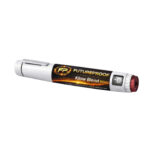
KLOW Blend 80mg Pen – Advanced Multi-Peptide Research Formulation
Our KLOW Blend 80mg Pen is a four-component research peptide formulation combining BPC-157, TB-500, GHK-Cu, and KPV into a single laboratory research format. The combination brings together four compounds that have each attracted scientific interest across different areas of peptide biology, including extracellular matrix research, cellular signalling, inflammatory pathways, tissue biology, and cellular migration.
The KLOW Blend 80mg Pen contains a total of 80mg of peptide material, consisting of 50mg of GHK-Cu, 10mg of BPC-157, 10mg of TB-500, and 10mg of KPV. Rather than representing one single active mechanism, the formulation provides researchers with a multi-component preparation that can be investigated in experimental models involving several biological pathways.
Each component has a distinct molecular structure and research history. GHK-Cu is a copper-binding tripeptide associated with studies of extracellular matrix biology and tissue remodelling. BPC-157 has primarily been investigated in preclinical research involving tissue-response mechanisms, gastrointestinal models, and vascular-related signalling. TB-500 is related to thymosin beta-4 research and has been studied in connection with actin organisation and cellular migration. KPV is a short peptide fragment derived from α-MSH research and has attracted interest in experimental inflammatory signalling models.
The purpose of combining these compounds is to provide a broader research formulation rather than suggesting that the four peptides have identical biological properties. Each ingredient should be considered independently when interpreting scientific findings.
The KLOW Blend 80mg Pen is supplied strictly for laboratory research, analytical testing, and scientific investigation. It is not intended for human consumption, veterinary use, diagnosis, treatment, or therapeutic application.
What Is KLOW Blend 80mg Pen?
The KLOW Blend 80mg Pen is a multi-component research formulation containing four different peptides:
- 50mg GHK-Cu
- 10mg BPC-157
- 10mg TB-500
- 10mg KPV
The formulation is designed around the concept of studying several peptide-related biological pathways within a single research material. This can be useful when experimental models involve interconnected processes rather than one isolated signalling pathway.
The four compounds do not perform the same function. Their inclusion in one formulation simply allows researchers to investigate a broader collection of peptide characteristics within a defined preparation.
GHK-Cu contributes an area of research surrounding copper-dependent peptide activity and extracellular matrix biology. BPC-157 contributes a research profile largely associated with preclinical tissue and cellular-response models. TB-500 provides an additional area of interest involving actin-associated cellular movement and organisation. KPV contributes research interest surrounding peptide signalling and inflammatory pathways.
Because each compound has a different research history, the KLOW Blend 80mg Pen should be evaluated as a combination of individual research materials rather than as a single compound with one established mechanism.
KLOW Blend 80mg Pen Composition
The total labelled peptide content of the formulation is 80mg.
| Component | Quantity | Primary Research Interest |
|---|---|---|
| GHK-Cu | 50mg | Copper-binding activity, extracellular matrix and tissue biology |
| BPC-157 | 10mg | Preclinical tissue-response and cellular research |
| TB-500 | 10mg | Actin-associated cellular migration and tissue organisation |
| KPV | 10mg | Peptide signalling and inflammatory pathway research |
| Total | 80mg | Multi-component peptide research |
The unequal proportions are intentional within the formulation. GHK-Cu represents the largest component, while BPC-157, TB-500, and KPV are each present at 10mg.
This composition allows researchers to examine a preparation containing different peptide classes and biological research profiles.
When interpreting experimental results, it is important to identify which component may be associated with an observed response rather than attributing every observation to the complete blend.
Understanding GHK-Cu
GHK-Cu is a naturally occurring copper-binding tripeptide consisting of glycine, histidine, and lysine associated with copper ions. It has been studied extensively within peptide and tissue biology research.
Scientific interest in GHK-Cu includes its relationship with extracellular matrix components, collagen-associated processes, tissue remodelling, and cellular signalling.
The extracellular matrix is the network of proteins and other molecules surrounding cells. It provides structural support while also participating in communication between cells and their surrounding environment.
Researchers studying GHK-Cu may therefore examine questions involving:
- Extracellular matrix organisation
- Collagen-related pathways
- Cellular signalling
- Copper-dependent biochemical activity
- Tissue remodelling models
- Peptide stability
- Protein and peptide interactions
Within the KLOW Blend 80mg Pen, GHK-Cu represents the largest individual component. Its inclusion provides an important research angle focused on peptide chemistry, copper binding, and extracellular matrix biology.
The presence of GHK-Cu should not, however, be interpreted as evidence that the complete blend has the same biological effects as GHK-Cu studied independently.
Understanding BPC-157
BPC-157 is a synthetic peptide that has received substantial attention in preclinical peptide research. Much of the scientific literature surrounding BPC-157 involves animal models and laboratory investigations rather than large-scale controlled human studies.
Researchers have examined BPC-157 in experimental models involving tissue responses, gastrointestinal biology, vascular-related signalling, and cellular processes.
Research areas associated with BPC-157 include:
- Tissue-response models
- Gastrointestinal research
- Cellular signalling
- Vascular-related experimental models
- Angiogenesis research
- Connective tissue investigations
- Peptide stability and characterisation
BPC-157 therefore adds a distinct research profile to the KLOW Blend 80mg Pen.
An important consideration when reviewing BPC-157 literature is the distinction between preclinical findings and established clinical evidence. Results observed in laboratory or animal models cannot automatically be translated into human therapeutic outcomes.
Researchers using multi-component formulations should also distinguish between observations involving BPC-157 alone and observations involving a combination containing several different peptides.
Understanding TB-500
TB-500 is a synthetic peptide associated with research surrounding thymosin beta-4. Thymosin beta-4 is a naturally occurring peptide involved in several cellular processes, including actin regulation.
Actin is an important structural protein found within cells. It contributes to cell shape, movement, organisation, and intracellular structure.
Because cellular movement is relevant to many biological processes, thymosin beta-4-related research has attracted interest in areas such as:
- Cellular migration
- Actin organisation
- Tissue biology
- Angiogenesis research
- Cellular structure
- Wound-response models
- Regenerative biology
TB-500 consequently provides another distinct research pathway within the KLOW Blend 80mg Pen.
The inclusion of TB-500 does not mean that the blend has been clinically established for tissue repair or recovery. Instead, it reflects scientific interest in the underlying biological mechanisms associated with thymosin beta-4-related peptide research.
Understanding KPV
KPV is a short tripeptide consisting of lysine, proline, and valine. It is associated with the C-terminal region of alpha-melanocyte-stimulating hormone, commonly abbreviated as α-MSH.
KPV has been investigated in experimental research involving inflammatory signalling and cellular pathways.
Research surrounding KPV has examined areas including:
- Inflammatory signalling
- Cellular communication
- Peptide-receptor interactions
- NF-κB-related pathways
- Experimental inflammatory models
- Peptide stability
Its inclusion in the KLOW Blend 80mg Pen introduces another distinct research pathway that differs from the copper-binding properties of GHK-Cu and the actin-associated research surrounding TB-500.
The scientific significance of KPV should be considered within the context of the specific experimental model being used. Laboratory observations do not automatically establish clinical effectiveness.
Why Combine Four Research Peptides?
One of the central characteristics of the KLOW Blend 80mg Pen is that it contains four different peptides rather than one isolated compound.
In laboratory research, combining compounds can allow scientists to investigate multiple biological processes under related experimental conditions. However, combination research also introduces additional analytical complexity.
For example, if an experimental observation occurs after exposure to a four-component formulation, researchers must consider the individual characteristics of each component as well as possible interactions between them.
The four research areas represented in this formulation include:
- Extracellular matrix and copper-binding research
- Tissue-response and cellular signalling research
- Actin-associated cellular movement research
- Inflammatory signalling research
This broad profile makes the formulation relevant to experimental work examining interconnected biological systems.
The KLOW Blend 80mg Pen should therefore be understood as a multi-component research material rather than as a compound with one universally established mechanism.
KLOW Blend and Extracellular Matrix Research
The extracellular matrix is a major area of interest in modern cell biology. It provides structural support around cells and influences cellular behaviour through biochemical and mechanical signalling.
GHK-Cu has been studied in connection with extracellular matrix components and tissue remodelling. Researchers may examine changes involving collagen-related proteins, matrix organisation, and cellular responses to different experimental environments.
BPC-157 and thymosin beta-4-related research also intersects with tissue biology, although the mechanisms and evidence bases are different.
This makes the KLOW Blend 80mg Pen potentially relevant to laboratory models where several aspects of tissue biology are being examined simultaneously.
The formulation should not be viewed as a clinically validated tissue-regeneration product. Its value within this context is as a research material for investigating peptide-related biological processes.
KLOW Blend and Cellular Migration
Cell migration is an important biological process involved in development, immune responses, tissue remodelling, and many other physiological processes.
TB-500-related research has generated interest in cellular movement partly because of the established role of thymosin beta-4 in actin regulation.
Actin helps cells maintain their structure and change shape when movement occurs. Researchers can therefore investigate actin-associated mechanisms to understand how cells move through different environments.
BPC-157 research has also examined cellular and vascular-related processes in experimental models.
Within the KLOW Blend 80mg Pen, these different research areas can be considered alongside GHK-Cu-related extracellular matrix studies and KPV-related signalling research.
This does not establish that the combination produces a particular biological outcome. Instead, it provides a formulation containing compounds with complementary areas of scientific interest.
KLOW Blend and Inflammatory Signalling Research
Inflammation involves a complex network of cellular signals, proteins, receptors, and immune responses.
KPV has attracted research interest because of its association with α-MSH-related signalling and experimental inflammatory pathways.
Researchers may investigate inflammatory mediators, transcription factors, cellular responses, and changes in signalling pathways under controlled conditions.
Other components of the KLOW Blend 80mg Pen have their own independent research profiles that may intersect with tissue and cellular biology.
Because inflammation is highly context-dependent, results can differ significantly between experimental models. A response observed in a cell culture system, animal model, or other research environment cannot automatically be applied to humans.
KLOW Blend and Tissue Biology
Tissue biology involves interactions between cells, structural proteins, extracellular matrix components, blood vessels, and signalling molecules.
The four peptides in the KLOW Blend 80mg Pen have each been studied in areas that can overlap with aspects of tissue biology.
GHK-Cu is associated with extracellular matrix research.
BPC-157 has been examined in preclinical tissue-response models.
TB-500-related research focuses partly on cellular movement and actin organisation.
KPV has been studied in inflammatory signalling models.
Together, these areas provide a broad scientific framework for investigating how peptide-related pathways interact with tissue-associated biological processes.
Again, this broad research profile should not be confused with evidence establishing a specific therapeutic effect.
Laboratory Research Applications
The KLOW Blend 80mg Pen may be relevant to laboratory research involving peptide chemistry, analytical testing, cellular biology, and experimental tissue models.
Potential areas of scientific investigation include:
- Peptide characterisation
- Analytical chemistry
- Cellular signalling
- Extracellular matrix research
- Cellular migration models
- Inflammatory signalling
- Tissue biology
- Peptide stability
- Molecular interaction studies
- Comparative peptide research
The appropriate application depends on the research model, laboratory equipment, analytical objectives, and validated experimental methodology.
Researchers should establish appropriate controls when working with multi-component formulations so that observations can be interpreted accurately.
Analytical Testing of KLOW Blend
Analytical verification is particularly important for multi-component peptide formulations.
Unlike a single-peptide product, the KLOW Blend 80mg Pen contains four distinct peptide components. Researchers therefore need to consider both overall product quality and the identity and purity of individual components.
High-performance liquid chromatography, commonly known as HPLC, is one analytical method frequently used in peptide quality assessment.
HPLC can provide information regarding chromatographic purity and help researchers evaluate the composition of a peptide sample.
Other analytical techniques may also be appropriate depending on the laboratory objective.
Potential analytical approaches include:
- HPLC
- Mass spectrometry
- Peptide identity testing
- Chromatographic analysis
- Stability testing
- Comparative analytical profiling
Testing documentation should always be interpreted according to the methodology, laboratory standards, batch information, and specifications associated with the relevant sample.
A stated purity percentage should not be interpreted without understanding what analytical method was used to generate that result.
Importance of Batch Testing
Batch consistency is particularly important when working with multi-component research formulations.
The composition of a research material can influence experimental reproducibility. Researchers may therefore document:
- Batch identification
- Peptide composition
- Analytical results
- Storage conditions
- Preparation history
- Experimental conditions
Maintaining accurate records helps laboratories compare results between experiments.
For the KLOW Blend 80mg Pen, documentation should account for the fact that four peptide components are present rather than treating the material as a single molecular entity.
Peptide Stability
Peptide stability can be influenced by temperature, moisture, light exposure, formulation conditions, and handling practices.
Lyophilised materials are commonly used in peptide research because removing water can improve stability during storage compared with many aqueous preparations.
However, lyophilisation does not make a peptide permanently stable under every condition.
Researchers should follow the storage specification supplied for the particular formulation and avoid unnecessary exposure to unsuitable temperatures.
For the KLOW Blend 80mg Pen, stable storage conditions are important for maintaining consistency throughout the intended research period.
Storage Considerations
The KLOW Blend 80mg Pen should be stored according to the formulation-specific storage requirements provided with the product.
General laboratory considerations include:
- Protecting the material from excessive heat
- Limiting exposure to direct light
- Avoiding unnecessary temperature fluctuations
- Maintaining appropriate storage conditions
- Following documented laboratory handling procedures
Researchers should rely on the applicable product specification rather than assuming that storage instructions for another peptide formulation apply automatically.
Different formulations can have different stability characteristics.
Multi-Peptide Research Considerations
Working with a four-component formulation presents several considerations that do not arise to the same degree with a single research peptide.
First, each compound may have a different molecular structure.
Second, each compound may have a different stability profile.
Third, the analytical behaviour of a mixture can differ from that of its individual components.
Finally, an observed experimental response cannot necessarily be attributed to one ingredient without appropriate controls.
For these reasons, researchers should design experiments carefully and use suitable controls when attempting to determine the contribution of individual components.
The KLOW Blend 80mg Pen is therefore best suited to qualified laboratory environments where appropriate analytical and experimental procedures can be maintained.
Comparing KLOW Blend With Individual Peptides
Researchers may choose between a multi-component formulation and individual peptide preparations depending on the objective of the experiment.
| Research Material | General Research Profile |
|---|---|
| GHK-Cu | Copper-binding and extracellular matrix research |
| BPC-157 | Preclinical tissue-response and cellular research |
| TB-500 | Actin-associated cellular migration research |
| KPV | Inflammatory signalling research |
| KLOW Blend 80mg Pen | Multi-component research across several pathways |
An individual peptide can provide a more controlled way to investigate one molecular system.
A multi-component preparation provides a broader research profile but may require more complex interpretation.
Neither approach is inherently superior. The appropriate choice depends on the scientific question being investigated.
Scientific Interpretation
Scientific findings involving peptide research should always be interpreted according to the evidence available.
A laboratory observation does not necessarily translate into a human outcome.
Similarly, results involving one peptide cannot automatically be applied to a blend containing four peptides.
For the KLOW Blend 80mg Pen, this distinction is especially important because the formulation combines compounds with different levels and types of published evidence.
Researchers should consider:
- The experimental model
- Species or cell type
- Experimental conditions
- Concentration or exposure parameters
- Study duration
- Control groups
- Analytical methodology
- Reproducibility
- Limitations of the available evidence
This approach supports more accurate interpretation of research findings.
Current Scientific Interest
Interest in peptide research continues to grow as scientists investigate smaller signalling molecules and their relationships with cellular systems.
Multi-peptide research is particularly relevant to studies attempting to understand how several biological processes interact.
The KLOW Blend 80mg Pen represents this broader research approach by combining four compounds with distinct scientific profiles.
Current areas of interest surrounding its individual components include:
- Cellular communication
- Extracellular matrix organisation
- Peptide-receptor interactions
- Actin-associated cellular movement
- Tissue-response mechanisms
- Inflammatory signalling
- Molecular stability
- Analytical peptide chemistry
Future research may provide additional information regarding the individual compounds and the potential scientific value of studying them in combination.
Research Limitations
Despite significant interest in BPC-157, TB-500, GHK-Cu, and KPV, the evidence surrounding these compounds is not uniform.
Some areas have extensive laboratory literature, while others remain relatively preliminary.
Research findings can also vary according to experimental design.
The presence of published research should therefore not be interpreted as proof that a peptide is effective for a particular disease, condition, recovery process, or cosmetic outcome.
The KLOW Blend 80mg Pen is provided as a research material and should only be evaluated within appropriate scientific and analytical contexts.
Why Researchers May Consider a Blend Format
A blend can simplify the inclusion of multiple research compounds within a defined formulation.
Instead of maintaining four separate peptide preparations, researchers working with an appropriate experimental model may investigate a combined material.
Potential advantages from a research workflow perspective include:
- Defined multi-component composition
- Simplified material organisation
- Consistent formulation across experiments
- Reduced need to combine separate materials manually
- Convenient format for controlled laboratory research
However, these practical considerations do not eliminate the need for appropriate experimental controls.
Researchers should also recognise that a blend makes it more difficult to isolate the effects of individual compounds unless separate comparator groups are included.
Quality and Research Standards
High-quality research materials should be accompanied by appropriate documentation wherever possible.
For a multi-component peptide preparation, useful quality information may include:
- Product identity
- Batch identification
- Component composition
- Analytical testing
- Purity information
- Storage specifications
- Formulation information
Laboratories should evaluate documentation according to their own quality-control requirements.
The KLOW Blend 80mg Pen is intended for scientific investigation where controlled handling, documentation, and analytical procedures can be maintained.
Research Use Only
The KLOW Blend 80mg Pen is supplied exclusively for laboratory research, analytical testing, and scientific investigation.
It is not intended for:
- Human consumption
- Human injection
- Veterinary use
- Diagnosis
- Treatment
- Disease prevention
- Therapeutic application
- Unapproved medical use
No information on this page should be interpreted as medical advice, dosing guidance, or a recommendation for personal use.
Researchers and qualified laboratory personnel should follow applicable institutional procedures, safety requirements, and regulations when handling peptide research materials.
Frequently Asked Questions
What is KLOW Blend 80mg Pen?
The KLOW Blend 80mg Pen is a four-component research peptide formulation containing 50mg of GHK-Cu, 10mg of BPC-157, 10mg of TB-500, and 10mg of KPV.
What does the KLOW Blend contain?
The formulation contains four research peptides: GHK-Cu, BPC-157, TB-500, and KPV.
How much GHK-Cu is in the KLOW Blend?
The formulation contains 50mg of GHK-Cu.
How much BPC-157 is included?
The formulation contains 10mg of BPC-157.
How much TB-500 is included?
The formulation contains 10mg of TB-500.
How much KPV is included?
The formulation contains 10mg of KPV.
What is GHK-Cu researched for?
GHK-Cu has been investigated in areas including copper-binding activity, extracellular matrix biology, collagen-related research, cellular signalling, and tissue remodelling.
What is BPC-157 researched for?
BPC-157 has primarily attracted interest through preclinical studies involving tissue-response mechanisms, gastrointestinal models, cellular signalling, and vascular-related research.
What is TB-500 researched for?
TB-500 is associated with research related to thymosin beta-4, actin organisation, cellular migration, and tissue biology.
What is KPV researched for?
KPV is a short peptide associated with α-MSH research and has been investigated in experimental models involving inflammatory signalling and cellular communication.
Is KLOW Blend clinically approved?
The KLOW Blend 80mg Pen is supplied as a research formulation and should not be represented as an approved clinical or therapeutic product.
Is KLOW Blend for human use?
No. The KLOW Blend 80mg Pen is supplied exclusively for laboratory research and analytical investigation and is not intended for human or veterinary use.
Why is analytical testing important?
Because the formulation contains four different peptide components, analytical testing can help laboratories evaluate identity, purity, composition, and consistency.
How should KLOW Blend be stored?
Storage should follow the formulation-specific specifications supplied with the product. The material should be protected from unsuitable temperatures, excessive heat, direct light, and unnecessary environmental fluctuations.
Can research involving individual peptides be applied directly to KLOW Blend?
No. Research findings involving GHK-Cu, BPC-157, TB-500, or KPV individually cannot automatically be interpreted as evidence for the complete KLOW Blend. Combination formulations require their own experimental evaluation.
Final Research Summary
The KLOW Blend 80mg Pen provides a multi-component research formulation combining GHK-Cu, BPC-157, TB-500, and KPV. Each peptide contributes a different area of scientific interest, ranging from extracellular matrix biology and copper-binding activity to cellular migration, tissue-response models, and inflammatory signalling.
The 80mg composition consists of 50mg GHK-Cu, 10mg BPC-157, 10mg TB-500, and 10mg KPV. This defined formulation gives qualified researchers a convenient material for controlled laboratory investigations involving multiple peptide pathways.
The scientific literature surrounding the individual components continues to develop, and evidence varies considerably between compounds and experimental models. Consequently, observations should be interpreted carefully and supported by appropriate controls and analytical methods.
The KLOW Blend 80mg Pen is intended solely for laboratory research, analytical testing, peptide characterisation, and scientific investigation. It is not intended for human or veterinary use and should only be handled by appropriately qualified personnel following recognised laboratory procedures.


